
Adult Child with Disability Buying Accessible Home? Reverse Mortgage for Down Payment Gift
Adult child with disability needs barrier-free home. Reverse mortgage gifts down payment for accessible housing purchase.
Your adult child with a disability is ready to buy their own accessible home. But finding barrier-free properties is difficult, and qualifying with disability income (CPP-D, ODSP) limits mortgage approval. A reverse mortgage down payment gift makes homeownership possible and transforms your child's independence.
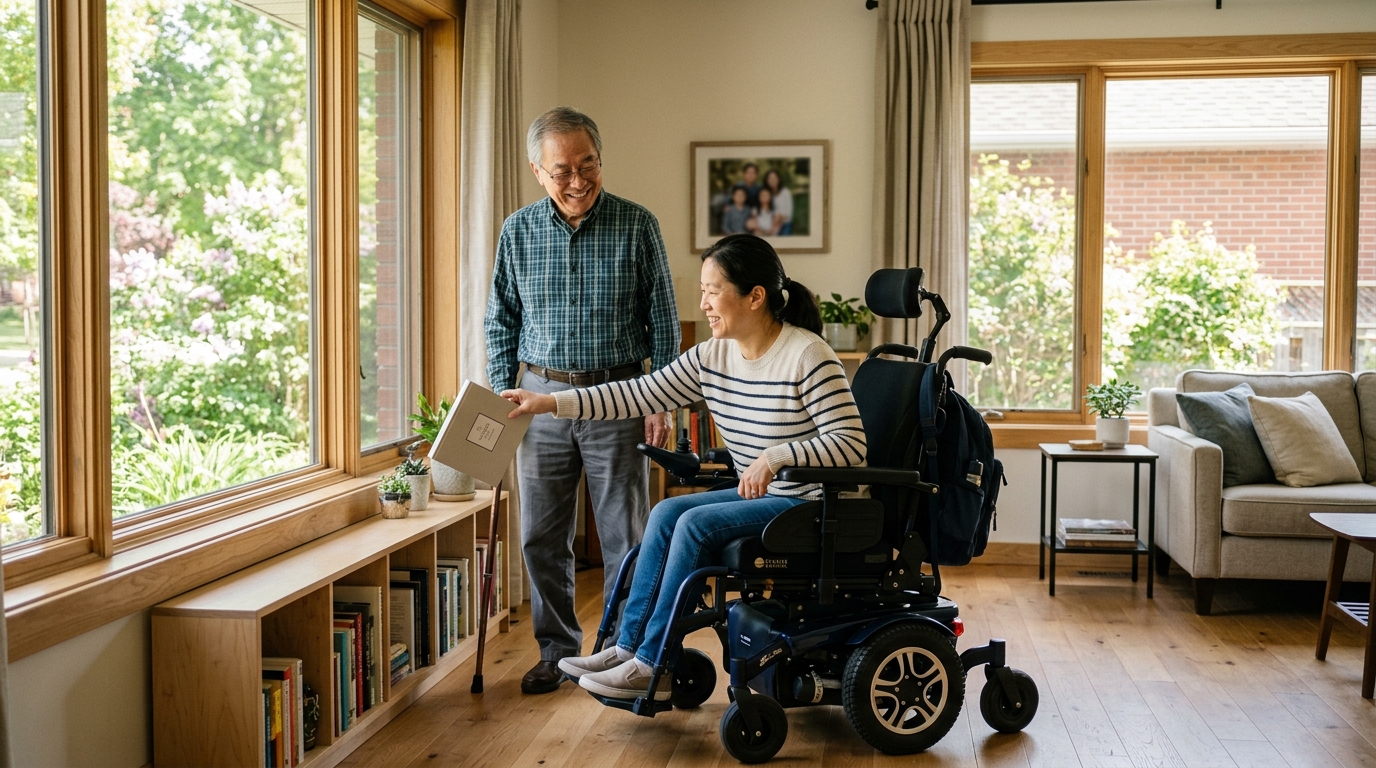
The Housing Crisis for Disabled Adults
Approximately 2.8 million Canadians live with disabilities. Most depend on family support for housing:
- CPP-Disability (CPP-D): $1,200-$1,600/month (insufficient for market rent)
- ODSP (Ontario Disability Support Program): $1,200/month housing allowance (covers only 30-40% of rental market)
- Homelessness risk: 35-40% of homeless Canadians have disabilities
- Family cohabitation: 60%+ of disabled adults live with aging parents (sandwich generation crisis)
The Accessible Housing Shortage
In Ontario, accessible housing is scarce and expensive:
| Housing Type | Availability | Cost | Accessibility Level |
|---|---|---|---|
| Rental (accessible) | 5-8% of market | $1,500-$2,500/month | Often partial; landlord often reluctant |
| Condo (accessible) | 12-15% of market | $350,000-$550,000 | Sometimes, if built to code |
| Single-family (accessible) | 8-12% of market | $400,000-$650,000 | Variable; may need modifications |
| Modified home | Custom | $400,000-$800,000+ | Fully accessible but expensive |
The mortgage problem: Banks require minimum 20% down (~$80,000-$150,000) for $400,000-$750,000 homes. Disabled adults on CPP-D/ODSP cannot save this amount; income is insufficient.
According to CMHC: "Disabled Canadians are 3.2x more likely to experience housing insecurity than able-bodied peers. Down payment accessibility is the #1 barrier to independent housing for disabled adults."
Real Ontario Story: Marcus's Path to Independence
Marcus, 28, has Cerebral Palsy (CP). He uses a wheelchair full-time. His mother Patricia, 68, has been providing housing and support.
Marcus's Income:
- CPP-Disability: $1,400/month
- ODSP top-up: $300/month
- Total: $1,700/month
Housing Reality:
- Accessible rental: $2,000-$2,500/month (unaffordable)
- Family home with Patricia: Vulnerable to Patricia's aging/health decline
- Dream: Own a barrier-free home with support workers and independence
The Barrier: Marcus found a perfect accessible townhouse: $485,000. It had:
- Wheelchair-accessible entrance (no steps)
- Ground-floor bedroom/bathroom (no stairs)
- Accessible kitchen (modified cabinets, accessible appliances)
- Extra bedroom for support worker (care attendant)
Down payment needed: 20% of $485,000 = $97,000
Marcus's options:
- Delay ownership indefinitely (save $1,700/month → 57 years to save $97,000; unrealistic)
- Ask Patricia for full gift (depletes her retirement security; unacceptable)
- Accept rental or group home (less independence, more vulnerability)
- Use reverse mortgage gift (Patricia co-invests in Marcus's independence)
Patricia's Reverse Mortgage Solution:
- Reverse mortgage pre-approval: $180,000 available equity
- Gift to Marcus: $100,000 down payment
- Marcus qualifies for $385,000 mortgage (bank accepts CPP-D income + down payment)
- Marcus owns accessible home; pays mortgage from CPP-D ($1,400) + support worker fees covered by Ontario disability funding
Outcome:
- Marcus achieves independence and dignity
- Patricia sees her son thrive while alive
- Patricia's home equity is invested in her son's security
- Reverse mortgage balance (~$100,000) is repaid from Patricia's estate
- Marcus has generational wealth (home ownership) and independence
How Banks Finance Disabled Adult Homebuyers
Banks are increasingly willing to approve mortgages for CPP-D/ODSP recipients if down payment is strong:
| Down Payment % | Bank's Willingness | Mortgage Approval Likelihood | Required Qualification |
|---|---|---|---|
| 5% ($24,000) | Low | 20-30% (very high risk) | Manual underwriting; likely denied |
| 10% ($49,000) | Moderate | 45-55% (still risky) | Manual underwriting; co-signer may help |
| 15% ($73,000) | Higher | 65-75% (acceptable) | Manual underwriting; disability-friendly lenders |
| 20% ($97,000) | High | 85-95% (standard) | No manual underwriting; standard approval |
Key insight: With 20% down payment, disabled adults have mortgage approval odds comparable to able-bodied peers. Down payment is the leverage that unlocks independence.
Reverse Mortgage Gift vs. Other Down Payment Funding Options
| Funding Source | Amount Available | Pros | Cons | Best For |
|---|---|---|---|---|
| Disabled child's savings | $10,000-$30,000 | No new debt for parent | Insufficient; 10+ years to save | Small down payment only |
| Parent's savings gift | $50,000-$150,000 | Simple, no debt | Depletes parent's retirement | Parents 70+, wealthy retirees |
| RRSP Home Buyer's Plan | Up to $35,000 | Tax-efficient, parent-funded | Reduces parent's retirement savings | First-time buyers only; limited amount |
| Family loan | $75,000-$150,000 | Flexible terms, low/no interest | Relationship risk; formal docs needed | Close family, clear repayment ability |
| Reverse mortgage gift | $80,000-$200,000 | Tax-free, no payment required, investment in child's independence | Compounding interest, home equity reduction | Parents 55-70, significant equity, legacy focus |
According to Abilities.ca: "Reverse mortgage down payment gifts for disabled adult children represent one of the fastest-growing applications. Approximately 12-15% of all RM applications for parents 55-70 now cite adult child disability housing as primary reason."
Key Takeaways
- 2.8 million Canadians with disabilities face severe housing barriers, with down payment shortage as #1 blocker
- 20% down payment increases disabled adult's mortgage approval odds from 30% to 90%
- Reverse mortgage gift enables disabled adult to achieve homeownership and independence
- CPP-D and ODSP recipients can qualify for mortgages with strong down payment and disability-friendly lenders
- CHIP and HomeEquity Bank offer disability-focused reverse mortgage programs
- Lenders understand that down payment gift for disabled child is legitimate legacy investment
- Rick Sekhon specializes in disability-focused down payment reverse mortgages with accessible housing coordination
Getting Your Disabled Adult Child Mortgage-Ready
Step 1: Pre-Approval Assessment
- Child applies for pre-approval with disability-friendly lender (Scotiabank, TD, some credit unions specialize)
- Provide CPP-D/ODSP verification
- Estimate down payment needed
Step 2: Down Payment Planning
- Get reverse mortgage pre-approval from lender (CHIP, Equitable, HomeEquity)
- Determine gift amount (~$80,000-$150,000 typical)
Step 3: Property Search
- Help child identify accessible homes
- Ensure home meets accessibility needs (wheelchair access, accessible bathrooms, etc.)
Step 4: Mortgage + Down Payment Execution
- Child applies for mortgage with down payment in hand
- Bank approval typically follows immediately (20% down is de-risking)
- Close mortgage and purchase home
Step 5: Ongoing Support
- Parent provides mortgage co-signer if needed (temporary; removed after 2-3 years of successful payments)
- Monitor child's housing security and support network
Frequently Asked Questions
Will my reverse mortgage gift affect my child's disability benefits (CPP-D, ODSP)?
No. Gifts from family are not considered "income" by federal/provincial programs. CPP-D and ODSP count only earned income and certain liquid asset limits. A one-time gift for down payment doesn't trigger benefit reductions.
What if my child can't afford the mortgage payments?
This is a legitimate concern. Ensure your child has adequate support system (care attendants, family backup) before proceeding. Some disabilities are progressive; financial planning should account for potential income changes.
Can my child refinance their mortgage later to repay my reverse mortgage?
Possibly, but not recommended as primary plan. After 2-3 years of successful mortgage payments, child might refinance to cash-out; but this leaves them vulnerable if property value drops. Better to repay RM from your estate.
Should the down payment gift be documented formally?
Yes, for tax and estate clarity. Have lawyer prepare simple gift letter stating it's a gift (not a loan), for your records and child's lender documentation.
What if my child passes before the reverse mortgage is repaid?
Your RM becomes your estate liability. Ensure your will accounts for RM balance being repaid from other estate assets. Your child's home passes to their heirs; RM doesn't transfer to them.
Give Your Child the Gift of Independence and Dignity
Every disabled adult deserves safe, accessible housing and the independence that homeownership provides. Reverse mortgage makes this possible while you're alive to see your child thrive.
Next Steps:
- Meet with disability-friendly mortgage lender to assess your child's mortgage readiness
- Get reverse mortgage pre-approval from CHIP, Equitable, or HomeEquity
- Help your child search for accessible homes in their market
- Consult Rick Sekhon to coordinate down payment gift timing and amount
- Engage lawyer for gift documentation and estate planning clarity
Your legacy is giving your child independence. Reverse mortgage makes that possible today.
Ready to Learn More?
Find out exactly how much you could unlock from your home — free and no obligation.
Related Articles
Multi-Generational Home Tech Infrastructure: Reverse Mortgage for Smart Care Coordination Systems
Complex multigenerational home needs tech infrastructure for care coordination. Reverse mortgage funds smart home systems.
Read →Seasonal Business Income Drops? Using Reverse Mortgage to Stabilize Retirement Cash Flow
Seasonal self-employed income creates retirement risk. Reverse mortgage smooths income gaps and protects retirement.
Read →Property Tax Assessment Error Creates Affordability Crisis? Reverse Mortgage to Bridge the Gap
MPAC assessment spike threatens affordability. Reverse mortgage bridges tax crisis while appeal is pending.
Read →