
Reverse Mortgage for Accessible Vacation Property Development: Creating Multi-Generational Disability-Friendly Retreats
Transform your cottage into an accessible family gathering place. Reverse mortgage for disability-friendly vacation property modifications.
You own a cottage or vacation property—a family gathering place for three generations—but your aging parent uses a wheelchair, and your adult child has mobility challenges. Could a reverse mortgage help make this space accessible for all family members?
Absolutely. Accessible vacation properties become multigenerational gathering spaces where all family members participate fully, strengthening bonds across ability levels.
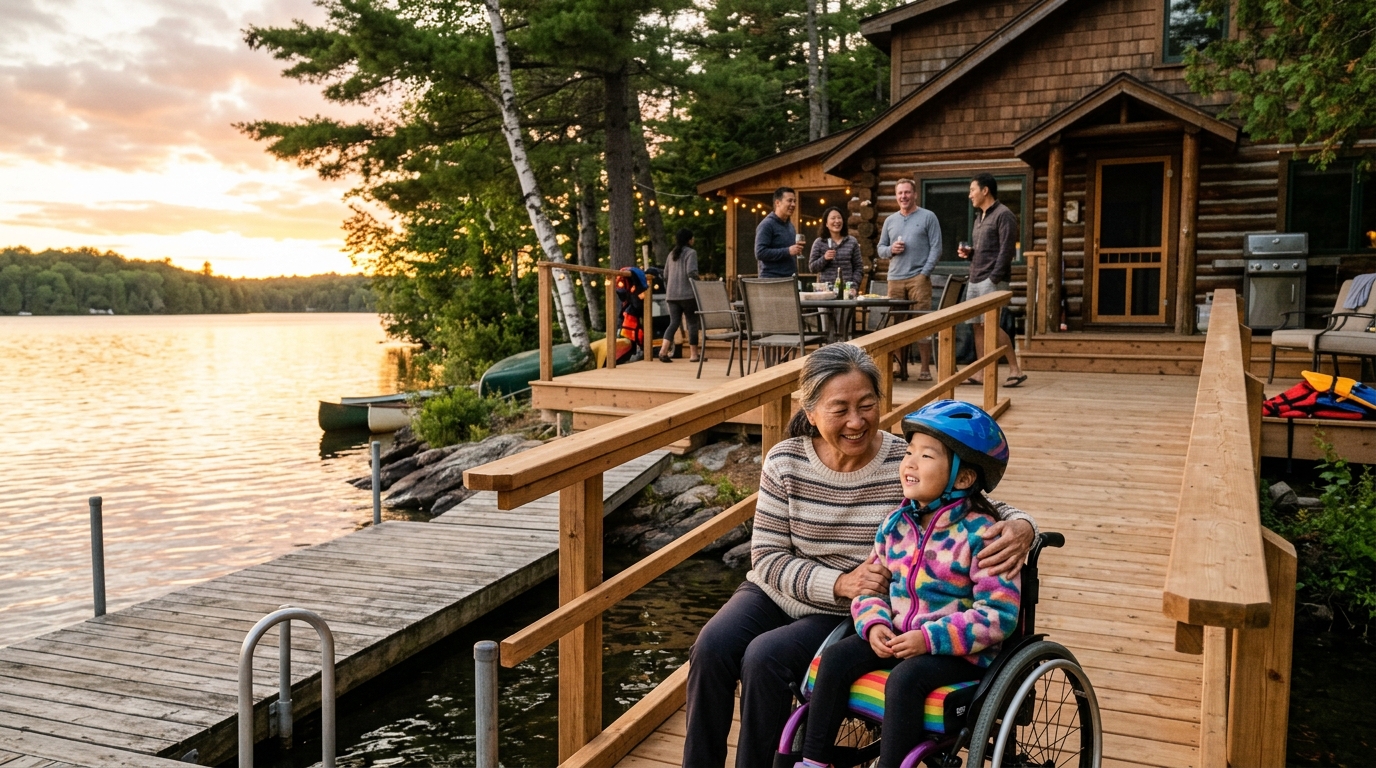
The Multigenerational Accessibility Challenge
An estimated 25% of Canadians have disability; yet most vacation properties lack accessibility. Families with aging parents and disabled adult children often can't gather together because the "family place" excludes members.
Definition: Accessible vacation property development refers to retrofitting seasonal homes (cottages, vacation properties) with universal design features that enable people across mobility, sensory, and cognitive abilities to participate fully in family gatherings.
Common barriers:
- Stairs preventing wheelchair access
- Narrow doors, inaccessible bathrooms
- No accessible kitchen or dining
- Bedrooms without accessible sleeping surfaces
- No adapted recreational spaces
- Isolated location with transportation barriers
- Seasonal infrastructure (water systems, heating) not suitable for accessibility equipment
A reverse mortgage can fund comprehensive accessible retrofit, transforming isolated vacation property into truly multigenerational gathering place.
Real Story: The Chen Family Cottage Project
The Chen family owned a 40-year-old cottage in Muskoka, gathering place for three generations. But accessibility was deteriorating:
- Aging grandmother (78) needed wheelchair after stroke
- Adult son (45) used manual wheelchair from spinal cord injury
- Grandchildren (ages 5–15) needed accessible family time with grandpa and great-grandma
The family couldn't gather at the cottage; accessibility barriers prevented it.
The parents (both 72) accessed a $75,000 reverse mortgage to fund:
- Main entrance renovation ($8,000): Ramp system, accessible door width, accessible entry platform
- Accessible bedroom suite ($15,000): Roll-under bed, accessible bathroom with shower, grab bars
- Accessible kitchen/dining ($12,000): Lowered counters, accessible appliances, seating modifications
- Accessible bathroom throughout ($10,000): Multiple accessible stalls, grab bars, shower chairs
- Accessible recreational space ($8,000): Patio expansion for wheelchair users, adapted fishing platform, accessible outdoor games
- Accessibility equipment ($6,000): Ramps, grab bars, transfer equipment, accessible bedding
- Transportation ($4,000): Minivan with wheelchair lift access parking
- Contingency/finishing ($12,000)
Over two years, the cottage became fully accessible. Today:
- Three generations gather every summer
- Grandmother and father can participate equally
- Grandchildren have accessible family memories
- Cottage is now multi-use (family gathering, respite care, accessible rental income)
Reverse mortgage cost: approximately $3,900 annually. The family's intergenerational bond strengthened. The cottage became usable legacy for all family members.
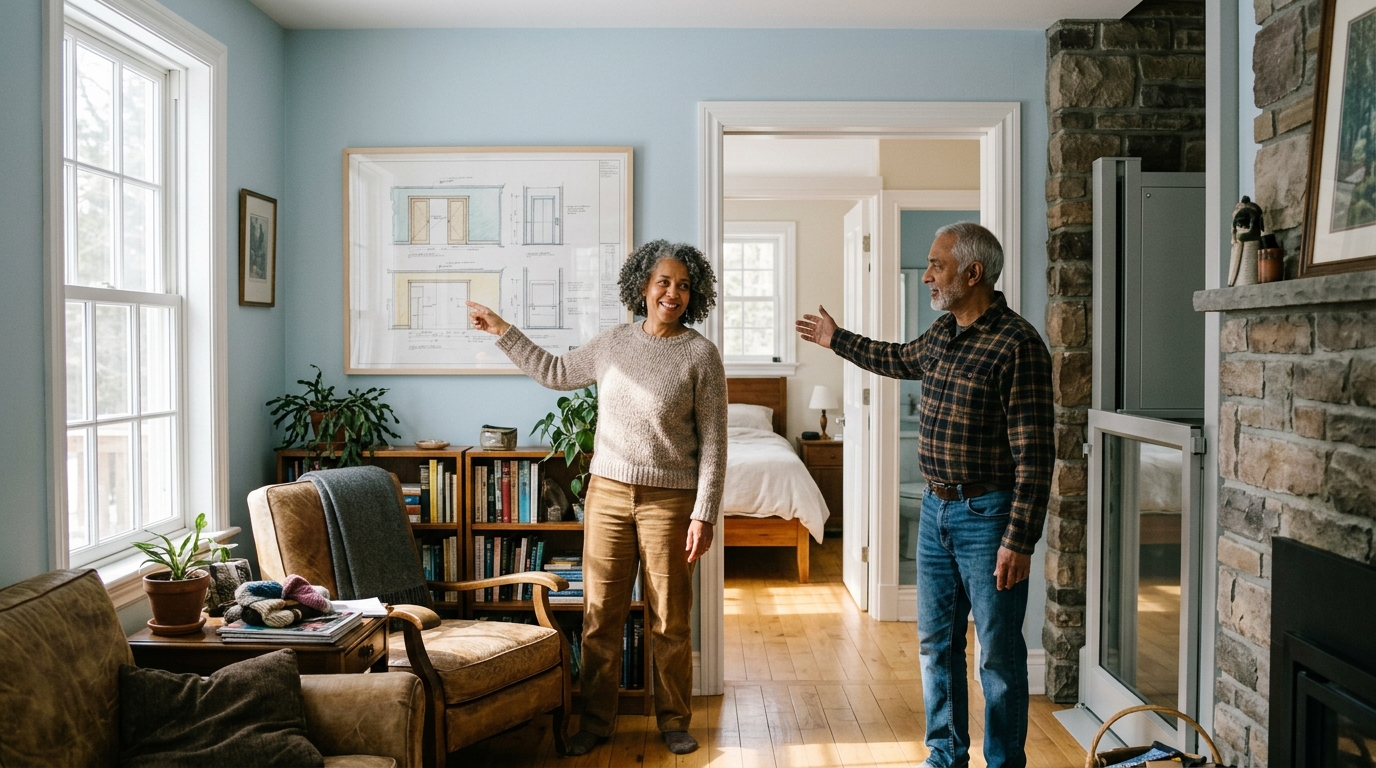
Accessible Vacation Property Investment Benefits
| Benefit | Personal Impact | Legacy Impact | Economic Impact |
|---|---|---|---|
| Multigenerational gathering | All family members participate equally | Strengthened family bonds across generations | Intangible but priceless |
| Respite care option | Aging parent/disabled adult child in familiar, beautiful space | Family support infrastructure | Reduces costs vs. commercial respite facilities |
| Inclusive family time | Holidays, celebrations, everyday time together | Children grow up with inclusive normalcy | Disability integration models future generations |
| Property value | Accessible properties are valuable to growing market | Accessible legacy appreciated by heirs | 15–25% increased resale value |
| Rental income (optional) | Can generate revenue during off-seasons | Sustainable funding for ongoing maintenance | $2,000–$5,000/month if marketed accessibly |
Accessible Vacation Property Design Elements
| Element | Function | Cost | Importance |
|---|---|---|---|
| Accessible entry | Ramp, accessible door width, platform | $5,000–$10,000 | Critical; without it, property is inaccessible |
| Accessible bedroom | Roll-under bed, accessible bathroom attached | $8,000–$15,000 | Essential for overnight accessibility |
| Accessible bathroom | Grab bars, shower chair, roll-under sink, accessible toilet | $5,000–$10,000 per bathroom | Multiple bathrooms serve multiple family members |
| Accessible kitchen | Lowered counters, accessible appliances, seating | $5,000–$12,000 | Enables meal prep participation |
| Accessible recreation | Outdoor patio, adapted activities, accessible trails | $3,000–$8,000 | Creates meaningful family time |
| Mobility equipment | Ramps, lifts, grab bars, transfer equipment | $2,000–$6,000 | Infrastructure for safe independence |
| Accessible transportation | Parking, accessible vehicle, shuttle access | $2,000–$4,000 | Enables arrival and local mobility |
Comparing Vacation Property Accessibility Funding Options
| Funding Source | Upfront Cost | Time | Your Ongoing Burden | Project Flexibility |
|---|---|---|---|---|
| Reverse mortgage | 5–6.5% interest annually | 30–45 days | Interest only during life; pays off at death | Flexible draws as project progresses |
| Home equity line of credit | Prime + 0.5–1.5% | 14–30 days | Monthly payments required during retirement | Access anytime; requires good credit |
| Savings depletion | None (if available) | Immediate | Depletes retirement capital | Limited to available savings |
| Adult children contribute | Split cost 50/50–70/30 | Varies | Shared responsibility; children invest | Requires family agreement |
| Accessibility grants (limited) | None to lender | 3–6 months to access | Requires applications; uncertain | Limited to grant parameters |
Tax and Property Implications
- Reverse mortgage proceeds: Not taxable income
- Accessible home modifications: Some may qualify for Accessible Home Modification Accessibility Tax Credit (research eligibility); consult accountant
- Property value increase: Accessible renovation increases property value; if you eventually sell, capital gains implications; plan with advisor
- Principal residence exemption: If cottage is "principal residence," consider tax implications of accessibility improvements
- Rental income (if you rent accessible cottage): Taxable income, but deductible ongoing maintenance costs
According to CRA and FSRAO, property modifications have tax implications; consult professional before major investment.
Long-Term Maintenance and Updates
Accessible properties require ongoing investment:
- Annual maintenance budget (5–10% of project cost)
- Equipment replacement cycles (grab bars, ramps, mobility equipment)
- Seasonal winterization for year-round accessibility
- Technological updates (accessible smart home systems)
Factor ongoing costs into reverse mortgage planning.
Key Takeaways
- 25% of Canadians have disability; most vacation properties exclude them
- Accessible vacation properties strengthen multigenerational bonds by enabling all family members to participate fully
- Initial retrofit cost: $50,000–$150,000 depending on property size and modifications needed
- Reverse mortgage spreads cost over lifetime; manageable ongoing interest (~5–6% annually)
- Property value increases 15–25% with accessibility modifications
- Secondary benefits: Possible rental income, respite care location, lasting family legacy
Frequently Asked Questions
Will making my cottage accessible reduce its value or rental appeal?
No; it increases value. Accessible properties command 15–25% price premiums in vacation market. Growing population with disabilities seeks accessible vacation properties. If you ever sell, accessibility increases marketability and value.
Can I rent out the accessible cottage to generate income?
Yes. Accessible vacation rentals are high-demand niche. You can market to families with disabled members, seniors, mobility-challenged travelers. Rental income of $2,000–$5,000/month is realistic if marketed well. This generates funds to repay reverse mortgage.
What if my adult child or aging parent's accessibility needs change?
Design for flexibility. Universal design principles allow adaptations. Start with ramps, grab bars, accessible bathrooms. Layer additional modifications (lifts, accessible bedrooms) as needed. Reverse mortgage line of credit allows phased investment over time.
Should my adult children contribute financially to the cottage accessibility retrofit?
If it benefits them, yes. Many families split costs when adult children will use accessible space. This creates shared investment and ensures they value the property as legacy.
What happens to the accessible cottage when I pass away?
Your estate inherits the property. Reverse mortgage is paid from estate proceeds (sale or transfer). If adult children inherit, they have fully accessible property—a lasting legacy enabling future family gatherings.
Is it worth retrofitting an old cottage, or should I sell and buy an accessible property?
Usually retrofit is better. Selling means losing family history and gathering place. Retrofitting maintains emotional legacy while adding accessibility. Reverse mortgage makes retrofit affordable without depleting retirement capital.
Your family cottage or vacation property can be an inclusive, multigenerational gathering place for all ability levels. A reverse mortgage makes accessibility investment possible—creating lasting legacy where every family member belongs.
Ready to explore funding an accessible vacation property retrofit? Contact Rick Sekhon Reverse Mortgages for a consultation on transforming your family gathering place into a fully accessible legacy property.
Ready to Learn More?
Find out exactly how much you could unlock from your home — free and no obligation.
Related Articles
Reverse Mortgage for DEI Consulting Practice: Launching Diversity, Equity, and Inclusion Consulting in Retirement
Start a diversity and inclusion consulting practice. Help corporations and nonprofits build equitable cultures; reverse mortgage funds training, business setup, and market entry.
Read →Reverse Mortgage for Residential Sustainability Auditing Practice: Certifying Aging in Place
Launch a professional home energy and sustainability auditing business. Help Ontario homeowners certify efficiency; reverse mortgage funds training, tools, and market entry.
Read →Reverse Mortgage for Archival and Digital Preservation Consulting: Preserving Institutional History and Heritage
Launch archival consulting practice preserving records for institutions. Help libraries, archives, nonprofits; reverse mortgage funds training, tools, and market entry.
Read →