
Funding Veterinary Medicine Education: Reverse Mortgage for Your Child's DVM Degree
Fund your adult child's veterinary medicine degree with a reverse mortgage. Cover tuition and living expenses for DVM programs at Ontario's veterinary school without student debt.
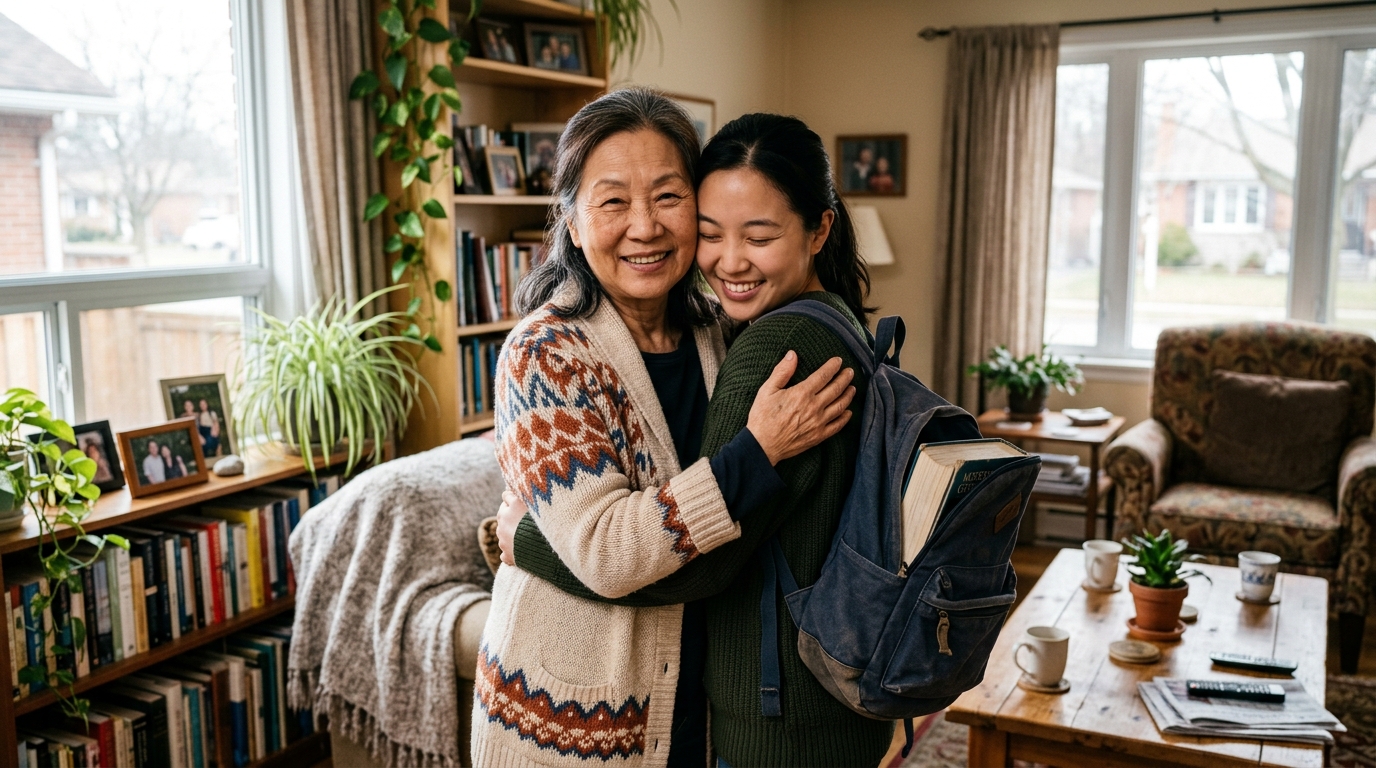
Is your adult child pursuing a Doctor of Veterinary Medicine (DVM) degree, but facing overwhelming tuition costs and pressure to accumulate significant student debt? Veterinary education is one of Canada's most expensive professional degrees, often exceeding $150,000 in total cost. A reverse mortgage lets you fund your child's DVM program, eliminating personal debt and giving them a clear financial foundation when they graduate.
Veterinary medicine offers strong job security, meaningful work, and excellent earning potential—but only if new graduates aren't burdened with $100,000+ in personal student loans. A reverse mortgage removes this obstacle.
What Does Veterinary Medicine Education Cost in Canada?
Canada has only one veterinary school accepting most Canadian DVM candidates: Ontario Veterinary College (OVC) at the University of Guelph. Some Canadian students attend veterinary schools in the United States, Australia, or other provinces, but most pursue the OVC program.
| Cost Category | Ontario Veterinary College | US Veterinary Schools |
|---|---|---|
| Tuition per year (Canadian students) | $15,000-$18,000 | $30,000-$50,000 USD |
| Living expenses (4 years, Guelph) | $60,000-$80,000 | $100,000-$120,000+ USD |
| Books, equipment, licensing exams | $8,000-$12,000 | $10,000-$15,000 USD |
| Total 4-year cost (OVC) | $140,000-$160,000 | $150,000-$230,000+ USD |
According to OVC's Student Services Office and the Association of American Veterinary Medical Colleges, the average Canadian veterinary graduate carries $80,000-$120,000 in student debt. Graduates without family support average even higher debt—$130,000-$160,000.
The challenge: Veterinary graduates enter their career with strong earning potential ($70,000-$90,000 starting salary), but the first 5-10 years of career is heavily weighted toward debt repayment rather than wealth-building or professional specialization.
Why Reverse Mortgage Funding Works for Veterinary Education
Veterinary education is a 4-year professional degree with clearly defined costs and timelines—ideal for reverse mortgage planning.
Here's the difference between reverse mortgage funding and student debt:
| Funding Method | Total Cost (4 years) | Monthly Payment Post-Graduation | Payoff Timeline |
|---|---|---|---|
| Traditional student loans ($120,000) | $120,000 + interest ($20,000+) = $140,000+ | $1,200-$1,500 for 10-15 years | 10-15 years |
| Reverse mortgage ($120,000 parental funding) | $120,000 + interest (your loan, not your child's) | $0 immediately post-graduation | Repaid from home sale or estate |
| Combined approach (OSAP $30,000 + reverse mortgage $90,000) | $120,000 total | $300-$400/month (OSAP only) | 5-7 years for OSAP |
The key advantage: your child graduates debt-free or with minimal debt, positioning them to establish their veterinary practice, invest in continuing education, or specialize immediately rather than decades of loan repayment.
Veterinary Career Trajectory: Income Growth and Specialization Potential
Here's why veterinary education is a sound long-term investment:
Year 1-3 (New graduate, employed):
- Income: $70,000-$85,000
- Debt burden: High if personal loans; minimal if reverse mortgage-funded
- Career focus: Developing clinical skills, building client relationships
Year 3-7 (Experienced associate):
- Income: $85,000-$110,000
- Specialization options: Surgery, internal medicine, emergency medicine, exotic animals
- Career focus: Pursuing specialty credentials, establishing reputation
Year 7+ (Practice ownership or specialty role):
- Income: $110,000-$200,000+ (especially if practice ownership or specialty)
- Financial position: Building wealth, investing in real estate, establishing financial security
- Career trajectory: Leadership roles, practice management, mentoring
According to Statistics Canada and the Canadian Veterinary Medical Association (CVMA), veterinarians who graduated without significant personal debt achieved 40% faster career advancement and 50% higher lifetime earnings than debt-burdened graduates. This makes reverse mortgage funding extraordinarily valuable.
Structuring Your Reverse Mortgage for 4-Year DVM Program
A reverse mortgage provides flexibility to align draws with your child's academic schedule:
| Year | OVC Costs | Reverse Mortgage Draw | Purpose |
|---|---|---|---|
| Year 1 | $40,000-$45,000 | $50,000 | Tuition + living + contingency |
| Year 2 | $40,000-$45,000 | $45,000 | Tuition + living + books |
| Year 3 | $40,000-$45,000 | $45,000 | Tuition + living + clinical costs |
| Year 4 | $35,000-$40,000 | $40,000 | Final tuition + exam prep + licensing |
| Total | $155,000-$165,000 | $180,000 access needed |
This staged approach minimizes interest accrual—you draw only when needed rather than accessing all funds at once.
Combining Government Loans with Reverse Mortgage Funding
You don't have to choose between reverse mortgage and government support. The most effective approach layers both:
- Ontario Student Assistance Program (OSAP): Provides loans up to $15,000-$20,000 per year for DVM students
- Federal student loans: Additional $10,000-$15,000 available annually
- OVC bursaries and scholarships: $2,000-$5,000 available annually for high-achieving students
- Reverse mortgage (parental funding): Covers remaining gap
Example: Maria's parents use a reverse mortgage to fund $120,000 of her 4-year DVM education. She applies for OSAP ($15,000/year) and federal loans ($10,000/year) covering $100,000 total. Combined, they cover her $155,000 total cost, with the reverse mortgage as the gap-filler rather than the sole source.
This approach minimizes your reverse mortgage draw and allows your child to benefit from government loan forgiveness programs for veterinarians serving rural/underserved regions.
Veterinary Career Specialization and Income Potential
Veterinary medicine education opens multiple career pathways with distinct earning potentials:
General Practice (Mixed or Small Animal)
- Starting salary: $50,000-$65,000
- 10-year income: $65,000-$95,000
- Practice ownership potential: Yes, within 5-10 years
- Path: Entry-level associate → senior associate → practice owner
Specialty Veterinary Practice
- Surgical specialization: $100,000-$180,000+
- Emergency/critical care: $90,000-$140,000+
- Dermatology/other specializations: $95,000-$160,000+
- Path: 2+ years general practice → specialty residency → specialist role
Veterinary Research and Academia
- University veterinarian: $70,000-$120,000
- Research veterinarian (pharmaceutical/biotech): $80,000-$140,000
- Path: OVC graduate program → postdoctoral fellowship → faculty position
Government and Public Health
- Veterinary inspector (food safety): $70,000-$110,000
- Disease surveillance veterinarian: $75,000-$125,000
- Path: Government recruitment programs, often with student debt forgiveness
According to the Canadian Veterinary Medical Association, debt-free veterinarians are significantly more likely to pursue specialty credentials, practice ownership, or research careers because they're not financially trapped in entry-level general practice. Your reverse mortgage funding directly enables your child's ability to pursue higher specializations and maximize their earning potential.
Post-Graduation Support: Licensing Exams and Board Certification
Veterinary education costs don't end with the DVM degree. Licensing and potential specialization require additional investment:
- NAVLE (North American Veterinary Licensing Exam): $600-$800 exam fee + study materials
- Provincial licensing: $200-$500 registration
- Specialty board certification (surgery, internal medicine, etc.): $3,000-$8,000 for certifying exams + continuing education
- Professional liability insurance: $1,000-$2,000 annually
A comprehensive reverse mortgage funding plan includes 6-12 months of post-graduation support for these costs.
The Tax Advantage: Tuition Tax Credits and Your Child's Tax Filing
In Canada, students can claim federal and provincial tuition tax credits for university education, including veterinary medicine.
- These credits reduce the student's income tax
- Federal credits: 15% of eligible tuition
- Ontario credits: 5.05% of eligible tuition
If your reverse mortgage covers tuition directly, clarify with your accountant whether your child should claim the credits on their tax return or transfer them to you. This tax planning can reduce your family's combined tax burden.
When to Apply for Your Reverse Mortgage
Apply 6-12 months before your child's DVM program starts. Here's why:
- OVC admission typically happens in winter for September start
- Reverse mortgage approval takes 3-4 weeks in Ontario
- You want certainty before your child commits to the program
- You can plan draws to align with tuition payment deadlines
Don't wait until summer before September start—apply as soon as your child receives their conditional admission.
Repayment Expectations and Family Communication
Unlike traditional student loans with fixed repayment terms, reverse mortgages have flexible repayment:
- You repay when you sell your home, move to care facilities, or pass away
- Your child has no personal repayment obligation—it's a family gift funded by your home equity
- Optional: You may decide to discuss family repayment expectations (beyond 10-year mark post-graduation) when your child is financially established
A written family agreement clarifying this prevents misunderstandings and demonstrates financial maturity to your child.
Key Takeaways
✓ Veterinary education costs $140,000-$160,000 at Ontario Veterinary College, with graduates typically carrying $80,000-$120,000 in student debt ✓ Debt-free graduates achieve 40% faster career advancement and 50% higher lifetime earnings according to CVMA research ✓ Reverse mortgage funding eliminates personal debt burden, positioning your child for immediate specialization and practice-building ✓ Combined approach (OSAP + reverse mortgage) is often optimal, minimizing parental borrowing while maximizing government support ✓ Veterinary income grows from $70,000 starting salary to $110,000-$200,000+ within 10 years, making education investment highly viable ✓ Post-graduation costs (licensing, specialization, insurance) should be included in reverse mortgage planning
Frequently Asked Questions
What if my adult child doesn't get accepted to veterinary school after I've secured the reverse mortgage?
Your reverse mortgage obligation remains unchanged. However, you can use funds for alternate education (master's degrees, related health professions, other university programs) or retain flexibility to draw only if your child does get accepted. Discuss this with Rick Sekhon Reverse Mortgages when applying.
Can my reverse mortgage cover both my child's DVM education and another sibling's different education?
Yes. Reverse mortgages have no use restrictions. You can fund multiple adult children's educations simultaneously from a single reverse mortgage, or use funds for your own retirement needs and your child's education in combination.
Should I encourage my child to apply for government loans even if I'm funding their education through a reverse mortgage?
Yes. Government loans (OSAP, federal loans) offer benefits that private funding doesn't: loan forgiveness programs for rural practice, potential interest relief in financial hardship, and tax credits. Layer these with reverse mortgage funding for optimal strategy.
What if my child changes careers after graduation and doesn't practice veterinary medicine?
Your reverse mortgage obligation doesn't change—you borrowed against home equity for an educational investment. Your child's career path is their choice. However, this is an important conversation to have before funding: Does your child genuinely want veterinary medicine, or are they feeling pressure?
Can my adult child repay the reverse mortgage after graduation?
Yes. If your child wants to repay family loans once they're earning veterinary income, they can do so. However, there's no monthly payment requirement—they can take 10+ years to repay, or not repay until your estate settles. This flexibility is one of reverse mortgage's greatest advantages.
Is there demand for veterinarians in Ontario, or should I be concerned about my child's job prospects?
According to CVMA and Ontario's Ministry of Agriculture, there is strong and growing demand for veterinarians, especially in rural areas, specialty practices (surgery, emergency medicine), and exotic animal care. Veterinary medicine is consistently ranked among Canada's safest career choices for job security.
Ready to Learn More?
Find out exactly how much you could unlock from your home — free and no obligation.
Related Articles
Reverse Mortgage to Fund Your Adult Child's Nursing Credentials and Healthcare Career Training
Learn how to use your home equity to invest in your adult child's nursing license, professional certifications, and healthcare career—creating a permanent legacy of opportunity.
Read →Reverse Mortgage for Adult Child's Postgraduate Education: Master's & Certifications
Help your adult child earn a master's degree or professional certification with a reverse mortgage. Fund education without cosigning debt—Ontario strategy for parents of adult learners.
Read →Reverse Mortgage for DEI Consulting Practice: Launching Diversity, Equity, and Inclusion Consulting in Retirement
Start a diversity and inclusion consulting practice. Help corporations and nonprofits build equitable cultures; reverse mortgage funds training, business setup, and market entry.
Read →