
Reverse Mortgage for Women: Building Financial Independence in Retirement
How women can use reverse mortgages to build wealth, independence, and security in retirement. Ontario guide for female homeowners 55+.
Are you a woman navigating retirement without the financial security you expected? Women face unique retirement challenges: longer life expectancies, interrupted careers due to caregiving, lower lifetime earnings, and higher rates of widowhood. Yet a reverse mortgage can be a powerful tool to reclaim financial independence and build the retirement security you deserve.
This guide explores how Ontario women 55+ can use home equity strategically to achieve financial autonomy, reduce reliance on others, and secure their legacy.
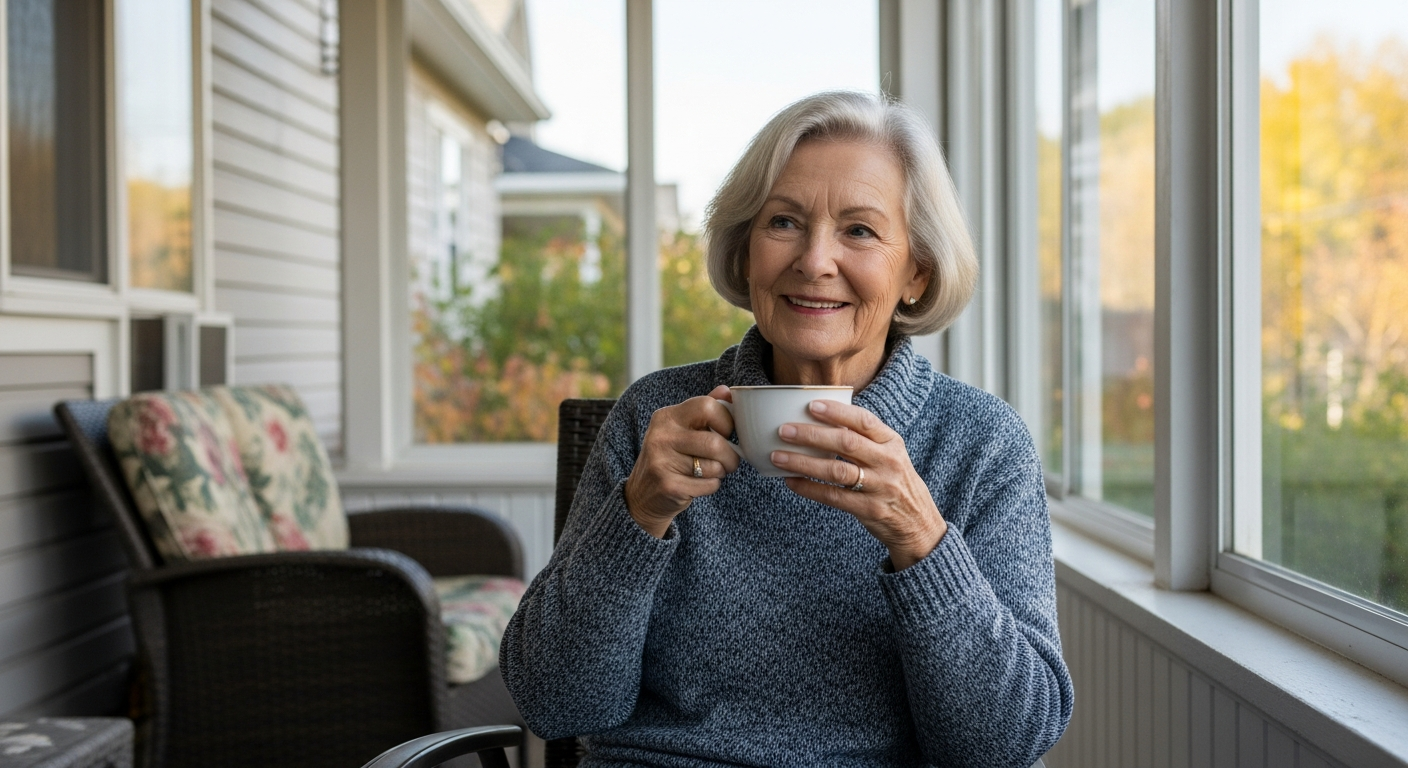
The Financial Reality for Retired Women
According to Statistics Canada, retired women in Canada have significantly lower average incomes than retired men:
- Women's average CPP: $16,200/year
- Men's average CPP: $21,600/year
- Gap: 25% lower income for women
- Widow rate: 45% of women age 65+ are widowed, compared to 12% of men
The causes are structural:
- Career interruptions: Women take time out for child-rearing, elder care, or other family responsibilities
- Wage gap: Women earn 10–20% less than men in comparable roles
- Pension inequity: Fewer women have access to defined-benefit pensions
- Longevity: Women live 5+ years longer than men on average, requiring larger retirement savings
For many women, the family home is their largest financial asset. A reverse mortgage lets them unlock that equity for independence, rather than relying on adult children, government benefits, or financial institutions that don't have their interests at heart.
Real-World Scenario: Patricia's Path to Independence
Patricia, 68, spent 25 years as a teacher, then took 12 years out of the workforce to raise three children and care for her aging mother. She returned to work part-time at age 55, which meant her CPP and pension were reduced compared to continuous full-time employment.
Widowed at 62, Patricia owned a $750,000 home in Ontario free and clear. Her annual income is approximately $28,000 (pension + CPP). After property taxes, home maintenance, utilities, and healthcare costs, she has little discretionary income.
Patricia's adult children are successful, but she doesn't want to become a burden to them. She values her independence.
Her challenge:
- Can't afford home renovations she needs for aging in place ($25,000)
- Has no emergency cushion if major repairs arise ($5,000+ for furnace, roof, etc.)
- Wants to help her grandchildren with education but can't afford it
- Dreams of spending winters in warmer climates but can't fund travel
Her solution: Patricia obtained a reverse mortgage for $250,000 (33% LTV). She structured it as a line of credit, allowing her to draw funds only as needed.
With this financial flexibility:
- Home security: $30,000 for accessibility modifications (grab bars, wider doors, accessible bathroom)
- Emergency reserves: $20,000 for unexpected repairs
- Legacy giving: $50,000 to help grandchildren's RESP education
- Travel fund: $15,000/year for winter escapes, keeping her healthy and engaged
- Peace of mind: $135,000 remaining line of credit for future needs
Patricia maintains full autonomy. She's not borrowing monthly payments, not relying on children, and not depleting her CPP for luxury items. Instead, she's using home equity strategically to fund the life she wants while maintaining her independence.
Why Reverse Mortgages Matter for Women's Financial Security
| Challenge | Traditional Solution | Reverse Mortgage Advantage |
|---|---|---|
| Need funds without monthly payments | Personal loan (requires income) | No income verification; no payments |
| Lack emergency savings | Credit cards (high interest) | Tax-free lump sum or line of credit |
| Want to stay in home but need cash | Sell and downsize (disrupting) | Keep home; access equity |
| Fear becoming burden to children | Rely on kids' help (dependent) | Independent; self-funded |
| Unsure about future needs | Lock into fixed loan terms | Flexible line of credit |
For women who've built equity but lack liquid savings or consistent income, a reverse mortgage is often the only path to true financial independence in retirement.
Women's Retirement Income Gaps: Where a Reverse Mortgage Fits
Let's compare two retirement income scenarios for a 70-year-old Ontario woman with a $750,000 home:
Scenario A: Traditional approach (no reverse mortgage)
- CPP + OAS: $28,000/year
- Minimal savings: $0
- Home: Illiquid; can't access without selling
- Total accessible income: $28,000/year
- Options if emergency arises: Sell home, downsize, or ask family for help
Scenario B: Reverse mortgage approach
- CPP + OAS: $28,000/year
- Reverse mortgage lump sum: $250,000 (can draw as needed)
- Home: Still occupied; still inherited by children (after RM repaid)
- Total accessible resources: $28,000/year PLUS $250,000 equity available
- Options if emergency arises: Draw on reverse mortgage line of credit
The difference in financial security and independence is dramatic.
Women's Specific Use Cases for Reverse Mortgages
1. Widow financial independence
Widowed women often inherit their late husband's portion of the home but face sudden loss of his income, pension, or insurance. A reverse mortgage provides bridging income or emergency reserves while she adjusts to single-income retirement.
2. Divorced women rebuilding security
Divorced women may have received the home in settlement but lack other assets. A reverse mortgage can provide emergency savings, healthcare funding, or help aging parents — without relying on an ex-spouse.
3. Never-married women
Single women who've built home equity throughout their working lives can use a reverse mortgage to offset lower CPP (since it's individual-contribution based) and create the financial security they didn't have through marriage or partnership.
4. Solo female caregivers
Women who've sacrificed careers to care for parents or grandchildren often have interrupted CPP and lower pensions. A reverse mortgage lets them fund their own care needs and aging in place without burdening children.
According to Aging 2.0, women age 65+ are significantly more likely than men to live alone, yet less likely to have professional in-home care. Home equity access is often the key to affording the care they need.
Women and Inheritance: Keeping Family Assets Intact
A reverse mortgage also aligns with many women's values around legacy. Rather than being forced to sell the family home to cover care costs or pass down debt, a reverse mortgage lets you:
- Fund your own care using home equity instead of consuming life savings
- Leave the home to heirs (assuming the reverse mortgage is repaid from the estate)
- Gift equity while alive to children or grandchildren — a "living legacy"
- Maintain control over how your assets are used, rather than depending on others' decisions
This aligns with the Living Legacy persona: women who want to use their wealth intentionally, on their terms, to benefit family and leave a clear legacy.
Tax and Benefit Implications (Critical for Women)
According to CRA guidelines, reverse mortgage proceeds are not taxable income. This is crucial for women on fixed incomes:
- No impact on OAS: Reverse mortgage funds don't count toward OAS income thresholds, so you won't trigger a clawback
- No impact on GIS: If you qualify for Guaranteed Income Supplement, a reverse mortgage doesn't affect eligibility
- No income tax: The funds are a loan advance, not income
This means a woman with $28,000 in CPP/OAS who accesses a $250,000 reverse mortgage remains eligible for all government benefits as if she'd received nothing.
Frequently Asked Questions
Is it harder for women to get a reverse mortgage?
No. Reverse mortgages are available to anyone 55+ with home equity, regardless of gender, income, or employment status. Lenders do not discriminate based on gender.
What if I'm widowed and the home is in my late husband's name?
Consult a lawyer, but in most cases, the home will have transferred to you automatically or through the estate. Once you own the home, you can apply for a reverse mortgage independently.
Can I use reverse mortgage funds to help support adult children?
Yes. You can use funds for any purpose, including gifting to family. However, this is a personal financial decision — ensure you're not compromising your own retirement security.
What about my estate? Will my children inherit the home?
If the reverse mortgage balance is paid from the estate or from a sale of the home, yes, any remaining equity goes to your heirs. The reverse mortgage is simply a debt against the property, not a claim on inheritance.
Next Steps: Claiming Your Financial Independence
- Get a home appraisal: Understand your home's current market value
- Calculate your retirement needs: What would true independence look like to you? (Travel, care, legacy gifts, emergencies)
- Meet with Rick Sekhon: Explore reverse mortgage options and structure a plan that matches your values and goals
- Review your CPP/OAS: Understand your government benefits so the reverse mortgage complements them strategically
- Consider your legacy: Decide how you want to use home equity — emergency reserves, experiences, legacy gifts, or all of the above
Your home is your largest asset. Use it strategically to build the retirement you've earned, on your terms.
Ready to Learn More?
Find out exactly how much you could unlock from your home — free and no obligation.
Related Articles
Reverse Mortgage for Single Seniors Living Alone Ontario
How a reverse mortgage helps single seniors in Ontario living alone bridge income gaps, fund home modifications, and age in place without monthly payments.
Read →Reverse Mortgage for Widows and Widowers in Ontario: A Complete Guide
How widows and widowers in Ontario use a reverse mortgage to manage financial changes after losing a spouse. Estate settlement, sole borrower rules, and income planning.
Read →Reverse Mortgage Eligibility in Ontario: Complete 2026 Guide
Everything Ontario homeowners need to know about qualifying for a reverse mortgage in 2026. Covers age requirements, home equity, property types, and the application process.
Read →