
Reverse Mortgage on a Townhouse or Semi-Detached in Ontario
Find out if you can get a reverse mortgage on a townhouse or semi-detached home in Ontario, including eligibility rules, appraisal tips, and lender options.
"We live in a semi-detached in East York — will a reverse mortgage lender even consider our property?" Many Ontario seniors who own townhouses or semi-detached homes worry that their property type might disqualify them from a reverse mortgage. The answer is clear: both freehold townhouses and semi-detached homes are fully eligible — and in many cases, these property types are among the easiest to approve. This guide covers the specific details, appraisal considerations, and strategies for townhouse and semi-detached homeowners across Ontario.
This article is for educational purposes only and does not constitute financial advice.
Are Townhouses and Semi-Detached Homes Eligible?
Yes. All four Canadian reverse mortgage lenders accept both freehold townhouses and semi-detached homes as eligible property types:
| Property Type | CHIP (HomeEquity Bank) | Equitable Bank | Bloom Financial | Home Trust (EquityAccess) |
|---|---|---|---|---|
| Freehold townhouse (row house) | Eligible | Eligible | Eligible | Eligible |
| Freehold semi-detached | Eligible | Eligible | Eligible | Eligible |
| Condo townhouse (common elements) | Eligible (condo rules apply) | Eligible (condo rules apply) | Eligible (condo rules apply) | Eligible (condo rules apply) |
| Stacked townhouse (condo) | Usually eligible | Usually eligible | Case-by-case | Case-by-case |
| Back-to-back townhouse | Usually eligible | Usually eligible | Case-by-case | Case-by-case |
The distinction between a freehold townhouse and a condo townhouse matters. A freehold townhouse means you own the land and the structure outright — there is no condo corporation involved. A condo townhouse means the property is registered as a condominium, with shared common elements, a condo corporation, monthly condo fees, and a reserve fund.
For condo townhouses, the lender will apply additional condo-related underwriting criteria. See our full guide on reverse mortgages on condos in Ontario for those details.
According to the Financial Consumer Agency of Canada (FCAC), reverse mortgages are available on most types of residential property that serve as the borrower's principal residence, including detached, semi-detached, and townhouse dwellings, provided they meet the lender's minimum value and condition requirements.
How Townhouses and Semi-Detached Homes Compare for Reverse Mortgage Purposes
Ontario seniors sometimes wonder whether their property type affects the amount they can borrow or the terms they receive. Here is how townhouses and semi-detached homes compare to fully detached homes:
| Factor | Detached Home | Semi-Detached | Freehold Townhouse |
|---|---|---|---|
| Eligible for reverse mortgage | Yes | Yes | Yes |
| Maximum LTV available | Up to 55–59% | Up to 55–59% | Up to 55–59% |
| Typical appraisal complexity | Standard | Standard | Standard (freehold) or condo-enhanced |
| Shared walls affect eligibility? | N/A | No | No |
| Property value range (GTA, 2026) | $700K–$2M+ | $650K–$1.3M | $500K–$1.2M |
| Property value range (outside GTA) | $350K–$900K | $300K–$700K | $280K–$650K |
| Lender preference | Preferred | Equally accepted | Equally accepted |
The key takeaway: there is no penalty or reduction in LTV for owning a semi-detached or townhouse. The loan amount is determined by the same factors that apply to any property — your age, the appraised value, and the lender's program. A $700,000 semi-detached receives the same LTV treatment as a $700,000 detached home.
To confirm you meet all eligibility requirements, see reverse mortgage eligibility in Ontario.
The Appraisal Process for Townhouses and Semi-Detached Homes
The appraisal is a critical step in any reverse mortgage application. For townhouses and semi-detached homes, the process is largely the same as for detached properties, with a few additional considerations:
What the Appraiser Evaluates
| Appraisal Factor | What the Appraiser Looks For |
|---|---|
| Interior condition | Kitchen, bathrooms, flooring, mechanical systems |
| Exterior condition | Roof, siding, foundation, windows, drainage |
| Lot size and configuration | Smaller lots are typical for these property types |
| Shared wall condition | Any visible issues at the party wall |
| Parking | Garage, driveway, or assigned parking |
| Comparable sales | Recent sales of similar property types in the area |
| Location and neighbourhood | Proximity to transit, amenities, desirability |
| Zoning | Confirms residential use; checks for legal non-conforming status |
Comparable Sales: The Key to Accurate Valuation
For semi-detached homes and townhouses, the appraiser will specifically look for comparable sales of the same property type in the neighbourhood. A semi-detached home should be compared to other semi-detached homes, not to fully detached properties or high-rise condos.
In areas where semi-detached homes or townhouses are common — such as East York, Leslieville, the Danforth, Hamilton's Crown Point, Ottawa's Centretown, or Kitchener-Waterloo — there is typically a strong supply of comparable sales, which helps produce an accurate appraisal.
In areas where these property types are rare, the appraiser may need to look at a wider geographic range for comparables, which can introduce more variability into the valuation.
For a full guide on what to expect, see reverse mortgage appraisal process in Ontario.
Real Scenarios: Ontario Townhouse and Semi-Detached Owners
Here are five representative scenarios showing how reverse mortgages work for these property types across Ontario:
| Scenario | Property | Value | Age | Lender | Approx. LTV | Estimated Amount |
|---|---|---|---|---|---|---|
| Margaret, 73, East York semi-detached | 3-bed semi, 1,200 sq ft | $890,000 | 73 | Equitable Bank | 40% | $356,000 |
| Jim & Carol, 69 & 66, Barrie townhouse | 3-bed freehold row | $540,000 | 66 | CHIP | 28% | $151,200 |
| Donna, 78, Hamilton semi-detached | 2-bed semi, Westdale | $620,000 | 78 | Equitable Bank | 48% | $297,600 |
| Robert & Anita, 72 & 70, Ottawa townhouse | 3-bed freehold, Kanata | $580,000 | 70 | Bloom Financial | 34% | $197,200 |
| Helen, 81, Kitchener semi-detached | 3-bed semi, near downtown | $510,000 | 81 | CHIP | 48% | $244,800 |
These scenarios demonstrate that townhouses and semi-detached homes across Ontario generate meaningful reverse mortgage amounts. Even outside the GTA, where property values are lower, borrowers in their 70s and 80s can access $150,000–$300,000 or more.
According to the Ontario Real Estate Association (OREA), semi-detached homes and townhouses represent approximately 25% of residential resale transactions in Ontario, making them one of the most common property types in the province.
Specific Considerations for Semi-Detached Homes
Semi-detached homes share one wall with the neighbouring property. This creates a few unique considerations:
Shared Roof and Structural Elements
In many older Ontario semi-detached homes (built before 1950, common in Toronto, Hamilton, and Ottawa), the roof covers both halves of the building. If the shared roof needs replacement, both owners typically must coordinate the work. Lenders want to see that the property is well-maintained, so a deteriorating shared roof could affect the appraisal.
Party Wall Agreements
Some semi-detached homes in Ontario have formal party wall agreements that outline maintenance responsibilities for the shared wall. While these agreements do not affect reverse mortgage eligibility, they may be reviewed by your lawyer during the independent legal advice (ILA) process.
Insurance
Semi-detached homes require their own individual homeowner's insurance policy. The shared wall means that a fire or water damage event in the adjoining unit could affect your property. Ensure your insurance covers this scenario. Lenders require active homeowner's insurance as a condition of the reverse mortgage.
Specific Considerations for Townhouses
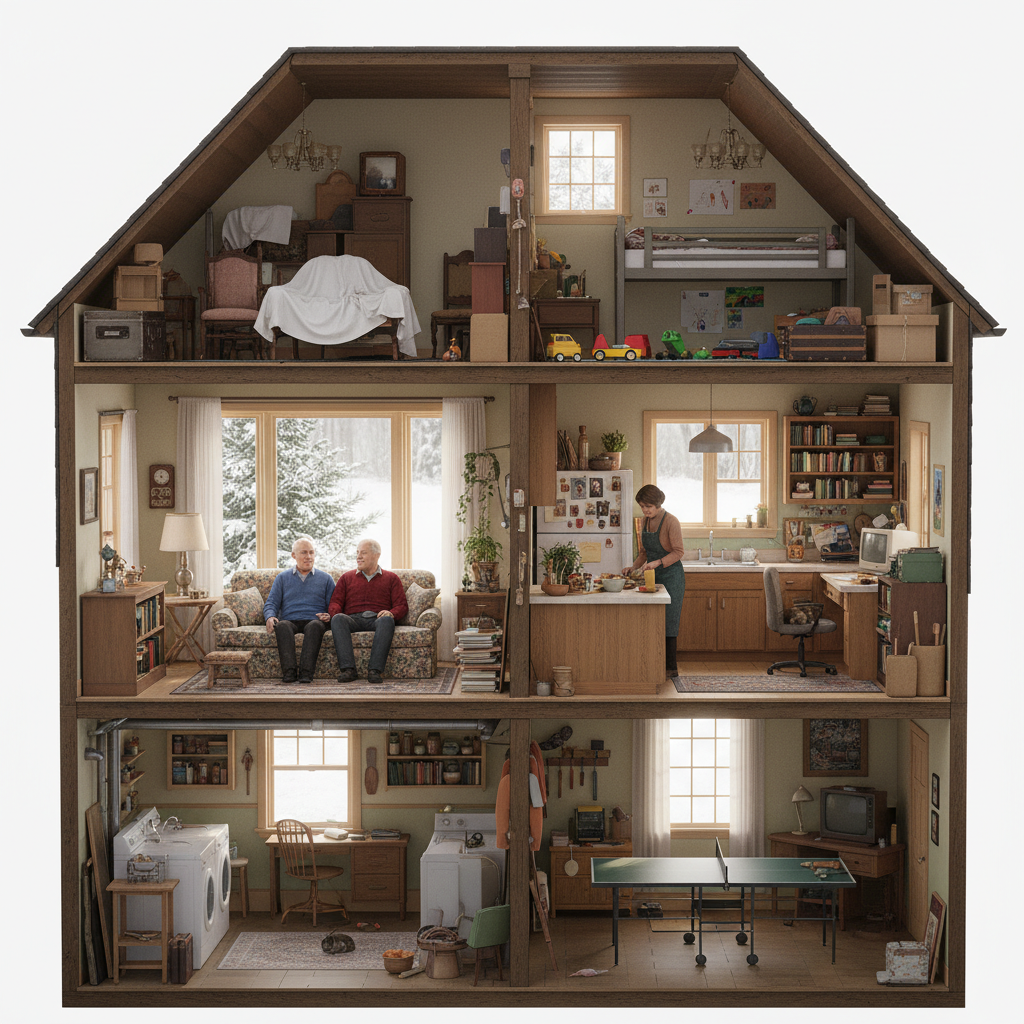
Townhouses come in several configurations, each with slightly different implications:
Freehold vs Condo Townhouse
| Feature | Freehold Townhouse | Condo Townhouse |
|---|---|---|
| Ownership | You own the land and building | You own the unit; common elements are shared |
| Monthly condo fees | None | Yes (typically $200–$600/month) |
| Reserve fund | Not applicable | Must be adequate for lender approval |
| Condo corporation | None | Must be in good standing |
| Reverse mortgage process | Same as detached home | Additional condo documentation required |
| Maintenance responsibility | Entirely yours | Shared (exterior often covered by condo corp) |
If your townhouse is a condo, the lender will require additional documentation including the Status Certificate, reserve fund study, and condo corporation financials. These requirements are the same as for any condo reverse mortgage — see reverse mortgage on a condo in Ontario.
End Unit vs Interior Unit
End-unit townhouses typically appraise higher than interior units because they have more windows, more natural light, and often a larger lot. This translates to a higher reverse mortgage amount. The difference can be meaningful:
| Unit Position | Typical Value Premium | Impact on Reverse Mortgage |
|---|---|---|
| End unit with extra windows | 5–10% higher than interior | $15,000–$60,000 more borrowing capacity |
| End unit with side yard | 8–15% higher | $20,000–$80,000 more borrowing capacity |
| Interior unit | Baseline value | Standard borrowing amount |
Stacked and Back-to-Back Townhouses
These newer configurations — common in Brampton, Markham, Milton, and other GTA suburbs — involve units stacked on top of each other or with no rear yard. They are typically registered as condominiums. Lender acceptance varies:
- CHIP and Equitable Bank generally approve stacked and back-to-back townhouses, subject to standard condo underwriting
- Bloom Financial and Home Trust assess these on a case-by-case basis
- Very new developments (under 5 years) with limited resale history may face additional scrutiny
How to Prepare Your Townhouse or Semi-Detached for a Reverse Mortgage
To ensure the smoothest possible application and the best appraisal, Rick Sekhon recommends:
- Address any visible maintenance issues. Peeling paint, a leaking roof, cracked foundation, or outdated electrical panel can reduce the appraised value and may trigger lender conditions.
- Gather your property documents. If it is a condo townhouse, obtain the Status Certificate early (allow 10 business days). For freehold properties, have your property tax bill and insurance policy available.
- Know your property type. Confirm whether your townhouse is freehold or condo. Check your title documents or ask your lawyer — this determines which documentation the lender requires.
- Check for liens or encumbrances. Any existing mortgage, HELOC, or lien on the property must be paid off from the reverse mortgage proceeds. Know the current balance.
- Consider minor improvements. A fresh coat of paint, clean landscaping, and a tidy interior can improve the appraiser's impression and potentially add value. See reverse mortgage home renovations in Ontario.
For homeowners using a reverse mortgage for debt relief, townhouses and semi-detached homes in mid-range Ontario markets often provide more than enough equity to consolidate high-interest debt and improve monthly cash flow.
Reverse mortgage proceeds are tax-free — they are borrowed funds, not income. This means they will not affect your OAS, GIS, or CPP eligibility. For more on tax treatment, see reverse mortgage tax implications in Canada.
The no-negative-equity guarantee ensures you will never owe more than your home's fair market value. Learn more about reverse mortgage inheritance in Ontario.
FAQ
Can I get a reverse mortgage on a semi-detached home in Ontario? Yes. Semi-detached homes are fully eligible for reverse mortgages from all four Canadian lenders — CHIP (HomeEquity Bank), Equitable Bank, Bloom Financial, and Home Trust. There is no LTV penalty for semi-detached properties compared to detached homes.
Is a freehold townhouse treated differently from a condo townhouse? Yes. A freehold townhouse is treated the same as a detached home — no additional condo documentation required. A condo townhouse requires the lender to review the Status Certificate, reserve fund, and condo corporation financials, similar to any condo application.
Does sharing a wall affect my reverse mortgage eligibility? No. Shared walls are a standard feature of semi-detached homes and townhouses and do not affect eligibility. The lender's primary concerns are the appraised value, your age, and the property's condition.
What if my townhouse is in a new development with few comparable sales? Newer developments with limited resale history may face additional appraisal challenges. The appraiser may need to look at a wider area for comparable sales, or the lender may apply a conservative valuation. Properties under 5 years old are assessed on a case-by-case basis.
Can Rick Sekhon help with townhouse and semi-detached reverse mortgage applications? Yes. Rick Sekhon processes reverse mortgage applications for all property types across Ontario, including townhouses, semi-detached homes, condos, and detached houses. Rick can assess your specific property, recommend the best lender, and manage the application from start to finish.
Will my reverse mortgage affect my ability to sell my semi-detached or townhouse later? No. You can sell your property at any time. The reverse mortgage balance is repaid from the sale proceeds, and any remaining equity belongs to you. There is no restriction on selling, though a prepayment penalty may apply if you sell mid-term. For strategies to manage this, see reverse mortgage prepayment penalties.
Speak to a licensed mortgage professional. Independent legal advice is required before closing a reverse mortgage in Ontario.
Get your free Ontario Reverse Mortgage Guide →
This content is for illustrative purposes only. Rates may vary. Call Rick Sekhon for the best rates and more information.
Ready to Learn More?
Find out exactly how much you could unlock from your home — free and no obligation.
Related Articles
Reverse Mortgage on a Condo in Ontario: Complete 2026 Guide
Learn about reverse mortgages on condos in Ontario, including eligibility requirements, special considerations, and fees involved.
Read →How Reverse Mortgage Appraisals Work in Ontario
Complete guide to the reverse mortgage appraisal Ontario process: costs, preparation tips, what appraisers evaluate, and how your home's value determines borrowing limits.
Read →Reverse Mortgage Eligibility in Ontario: Complete 2026 Guide
Everything Ontario homeowners need to know about qualifying for a reverse mortgage in 2026. Covers age requirements, home equity, property types, and the application process.
Read →