
Student Loan Debt in Retirement: Using a Reverse Mortgage to Eliminate Education Debt
Learn how Ontario homeowners 55+ can use a reverse mortgage to pay off remaining student loans in retirement, freeing up cash flow and improving financial security.
Eliminate Student Loan Debt in Retirement with a Reverse Mortgage
For many Canadians, student loan debt doesn't end when their working years do. Whether from undergraduate education, professional designations, or mid-career retraining, education loans can follow you into retirement—and they shouldn't. If you're an Ontario homeowner 55+ with remaining student loan balances, a reverse mortgage offers a practical strategy to clear this debt and reclaim your retirement cash flow.
This guide explains how reverse mortgages help eliminate student loan debt in retirement, the financial advantages, and how to structure your payoff strategy.

Why Student Loan Debt Is Problematic in Retirement
Most homeowners believe student loans disappear when they turn 65. They don't. If you have:
- Repayment Assistance Plan debt extending into retirement
- Professional designation loans (accounting, law, medicine credentials) that took years to complete
- Mid-career education for a career transition that overlapped with reduced income
- Loans consolidated into your mortgage that weren't fully paid down by retirement
...then you're managing education debt on a fixed or semi-fixed income. This erodes cash flow when you need flexibility most.
Student loans also affect cash flow planning. While federal loans don't trigger income tests for OAS/GIS the way RRIF withdrawals do, they still consume cash that could fund healthcare, housing modifications, or legacy goals.
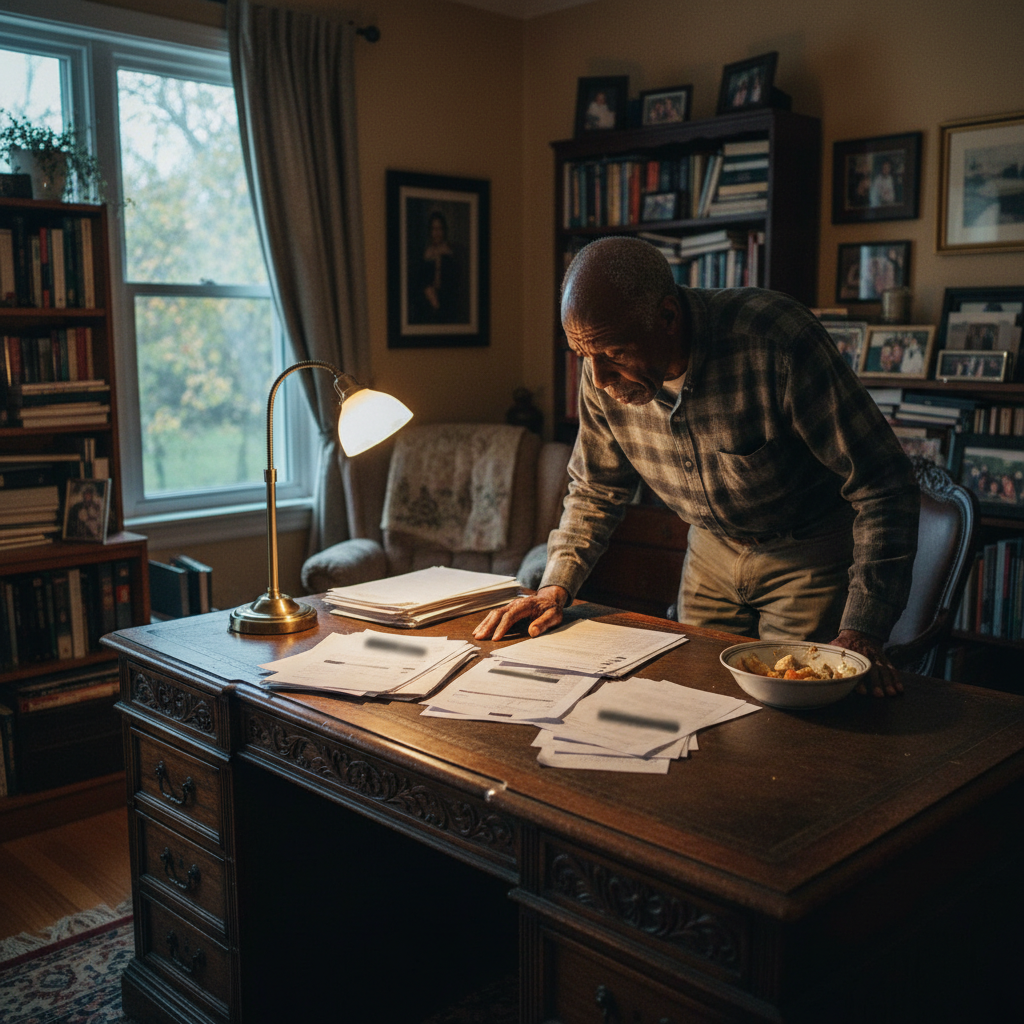
How a Reverse Mortgage Solves the Student Loan Problem
A reverse mortgage converts home equity into tax-free cash that you can use immediately to:
- Pay off remaining student loan balances in full—eliminating monthly payments and freeing up cash flow instantly
- Avoid extended repayment assistance obligations if you've managed reduced-income situations
- Improve your retirement cash flow without triggering income-based clawbacks on government benefits
- Eliminate interest accumulation on remaining student loans, saving thousands over the remaining repayment period
Example scenario:
Maria, 62, has $47,000 remaining on her student loans from a professional designation completed at age 48. She was underemployed for years, then returned to work at 55. Her current payment is $580/month, but she wants to retire at 65 with full CPP benefits.
Using a reverse mortgage, she borrows $47,000 at once and pays off the loans immediately. This eliminates her $580/month obligation, frees up $6,960 annually, and allows her to optimize her retirement income without the debt burden affecting her financial decisions.
The Interest Rate Advantage
Many homeowners overlook a key advantage: the interest rate comparison.
- Student loans currently carry interest rates between 4.5-6.5% in Canada
- Reverse mortgages (as of 2026) range from 6.2-7.1% for variable rates
While reverse mortgage rates are similar, the advantage is structural:
- You're converting a monthly payment obligation into an equity draw that you control
- You're not required to make interest payments during the loan term
- Interest compounds, but only on the amount you've drawn
- There's no prepayment penalty, so you can repay if your situation improves
This is fundamentally different from a traditional loan structure.
Interest rate comparison at a glance:
| Debt Type | Typical Rate Range (2026) | Monthly Payment Required? |
|---|---|---|
| Federal/provincial student loans | 4.5-6.5% | Yes |
| Reverse mortgage (variable) | 6.2-7.1% | No |
| Reverse mortgage (fixed) | ~6.5-8.5% | No |
Maria's example, before and after:
| Item | Before Reverse Mortgage | After Reverse Mortgage |
|---|---|---|
| Remaining student loan balance | $47,000 | $0 |
| Monthly payment | $580 | $0 |
| Annual cash flow freed up | — | $6,960 |

Structuring Your Student Loan Payoff Strategy
Step 1: Get Your Current Loan Details
Contact your loan servicer (National Student Loans Centre, provincial programs, or private lenders) and request:
- Total remaining balance
- Current interest rate
- Remaining amortization period
- Monthly payment amount
- Any penalties or early repayment restrictions
Step 2: Calculate Your Reverse Mortgage Eligibility
In Ontario, you can typically borrow 15-59% of your home's value, depending on your age and the lender. A $400,000 home might yield $60,000-$236,000 in available equity.
If your student loans are $47,000, you're well within borrowing capacity for most homeowners.
Borrowing capacity by age (approximate, on a $400,000 home):
| Age | Approx. % of Home Value | Approx. Available Equity |
|---|---|---|
| 55 | ~15-20% | $60,000-$80,000 |
| 65 | ~30-35% | $120,000-$140,000 |
| 75 | ~45-50% | $180,000-$200,000 |
| 85+ | ~55-59% | $220,000-$236,000 |
Step 3: Compare the Full Cost
Compare:
- Total interest paid on your remaining student loan (if you keep paying)
- Total interest on a reverse mortgage over the same period
- Tax implications (none for either—both are after-tax)
- Impact on retirement cash flow (monthly freed-up funds from eliminating the student loan payment)
Step 4: Decide on Timing
You don't have to draw the full amount immediately. Many reverse mortgages offer line-of-credit features, allowing you to:
- Draw the full amount now (recommended if rates are climbing)
- Draw incrementally as you approach retirement
- Keep it available for emergencies while making regular student loan payments
Government Benefits and Student Loan Forgiveness Programs
Important consideration: Canada has student loan forgiveness programs for:
- Repayment Assistance Plan enrollees after 15 years on the plan
- Public servants under certain conditions
- Physicians and other professions in underserved areas
Before using a reverse mortgage to pay off student loans, verify:
- Are you eligible for forgiveness in the next 2-5 years?
- Would forgiveness be a better outcome than debt consolidation?
- Does your remaining amortization period make payoff cost-effective?
If you're 1-2 years away from forgiveness, holding your reverse mortgage as a safety net (rather than drawing to pay the loan) might be smarter.
The Inheritance Angle
If you have a substantial estate or Living Legacy goals, student loan elimination takes on additional meaning. Your heirs won't inherit the debt, and the equity you preserve in your home can fund family goals instead of interest payments.
When to Act
The best time to eliminate student loan debt with a reverse mortgage is:
- Within 5-10 years of retirement, when you want to optimize your retirement income structure
- When interest rates are stable or rising, making interest-only debt less attractive
- When your home value is strong, maximizing your available equity
- Before CPP claiming, so you're not managing monthly student loan payments while adjusting to retirement income
Next Steps
- Request a reverse mortgage pre-qualification from a licensed Ontario lender (CHIP, Equitable Bank, Bloom, Home Trust)
- Bring your student loan statements to the consultation
- Discuss the line-of-credit vs. lump-sum option that works best for your timeline
- Calculate your retirement cash flow improvement once the student loans are eliminated
- Arrange independent legal advice before proceeding
Key Takeaways
- Federal and provincial student loans do not automatically disappear at retirement, and they can continue drawing on fixed retirement income for years.
- A reverse mortgage lets Ontario homeowners 55+ pay off remaining student loan balances in a single tax-free draw, with no monthly repayment required.
- Reverse mortgage rates (roughly 6.2-8.5%) are comparable to student loan rates (4.5-6.5%), but the reverse mortgage removes the monthly payment obligation entirely.
- Borrowing capacity generally ranges from 15-59% of home value, increasing with age.
- Homeowners within 1-2 years of loan forgiveness eligibility should confirm forgiveness isn't the better option before drawing on home equity.
- Eliminating student loan debt preserves more of the estate for heirs, since remaining loan balances would otherwise reduce what's left behind.
Frequently Asked Questions
Will paying off my student loans with a reverse mortgage affect my OAS or GIS?
No. Reverse mortgage proceeds are a loan, not income, so they are not counted for OAS or GIS purposes. Using the funds to pay off student loans does not trigger any clawback.
Can I use a reverse mortgage to pay off only part of my student loan balance?
Yes. Many reverse mortgages offer a line-of-credit structure, so you can draw only what you need now—for example, enough to cover a portion of your balance—and access more later if required.
Is it better to wait for student loan forgiveness instead of using a reverse mortgage?
It depends on your timeline. If you're within 2-5 years of qualifying for a forgiveness program, it's usually worth confirming eligibility before drawing on home equity, since forgiveness may eliminate the debt at no cost.
How quickly can I pay off my student loans once I'm approved for a reverse mortgage?
Once approved and after your mandatory independent legal advice is complete, funds are typically available within a few weeks, allowing you to pay off your loan servicer directly or through your own account.
Does eliminating student loan debt this way affect my home equity for other retirement goals?
Yes, drawing equity to pay off student loans reduces the amount available for other purposes later, such as home renovations or supplemental income. It's worth reviewing your full retirement plan with a mortgage professional first.
What documentation do I need to get started?
You'll generally need your current student loan statement showing balance and interest rate, proof of home ownership, and standard mortgage application documents. Your lender will also require independent legal advice before closing.
Conclusion
Student loan debt in retirement is manageable but costly. A reverse mortgage offers a strategic way to eliminate education debt, free up monthly cash flow, and improve your retirement financial picture without triggering income-based clawbacks.
If you're an Ontario homeowner 55+ carrying student loan debt into retirement, exploring this option could save thousands in interest and restore the financial freedom you've earned.
Contact a reverse mortgage specialist to discuss whether eliminating your student loans makes sense for your retirement plan.
Ready to Learn More?
Find out exactly how much you could unlock from your home — free and no obligation.
Related Articles
Reverse Mortgage to Fund Adult Child's Full-Time Executive MBA: Career Acceleration Without Debt
Use a reverse mortgage to fund your adult child's full-time MBA living costs, preventing student debt while they accelerate their career in Ontario.
Read →Reverse Mortgage for Aging Parent's Hidden Property Tax Arrears: Emergency Tax Debt Recovery
Discover your aging parent's underpaid property taxes and resolve arrears before foreclosure using a reverse mortgage in Ontario.
Read →Reverse Mortgage When Adult Child's Spousal Immigration Status Is Revoked: Emergency Family Support
Fund urgent legal defense and family restructuring when your adult child's spouse faces deportation due to immigration status revocation in Ontario.
Read →