
Reverse Mortgage for Snowbirds: Keep Your Home
Can Canadian snowbirds get a reverse mortgage? Learn the principal residence rules, lender requirements, and how reverse mortgage snowbirds Canada policies work in 2026.
You spend winters in Florida or Arizona and summers in Ontario — but does leaving Canada for months at a time put your reverse mortgage at risk? Thousands of Canadian retirees live the snowbird lifestyle, and the question of whether a reverse mortgage is compatible with seasonal travel is one of the most common concerns Rick Sekhon hears from clients.
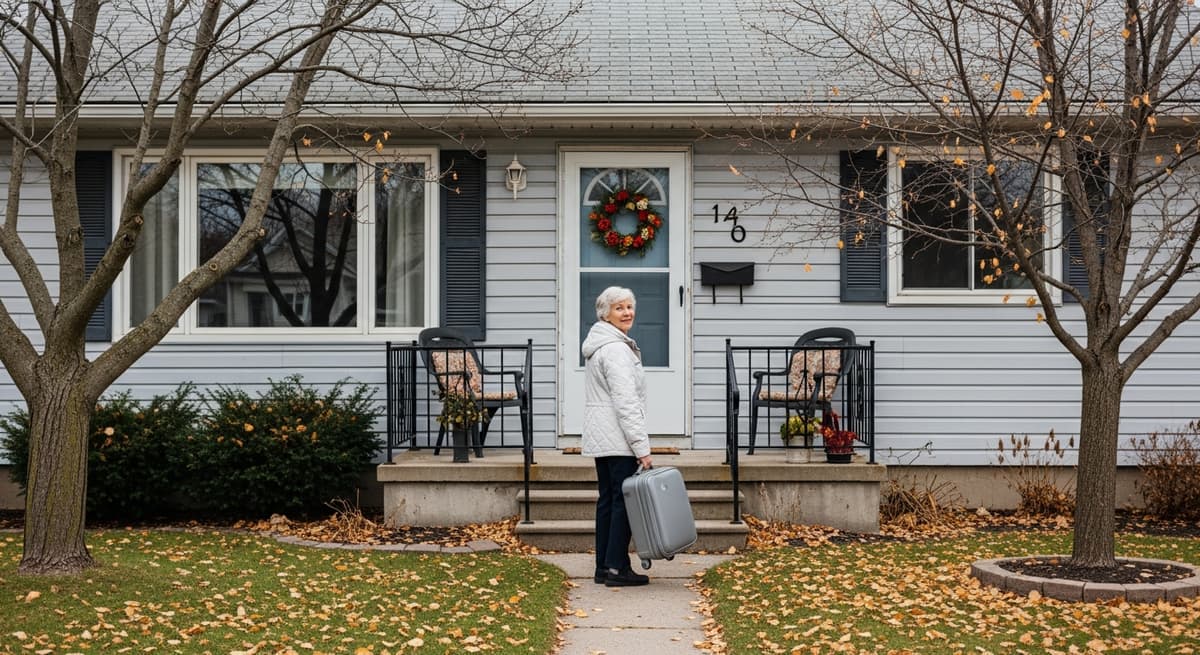
The short answer is yes — Canadian snowbirds can absolutely hold a reverse mortgage. But there are specific rules about how long you can be away, what you must do before you leave, and what happens if your travel plans change. This guide covers every detail.
The Principal Residence Rule: The Single Most Important Requirement
The foundation of every reverse mortgage in Canada is the principal residence requirement. Both HomeEquity Bank (CHIP) and Equitable Bank require that the mortgaged property be your primary home — the place where you live the majority of the year.
In practical terms, this means:
| Requirement | Details |
|---|---|
| Minimum time in Canada | 6 months + 1 day per year (183 days) |
| Maximum time abroad | Up to 6 months (182 days) per year |
| Property must remain | Your principal residence on title |
| You must return to | The same property each year |
| CRA residency status | Must remain a Canadian tax resident |
According to the Canada Revenue Agency (CRA), your principal residence is the home where you "ordinarily reside" and maintain your primary residential ties. Snowbirds who spend the winter months in a southern destination and return to their Ontario home for the remaining months satisfy this requirement — provided they do not exceed the time limits.
This rule is not unique to reverse mortgages. It applies to most home equity lending products in Canada. But with a reverse mortgage, the stakes are higher because there are no monthly payments — the lender's security depends entirely on you maintaining the property as your home.
For full details on all qualification criteria, see our complete eligibility guide.
How Lenders Monitor the Principal Residence Requirement

Each reverse mortgage lender in Canada has slightly different policies on borrower absences. Here is what you need to know about the major lenders:
HomeEquity Bank (CHIP Reverse Mortgage)
HomeEquity Bank requires that borrowers occupy the property as their principal residence. Their mortgage agreement includes a covenant that you will maintain the home and keep it insured. If you plan to be away for an extended period (generally 60+ consecutive days), you should notify them in writing.
Equitable Bank
Equitable Bank's reverse mortgage product has similar principal residence requirements. They require continuous occupancy as your primary home and expect notification if you will be absent for a prolonged period.
Bloom Financial
Bloom Financial also requires principal residence status. Their underwriting guidelines assess whether the applicant genuinely lives in the home full-time when they are in Canada.
Notification Comparison by Lender
| Lender | Notification Required | Extended Absence Limit | Insurance Proof Required |
|---|---|---|---|
| HomeEquity Bank (CHIP) | Yes, for 60+ days away | 6 months maximum | Yes, annually |
| Equitable Bank | Yes, for extended travel | 6 months maximum | Yes, annually |
| Bloom Financial | Yes, for prolonged absence | 6 months maximum | Yes, annually |
The key takeaway: every lender allows seasonal travel, but every lender also expects you to remain a full-time Canadian resident whose primary home is the mortgaged property.
Insurance Requirements While You Are Away
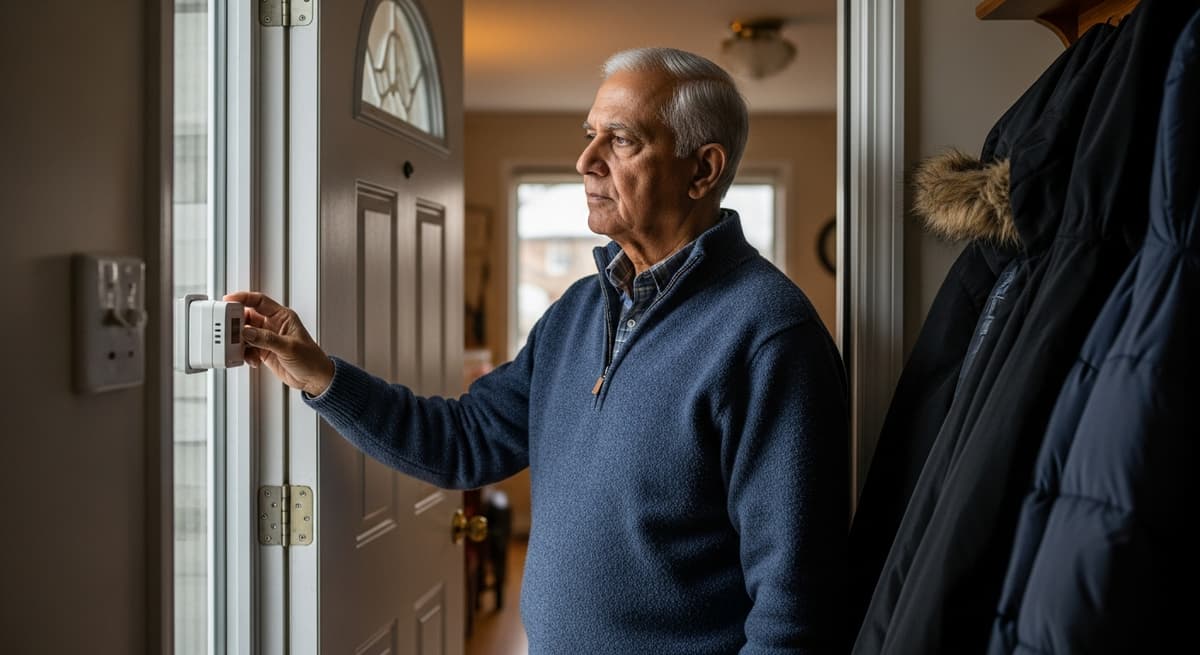
One of the biggest risks snowbirds face — with or without a reverse mortgage — is home insurance. Most Ontario home insurance policies contain a vacancy clause that voids coverage if your home is unoccupied for more than 30 consecutive days without notification.
Since your reverse mortgage lender requires you to maintain valid property insurance at all times, this is a critical issue.
What You Must Do Before Leaving
| Task | Why It Matters |
|---|---|
| Notify your home insurer | Prevents policy cancellation due to vacancy clause |
| Arrange regular home checks | Most insurers require a visit every 48–72 hours |
| Winterize the property | Shut off water or maintain heating to prevent burst pipes |
| Set a thermostat schedule | Keep the home at a minimum temperature (usually 15°C / 59°F) |
| Provide a trusted contact | Someone who can respond to emergencies while you are away |
According to the Financial Services Regulatory Authority of Ontario (FSRAO), homeowners have a responsibility to understand the terms of their insurance policies, including vacancy limitations. Failing to comply with these terms can result in a denied claim — which in turn puts your reverse mortgage in breach of its insurance covenant.
The Cost of Snowbird Insurance
Many Ontario snowbirds purchase a seasonal vacancy endorsement on their home insurance policy. This typically costs $100–$300 per year and extends coverage during your absence, provided you meet the insurer's conditions (regular home checks, winterization, etc.).
Rick Sekhon Reverse Mortgages recommends discussing your travel plans with both your insurer and your reverse mortgage lender before your first trip south. Getting it right from the start avoids complications later.
Property Maintenance Obligations
Your reverse mortgage agreement includes a covenant to keep the property in good repair. This does not pause while you are in Florida or Arizona. As a snowbird, you must ensure:
✓ Snow and ice removal from walkways and driveways ✓ Lawn care and exterior maintenance in warmer months ✓ Plumbing and heating systems remain functional ✓ No unauthorized tenants occupy the home while you are away ✓ The property remains insured and in insurable condition
✗ You cannot leave the home completely unattended for months ✗ You cannot rent out the property as a short-term rental while away ✗ You cannot allow the home to fall into disrepair during your absence
Most snowbirds arrange for a trusted family member, neighbour, or paid property management service to handle these responsibilities. The cost is modest — typically $100–$200 per month for basic property checking in most Ontario communities.
Impact on OAS, GIS, and Government Benefits While Abroad
A common concern for snowbirds considering a reverse mortgage is whether their time abroad affects government benefits. The good news: reverse mortgage proceeds are tax-free and do not count as income, regardless of where you are physically located when you receive them.
However, your time outside Canada can affect other benefits:
OAS and GIS Rules for Snowbirds
| Benefit | Rule for Snowbirds |
|---|---|
| Old Age Security (OAS) | Payable worldwide if you lived in Canada 20+ years after age 18. Shorter residency may require 6-month presence. |
| Guaranteed Income Supplement (GIS) | Suspended after 6 months outside Canada. Resumes when you return. |
| Ontario Health Insurance (OHIP) | Must be in Ontario 153 days per 12-month period. Trips abroad limited to 212 days total. |
| Provincial drug benefits (ODB) | Requires OHIP eligibility — same residency rules apply. |
According to Service Canada, GIS recipients who leave Canada for more than six months in a calendar year will have their payments suspended. This is independent of your reverse mortgage — it applies to all Canadian seniors who travel abroad for extended periods. But it underscores why staying within the 6-month travel window is important for your overall financial plan.
Since reverse mortgage funds are not taxable income, they do not trigger the OAS clawback or affect your GIS calculation. This is one of the key advantages for snowbirds who need supplemental cash flow. Learn more about how a reverse mortgage supports retirement cash flow and aging in place.
Practical Tips for Snowbirds With a Reverse Mortgage
After helping hundreds of Ontario snowbirds navigate the reverse mortgage process, Rick Sekhon recommends these best practices:
Before You Apply
- Confirm your travel history. Lenders may ask how long you typically spend outside Canada. Be honest — your pattern must show 6+ months per year in your Ontario home.
- Review your insurance policy. Ensure your current home insurance accommodates extended absences or add a vacancy endorsement.
- Understand lender notification rules. Ask your lender during the application process exactly what they require for seasonal travel.
While You Hold a Reverse Mortgage
- Keep a travel log. Document your departure and return dates each year. This protects you if a lender or government agency ever questions your residency.
- Notify your lender annually. Even if not strictly required, a brief written notice of your travel dates builds a positive relationship and avoids surprises.
- Maintain a Canadian mailing address. All reverse mortgage correspondence should go to your Ontario home. Do not redirect mail to a U.S. address.
- Arrange property checks. Hire a service or ask a neighbour to check the home every 48–72 hours and keep a written log.
- Keep your OHIP valid. If you lose OHIP coverage due to extended absence, it can trigger a cascade of problems with provincial benefits.
What to Do If Your Plans Change
If a health issue, family situation, or personal preference means you need to spend more than six months outside Canada in a given year, contact your lender immediately. Options may include:
- Requesting a one-time exception with documentation
- Adjusting your travel schedule for the following year
- Discussing repayment options if you are permanently relocating
The worst approach is to say nothing. Lenders are far more accommodating when borrowers communicate proactively.
Can You Use Reverse Mortgage Funds to Finance Your Snowbird Lifestyle?
Absolutely. There are no restrictions on how you use reverse mortgage proceeds. Many Ontario snowbirds use their funds for:
✓ Rental costs for a seasonal home in Florida, Arizona, or the Caribbean ✓ Travel insurance premiums (which increase significantly after age 65) ✓ Vehicle costs for a car kept in the U.S. ✓ Day-to-day living expenses while abroad ✓ Property taxes and maintenance on their Ontario home while away
This flexibility is one of the reasons a reverse mortgage is particularly well-suited to the snowbird lifestyle. Unlike a HELOC — which requires monthly interest payments that can strain a fixed retirement income — a reverse mortgage has no monthly payments and lets you use the funds however you choose.
You can also explore how other retirees are using reverse mortgages to supplement CPP and OAS or to cover healthcare costs in retirement.
Frequently Asked Questions
Can I get a reverse mortgage if I spend 5 months per year in Florida?
Yes. As long as you spend at least 6 months and 1 day (183 days) per year living in your Ontario home, you satisfy the principal residence requirement. Five months in Florida is well within the allowable limit.
What happens if I stay in the U.S. longer than 6 months in one year?
You risk breaching the principal residence covenant of your reverse mortgage agreement. You may also lose GIS benefits and OHIP coverage. Contact your lender immediately if this situation arises — a one-time exception may be possible with proper documentation.
Do I need to tell my reverse mortgage lender every time I travel?
For short trips (a few weeks), no. For seasonal absences of 60+ days, yes — most lenders expect written notification. Rick Sekhon recommends notifying your lender annually as a best practice, even if your absence is under 60 days.
Will my reverse mortgage affect my U.S. tax obligations?
Reverse mortgage proceeds are not income and are not taxable in Canada or the United States. However, if you spend more than 182 days in the U.S. in a calendar year, you may trigger IRS residency rules under the Substantial Presence Test. Consult a cross-border tax professional.
Can my spouse continue the reverse mortgage if I pass away while we are in the U.S.?
Yes. If both spouses are registered as co-borrowers on the reverse mortgage, the surviving spouse can continue living in the home and maintaining the mortgage regardless of where the first spouse passed away. The mortgage only becomes due when the last surviving borrower permanently leaves the home.
Does renting out my Ontario home while I am away affect my reverse mortgage?
Yes — this would breach the principal residence requirement. Your reverse mortgage agreement prohibits renting out the property. The home must remain your personal residence, not an income-generating rental, while you are away.
Ready to explore whether a reverse mortgage fits your snowbird lifestyle?
Get your free Ontario Reverse Mortgage Guide →
This content is for illustrative purposes only. Rates may vary. Call Rick Sekhon for the best rates and more information.
Ready to Learn More?
Find out exactly how much you could unlock from your home — free and no obligation.
Related Articles
Reverse Mortgage Eligibility in Ontario: Complete 2026 Guide
Everything Ontario homeowners need to know about qualifying for a reverse mortgage in 2026. Covers age requirements, home equity, property types, and the application process.
Read →Reverse Mortgage Tax Implications in Canada: What Ontario Homeowners Need to Know
Are reverse mortgage proceeds taxable in Canada? How do they affect OAS, GIS, and CPP? A complete guide to the tax implications of reverse mortgages for Ontario seniors.
Read →Reverse Mortgage for Aging in Place With Fibromyalgia: Home Modifications for Invisible Illness
Fund home modifications for aging with fibromyalgia. Reverse mortgage enables accessible design for pain management, energy conservation, and quality of life.
Read →