
Reverse Mortgage for Cottage Country Retirees in Ontario: What to Know
Ontario retirees who live full-time in cottage country — Muskoka, Kawartha Lakes, Prince Edward County — can use a reverse mortgage on their primary residence. Learn how it works.
You sold the house in the city years ago. The cottage on the lake is not your getaway anymore — it is your home. Thousands of Ontario retirees have made this transition, trading suburban commutes for year-round life in Muskoka, Kawartha Lakes, Haliburton, Prince Edward County, and the Georgian Bay corridor. If you are one of them, you may be sitting on significant home equity with limited options to access it — and wondering whether a reverse mortgage is available to you.
This article is for educational purposes only and does not constitute financial advice.
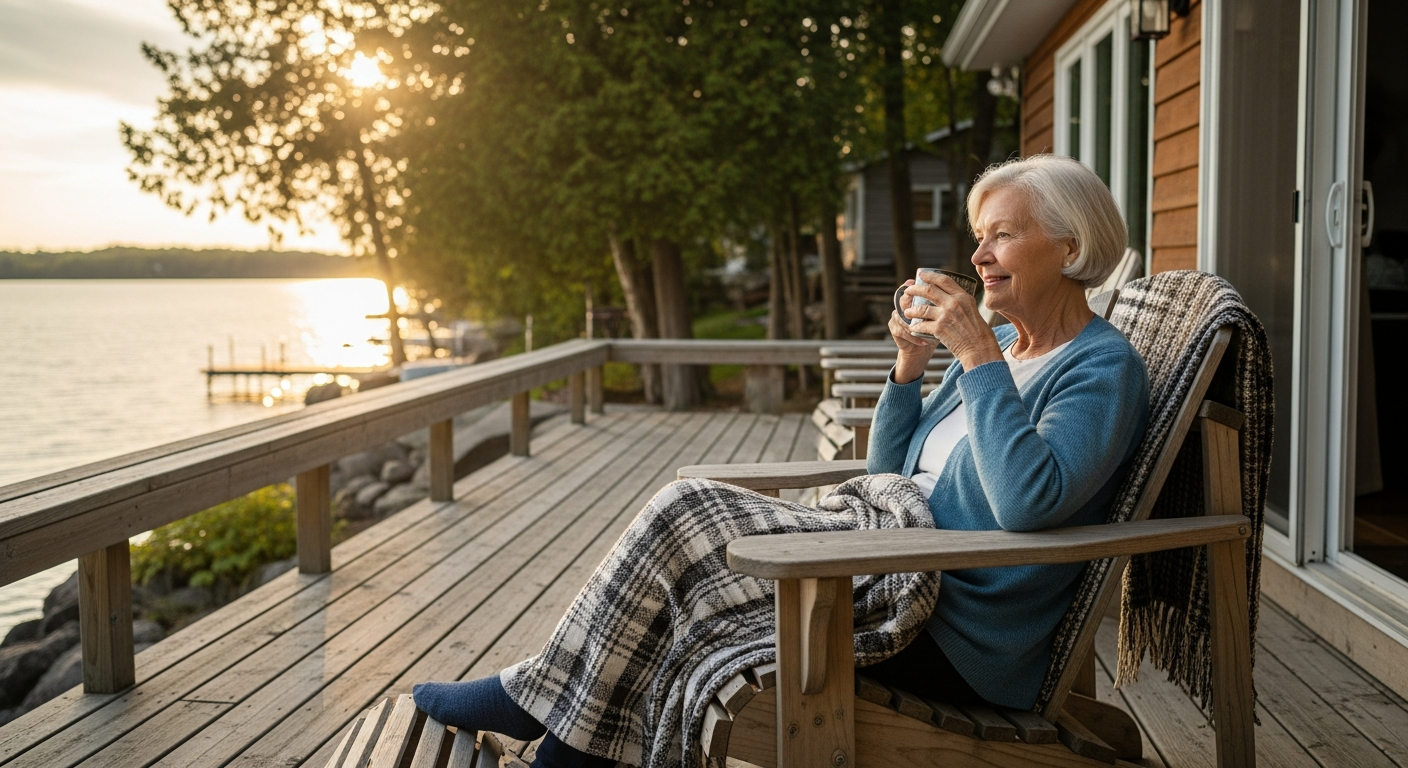
The short answer: yes, a reverse mortgage can work on a cottage-country property — but only if it is genuinely your principal residence. This article is distinct from our guide on vacation properties and cottages, which covers seasonal-use properties that do not qualify. This guide is specifically for retirees who have made the permanent move and live in cottage country full-time.
The Cottage-to-Home Transition
Ontario's cottage country regions have seen a dramatic demographic shift over the past decade. What were once seasonal communities are now home to growing populations of year-round retirees. Municipal infrastructure in towns like Gravenhurst, Bracebridge, Huntsville, Bobcaygeon, and Picton has expanded to serve permanent residents — including upgraded roads, expanded healthcare services, and year-round commercial activity.
For many retirees, the transition happened gradually. Weekend visits became month-long stays. Renovations added insulation, upgraded the furnace, and connected to municipal water. Eventually, the city house sold and the cottage became home.
The challenge is that while your lifestyle changed, the financial world may still view your property through a "cottage" lens. Reverse mortgage lenders need to see it as a legitimate primary residence before they will lend against it.
What Lenders Look For in a Cottage-Country Primary Residence
All four Canadian reverse mortgage lenders — HomeEquity Bank (CHIP), Equitable Bank, Bloom Financial, and Home Trust — require that the property securing the loan be your principal residence. For cottage-country properties, lenders scrutinize several additional factors beyond the standard requirements.
| Requirement | What Lenders Want to See | Common Cottage-Country Challenge |
|---|---|---|
| Year-round access | Maintained, plowed road accessible 12 months | Some properties on seasonal roads or private lanes |
| Heating system | Permanent, reliable heating (forced air, radiant, etc.) | Older cottages may rely on wood stoves only |
| Water supply | Reliable year-round water (municipal or drilled well) | Shallow or dug wells may freeze or run dry |
| Sewage system | Compliant septic or municipal sewer connection | Aging septic systems or holding tanks |
| Construction quality | Permanent construction, full foundation | Some cottages built on posts, piers, or without basements |
| Insulation and weatherproofing | Suitable for year-round habitation | Seasonal-grade construction may not meet standards |
| Insurance classification | Primary dwelling policy (not seasonal) | Some insurers still classify as seasonal |
| Municipal zoning | Zoned for year-round residential use | Some lakefront properties zoned seasonal residential |
If your property checks all of these boxes, you are in a strong position. If it falls short on one or two items, there may still be a path forward — but it will require documentation and possibly upgrades.
Proving Your Cottage Is Your Principal Residence
Lenders do not simply take your word for it. You will need to demonstrate that this is where you truly live. The documentation typically required includes:
- OHIP card listing the cottage-country address
- CRA tax returns filed with the cottage-country address
- Driver's licence showing the current address
- Voter registration at the property
- Utility bills showing year-round consumption (hydro, gas, water)
- Property insurance classified as a primary dwelling — not seasonal or secondary
If you still have a second property — perhaps a condo in the city — lenders will want to understand the arrangement. Having a secondary property is not disqualifying, but the cottage-country home must clearly be your primary one.
Tip: If you recently transitioned to full-time living, update all government documents and insurance policies before applying for a reverse mortgage. Inconsistencies between your driver's licence, OHIP card, and tax filings will slow the process.
Regional Considerations Across Cottage Country
Not all cottage-country regions are created equal from a lending perspective. Here is how the major regions compare.
Muskoka (Gravenhurst, Bracebridge, Huntsville, Lake of Bays)
Muskoka is Ontario's most established cottage-country market, with strong year-round infrastructure and high property values. Homes on larger lakes like Muskoka, Rosseau, and Joseph tend to appraise well. Lenders are generally familiar with the area, which works in your favour. Properties on smaller, more remote lakes with private roads may face more scrutiny.
Kawartha Lakes (Bobcaygeon, Fenelon Falls, Lindsay)
The Kawarthas offer a mix of waterfront and rural properties at more moderate price points than Muskoka. Year-round infrastructure is well-established in most areas. Properties closer to Lindsay and Peterborough benefit from proximity to urban services. More remote lakefront properties may require additional documentation about road access and servicing.
Prince Edward County (Picton, Wellington, Bloomfield)
The County has transformed into a desirable year-round community with a strong real estate market. Most properties in the core towns are well-serviced and lender-friendly. Rural agricultural properties or those on the more remote stretches of shoreline may require closer examination.
Haliburton Highlands
Property values in Haliburton tend to be lower than Muskoka, which can affect the amount you qualify for. Some properties are on seasonal roads or lack municipal services. If your Haliburton property has been fully upgraded for year-round living, it can still qualify — but expect the lender to dig deeper.
Georgian Bay (Collingwood, Wasaga Beach, Meaford)
This corridor benefits from strong year-round populations and established infrastructure. Properties in Collingwood and Wasaga Beach are particularly well-positioned for reverse mortgage lending due to consistent demand and good servicing.
How Much Can Cottage-Country Retirees Access?
The amount you can borrow depends on your age, your spouse's age (if applicable), and your property's appraised value. Cottage-country properties may receive a slightly lower loan-to-value (LTV) ratio than comparable urban properties, depending on the lender and specific location.
| Factor | Urban Property | Cottage-Country Primary Residence |
|---|---|---|
| Typical LTV range | Up to 55% (age-dependent) | Up to 45-50% (age-dependent, location-dependent) |
| Appraisal complexity | Straightforward | May require rural-specialist appraiser |
| Comparable sales availability | Abundant | May be limited in smaller markets |
| Processing time | Standard | May take slightly longer |
One important consideration: cottage-country property values can be more volatile than urban markets. The pandemic-era price surge in recreational regions was followed by corrections that exceeded those in cities like Toronto and Ottawa. Lenders account for this variability when setting LTV ratios. This means you may qualify for a smaller percentage of your home's appraised value than you would on an urban property of the same dollar amount.
Rick Sekhon works with cottage-country clients across Ontario and can provide a realistic estimate of what you may qualify for based on your specific property and location. Rick understands the nuances of rural and recreational market appraisals and can guide you to the lender most likely to offer favourable terms for your situation.
The Appraisal Process for Cottage-Country Properties
The appraisal is often the most critical step for cottage-country reverse mortgage applications. The appraiser must confirm that your property is suitable as a primary residence and assign a defensible market value.
For cottage-country properties, expect the appraiser to pay close attention to:
- Structural integrity and construction type. Is the home built on a permanent foundation? Is the construction suitable for year-round occupancy?
- Mechanical systems. Is the heating system adequate? Is the plumbing winterized or designed for year-round use?
- Septic compliance. Ontario's septic regulations are strict. An outdated or non-compliant system can be a deal-breaker.
- Road access. Can emergency vehicles access the property year-round?
- Comparable sales. The appraiser needs recent sales of similar properties to support the value. In smaller cottage markets, finding true comparables can be challenging.
If you anticipate any issues with the appraisal, consider addressing them before applying. Upgrading an aging septic system or ensuring your insurance reflects primary-residence status can prevent delays.
For more on the appraisal process, see our detailed guide on reverse mortgage appraisals in Ontario.
Drawbacks and Considerations
A reverse mortgage is not the right fit for every cottage-country retiree. Consider these factors carefully:
- Compound interest. Interest on a reverse mortgage accrues over time and is added to the loan balance. The longer you hold the loan, the more equity is consumed. This is the most significant financial trade-off, and it applies regardless of where your property is located.
- Lower LTV in rural areas. You may qualify for less than you would on an equivalent urban property, which could limit the usefulness of the product if your needs are substantial.
- Property maintenance obligations. You must maintain the property, pay property taxes, and keep adequate insurance. Failing to meet these conditions can trigger default. In cottage country, maintenance costs — including dock repair, shoreline management, and winter road clearing — can be higher than urban averages.
- Market risk. If cottage-country property values decline, your equity position shrinks faster. The no-negative-equity guarantee protects you from owing more than the home is worth, but it does not prevent equity erosion.
- Limited lender options. Not all lenders are equally comfortable with cottage-country properties. You may have fewer choices, which limits your ability to shop for the best terms.
FAQ
Can I get a reverse mortgage on a cottage in Ontario? Only if the cottage is your full-time, year-round principal residence. Seasonal or vacation-use cottages do not qualify. You must demonstrate permanent occupancy through government ID, tax filings, insurance, and utility records.
What if my cottage is on a seasonal road? Properties on seasonal roads that are not maintained in winter are very difficult to qualify. If you can demonstrate that the road is privately maintained year-round and that you have reliable winter access, some lenders may still consider it — but it adds complexity and risk.
Do Muskoka properties qualify for reverse mortgages? Yes, many Muskoka properties qualify — provided they are the borrower's principal residence, meet construction and servicing standards, and are occupied year-round. Properties on major lakes in established communities are the strongest candidates.
Will I get less money than someone with an urban home of the same value? Potentially. Lenders may apply a slightly lower LTV ratio to cottage-country properties due to market volatility and limited comparable sales. The exact amount depends on your age, location, and the specific lender. Rick Sekhon can run the numbers for your situation.
What happens if I need to move to a care facility later? The same rules apply as for any reverse mortgage. A permanent move to long-term care triggers repayment, typically within 12 months. You or your family would sell the property or arrange other repayment. Learn more in our guide on reverse mortgages and nursing homes.
Speak to a licensed mortgage professional. Independent legal advice is required before closing a reverse mortgage in Ontario.
Get your free Ontario Reverse Mortgage Guide →
This content is for illustrative purposes only. Rates may vary. Call Rick Sekhon for the best rates and more information.
Ready to Learn More?
Find out exactly how much you could unlock from your home — free and no obligation.
Related Articles
Reverse Mortgage Barrie & Muskoka: 2026 Guide
Barrie and Muskoka homeowners: learn how reverse mortgages work for your area. Property values, cottage considerations, and lender options.
Read →Reverse Mortgage on a Cottage or Vacation Property in Ontario (2026)
Can you get a reverse mortgage on a cottage in Ontario? Learn why vacation properties don't qualify, plus strategies to unlock equity using your primary home.
Read →Reverse Mortgage on Rural Property in Ontario: What You Need to Know
Can you get a reverse mortgage on rural Ontario property? Learn about acreage limits, well and septic requirements, LTV adjustments, and which lenders cover rural areas.
Read →