
Reverse Mortgage and Ontario Rent Control Changes: Strategic Housing Transitions
Ontario's rent control rules affect renters at 60+. Use a reverse mortgage to transition from renting to owning—or to hold your home if prices spike and you're tempted to sell.
You're 58, renting in Ontario, and nervous about your housing future. Rent increases are hitting harder each year. Landlords are finding creative ways to bypass rent control (renovictions, N-type notices, conversions to condos). You've owned homes before, downsized into a rental for simplicity, but now the calculus has changed. Should you buy again before you're 55? Or, if you already own, should you protect your home as housing costs surge? A reverse mortgage can help either transition—funding a purchase when you're 55+, or preventing a forced sale if you're homeowned but house-poor.
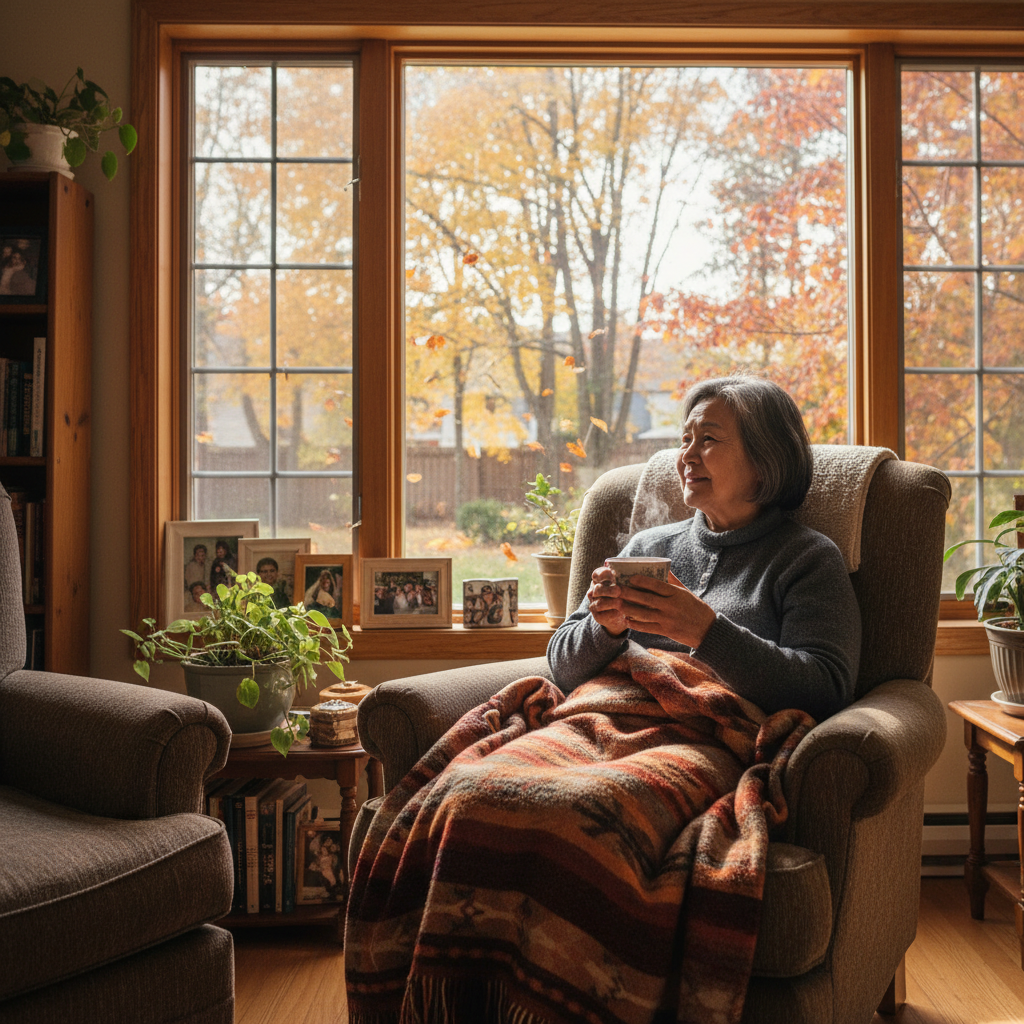
Ontario's Rent Control Rules: What Changed, What Stayed
Ontario's housing landscape has shifted dramatically. Here's what renters and homeowners should understand:
Current Ontario Rent Control Rules (2026)
| Rule | What It Means | Implication for Renters 60+ |
|---|---|---|
| Annual increase cap: 2.5% (or CPI if higher, max ~3–4%) | Rent can only increase by this amount/year | Modest protection, but still adds up over years |
| Exemption: Units occupied before 1991 | Rent control applies to ALL units, regardless of age | MORE units are protected than before |
| Exemption: "New" rental buildings (< 5 years) | No rent control; landlord sets any price | New purpose-built rentals are expensive |
| Renoviction protection: N4 notice for renovation requires "substantial"repairs, CPI increase limit post-renovation | Some protection against abuse | Landlords still find workarounds |
| Conversion to condo: Requires 120-day notice + relocation assistance fund | Tenants have time to find new housing | But market conditions may force downgrade |
Bottom line: Ontario has rent control, but it's not bulletproof. Landlords have workarounds. Renters at 60+ face two risks:
- Steady rent increases (~2.5%/year = 27.5% over 10 years)
- Unexpected displacement (unit conversion, major renovations, N-type notices)
The Rent vs. Buy Decision at 60+
Many renters at 60+ haven't owned in 10–20 years. They downsized to rentals to simplify life. But now, housing costs have reshaped the calculus:
| Scenario | Rent (Age 60–80) | Own (Age 60–80) | Better For Whom? |
|---|---|---|---|
| Annual housing cost (2-BR apartment) | $25,000–$35,000 initially, increasing 2.5%/year | $15,000–$20,000 (property tax, insurance, maintenance) | Own appears cheaper long-term |
| Upfront down payment required | $0 | $50,000–$100,000 (if buying at 60) | Renting costs less upfront |
| Security/permanence | Vulnerable to displacement after 2026 | Secure; can age in place; can be bequeathed | Owning more stable long-term |
| Flexibility | Can downsize/move easily | Selling has costs; moving is complex at 75+ | Renting more flexible, but risky |
| Wealth building | None; rent is gone | Home appreciation + equity (3–4%/year) | Owning builds intergenerational wealth |
For many Ontario renters at 60+, buying (if possible) becomes attractive. But traditional mortgages are difficult at 60+. That's where reverse mortgages enter.
According to CMHC (Canada Mortgage and Housing Corporation), an estimated 1.9 million Canadian renters are at risk of housing insecurity due to rising rents and limited affordable stock. Renters aged 55+ face the largest percentage rent increases relative to fixed incomes.
Using a Reverse Mortgage to Buy Your First Home at 60+
If you're renting and want to own, a reverse mortgage can enable this:
Scenario: Transition from Renting to Owning
Margaret, 62, has been renting in Toronto for 15 years. Current rent: $2,200/month ($26,400/year). She wants to buy a modest condo (~$500,000) to stop escalating rent payments and build equity.
Traditional mortgage at 62: Difficult. Most lenders want applicants under 75 and have strict income/debt ratios.
Reverse mortgage solution:
- Margaret has liquid assets: $200,000 (RRIF, TFSA, savings)
- She targets a $400,000 property (modest condo)
- Down payment: $100,000 from savings (25%)
- Remaining mortgage: $300,000
- Uses a reverse mortgage for $150,000 (instead of traditional mortgage for $300,000)
Financing structure:
- $100,000 down payment (Margaret's savings)
- $150,000 traditional insured mortgage (rental income or modest qualification)
- $150,000 reverse mortgage (no income/credit verification)
- Total: $400,000
Now Margaret owns. Mortgage payments ($800/month for traditional) + RM interest ($660/month) + property tax/insurance (~$400/month) = ~$1,860/month. Her previous rent: $2,200/month. Saving $340/month + building equity.
Within 10–15 years, the traditional mortgage is paid off. The RM balance remains but is manageable against home equity appreciation. Margaret has transitioned from renting to owning, reduced housing costs, and secured her housing future.
Protecting Your Owned Home: When Rent-like Costs Threaten Ownership
Conversely, if you already own a home in Ontario but face pressure to sell (property taxes rising, maintenance costs climbing, downsizing pressure), a reverse mortgage can keep you in place.
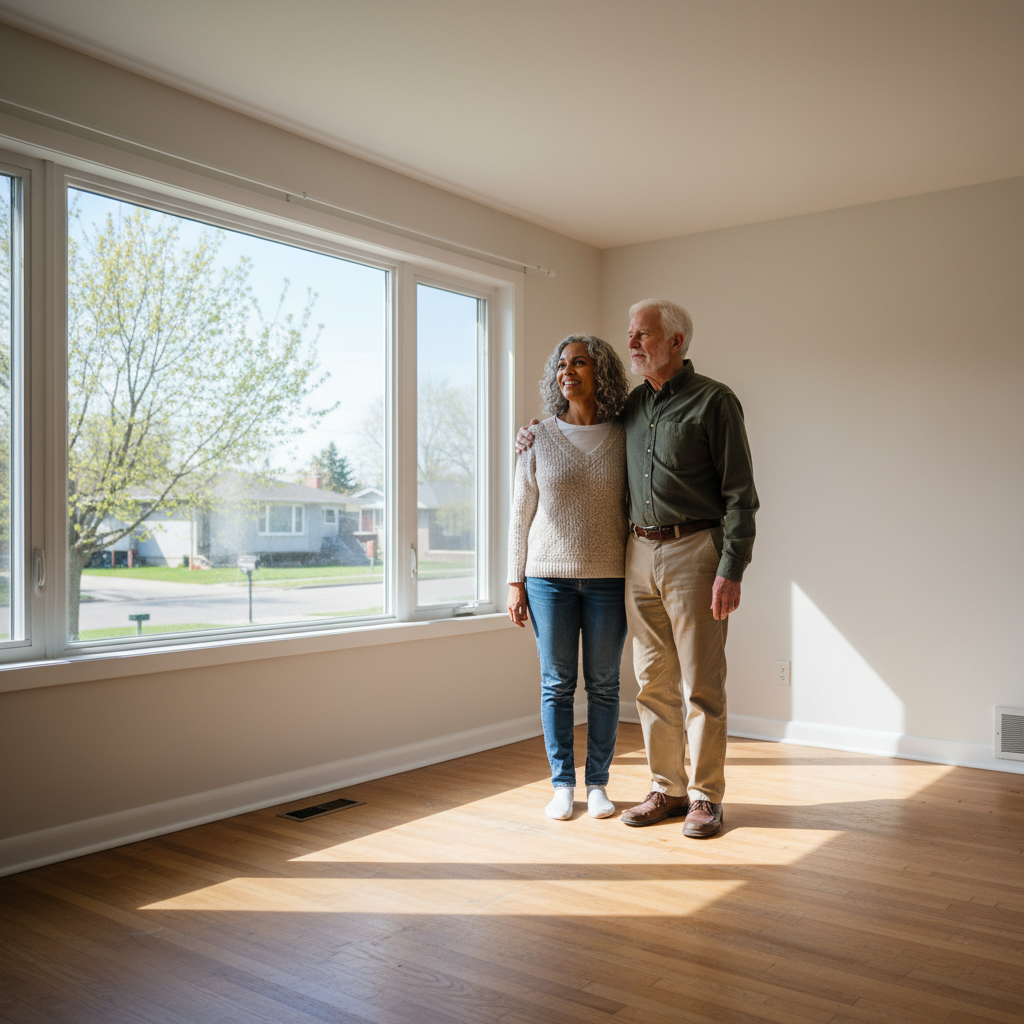
Scenario: The Pressure to Downsize
Ron, 74, owns a 4-bedroom home in a desirable Toronto neighborhood. Home value: $1.2 million. But property taxes have tripled in 10 years ($8,000→$15,000/year). Maintenance costs: $10,000+/year. His CPP: $28,000/year. OAS: $18,000/year. Total fixed income: $46,000/year.
Housing costs alone: $15,000 property tax + $10,000 maintenance + $8,000 utilities/insurance = $33,000/year. He's spending 72% of income on housing.
Ron's adult children suggest he downsize: "Sell the home, move to a smaller place, free up equity, reduce costs."
But Ron doesn't want to move. This is his home of 40 years. His grandchildren love visiting. His community is his life.
Reverse mortgage solution: Ron accesses a $200,000 line of credit via reverse mortgage. This buffer:
- Covers 6 years of property tax increases without strain
- Funds major repairs (roof, HVAC) without forced home sale
- Lets him remain in place while his children sort out long-term care planning
By the time the $200,000 is depleted, Ron is 80+. At that point, if a move makes sense (health, care needs), he'll have had years to plan—not forced a sudden crisis sale.
According to Statistics Canada, property tax increases in Ontario have averaged 3–4% annually in many regions, far outpacing inflation. Seniors on fixed incomes feel this pressure acutely. A reverse mortgage provides a buffer.
The Psychological Factor: Housing Security in Retirement
There's a mental health dimension that shouldn't be overlooked:
- Renters aged 60+: Anxious about displacement, increasing rents, lease non-renewal. Live in short-term uncertainty.
- Homeowners aged 60+: Can age in place, maintain independence, control housing decisions. Psychologically more secure.
Studies show that housing stability directly correlates with health outcomes in older adults. Forced moves, evictions, or housing transitions are associated with increased depression, medical emergencies, and mortality.
A reverse mortgage's role: It extends housing stability for homeowners or enables ownership for renters—both contributing to psychological wellbeing and health.
Tax Considerations: Renting vs. Owning for Ontario Seniors
| Tax Implication | Renting | Owning | Reverse Mortgage Impact |
|---|---|---|---|
| Principal residence exemption | N/A | Home sale is capital-gains exempt | RM doesn't trigger tax; home remains principal residence |
| Property tax credit | Renters: Ontario Residential Tenancy Tax Credit (~$300–$400 if low-income) | Homeowners: Municipal property tax bills, no direct credit | RM doesn't affect eligibility for renter credits (if you still qualify) |
| OAS/GIS clawback | Rent paid is not deductible; may affect low-income benefit eligibility | Homeownership costs not deductible; affects same way as rent | RM proceeds are not income; don't affect OAS/GIS |
| Landlord rental deduction | N/A (if renting to others, you can deduct expenses) | If you rent out part of home, can deduct expenses | RM interest NOT deductible as business expense (home is principal residence) |
Key insight: From a tax perspective, renting vs. owning doesn't dramatically differ for seniors. The advantage of owning comes from equity building, not tax savings.
Planning Your Housing Transition: Steps to Take
If You're Renting and Want to Own
- Assess affordability: Can you afford the down payment + RM costs vs. rent?
- Get pre-approved: Apply for both a traditional mortgage and reverse mortgage (different processes, timelines)
- Target the right property: Modest condo or townhouse (easier to maintain at 60+; lower property tax than large homes)
- Structure the financing: Down payment from savings + traditional mortgage + reverse mortgage (blended approach)
- Plan long-term: Ensure the RM balance is manageable against home equity over 15–20 years
If You're Homeowned and Facing Pressure to Sell
- Clarify your intent: Do you want to stay, or are you considering selling for financial reasons?
- Calculate true housing costs: Property tax, insurance, maintenance, utilities—what's the annual total?
- Compare to alternatives: What would smaller housing cost? Would downsizing actually save money after transaction costs?
- Explore RM as buffer: If you want to stay, access a RM line of credit to cover cost spikes and major repairs
- Plan succession: What do you want for this home after you pass? Discuss with family and estate lawyer
Frequently Asked Questions
Is it possible to get a traditional mortgage AND a reverse mortgage on the same property?
Yes, in some cases. You'd typically have the traditional mortgage registered in first position (priority) and the reverse mortgage in second position. Lenders are cautious about this structure, but it's done. Consult a reverse mortgage specialist about feasibility.
If I buy a home with a reverse mortgage at 62, can I sell it at 70 without penalty?
Yes. There's no restriction on selling a property with an outstanding reverse mortgage. When you sell, the reverse mortgage is repaid from sale proceeds (comes out before you receive proceeds). Any remaining sale proceeds are yours—no penalty.
Will buying a home at 62 with a reverse mortgage affect my CPP or OAS?
No. Home ownership doesn't change CPP payments. OAS is affected by net income (above ~$86,000 in 2026), but homeownership itself doesn't trigger income—only rental income would, if you rented out part of the home.
What if I rent out part of my home (like a basement) after getting a reverse mortgage?
You can do this. Rental income is taxable and is reported on your tax return. However, the reverse mortgage interest is NOT deductible (the home is your principal residence, not a rental property). The RM interest would be paid from your own cash flow, not tax-deducted.
Can I use a reverse mortgage to renovate a rental property I own?
No. Reverse mortgages are only available on your principal residence (the home you live in). Investment properties don't qualify. You'd need a different financing approach (traditional mortgage, HELOC, etc.) for rental property renovations.
The Bottom Line
Ontario's housing landscape has shifted. Renters face escalating costs and displacement risk. Homeowners face property tax and maintenance inflation. A reverse mortgage provides a tool to either transition from renting to owning or to remain stably housed as costs rise.
Whether you're 55 and just turned 55 and considering buying, or 72 and determined to stay in your home, a reverse mortgage can enable your housing goals without forcing you into traditional debt or forced downsizing.
Ready to Learn More?
Find out exactly how much you could unlock from your home — free and no obligation.
Related Articles
Reverse Mortgage to Prevent Forced Home Sale: When Staying Home Matters Most
Facing financial pressure to sell your home? Learn how a reverse mortgage can help you stay in your Ontario home instead of forced selling.
Read →Reverse Mortgage vs Downsizing: Which Is Right for You?
Compare reverse mortgages and downsizing as strategies to access home equity. Explore pros, cons, and scenarios for each option.
Read →Reverse Mortgage to Hire a Professional Palliative Care Transition Coordinator
Before hospice, a care transition coordinator helps plan the shift from treatment to comfort care. A reverse mortgage funds this crucial professional guide.
Read →