
Reverse Mortgage for Medical Bills and Healthcare Costs in Canada
Reverse mortgage medical bills healthcare debt Canada: fund dental, prescriptions, mobility aids, and private care not covered by OHIP. Real cost data inside.
Your dentist says you need two implants — $9,000. Your ophthalmologist recommends cataract surgery with premium lenses — $4,500 out of pocket. Your doctor wants you on a medication that costs $380 per month and is not on the Ontario Drug Benefit formulary. Where does a retired Ontario homeowner on CPP and OAS find $20,000+ for healthcare that the province will not cover? For a growing number of Canadian seniors, the answer is a reverse mortgage — using home equity to fund the healthcare costs that our public system leaves behind.
The Gap Between What OHIP Covers and What Seniors Need
Canada's universal healthcare system covers physician visits, hospital care, and medically necessary procedures. But the definition of "medically necessary" has significant gaps for seniors, and those gaps translate directly into out-of-pocket costs.
According to the Canadian Institute for Health Information (CIHI), approximately 30% of total health spending in Canada comes from private sources — out-of-pocket payments by individuals and private insurance. For seniors who have lost employer-sponsored health benefits upon retirement, this burden falls entirely on personal savings.
What OHIP Does Not Cover
| Category | Examples | Typical Annual Cost for Seniors |
|---|---|---|
| Dental care | Cleanings, fillings, crowns, implants, dentures | $2,000–$15,000+ |
| Vision care | Eye exams (over 65 covered), glasses, cataract lens upgrades | $500–$5,000 |
| Prescription drugs | Non-ODB formulary drugs, higher-tier medications | $1,200–$6,000+ |
| Hearing aids | Devices, fitting, batteries, maintenance | $2,000–$8,000 per pair |
| Mobility aids | Walkers, wheelchairs, scooters, stair lifts | $500–$15,000 |
| Physiotherapy | Beyond initial hospital-based rehab | $80–$120/session × 20–40 sessions/year |
| Private personal support workers (PSWs) | In-home care, bathing, meal prep, companionship | $25–$35/hour × variable hours |
| Long-term care co-payment | Ontario LTC monthly co-pay (basic accommodation) | $1,891–$2,701/month (2026) |
The Ontario Drug Benefit (ODB) program covers most seniors for drugs on its formulary — but many newer, more effective medications are not listed. The annual deductible and co-payments under ODB, while modest, still add up: $100 annual deductible plus $6.11 per prescription for those with income above approximately $22,200.
According to Statistics Canada, Canadian households headed by someone aged 65 or older spent an average of $4,300 per year on out-of-pocket health expenses in 2024 — a figure that has been rising by approximately 5–7% annually.
The Real Cost of Private Home Care in Ontario
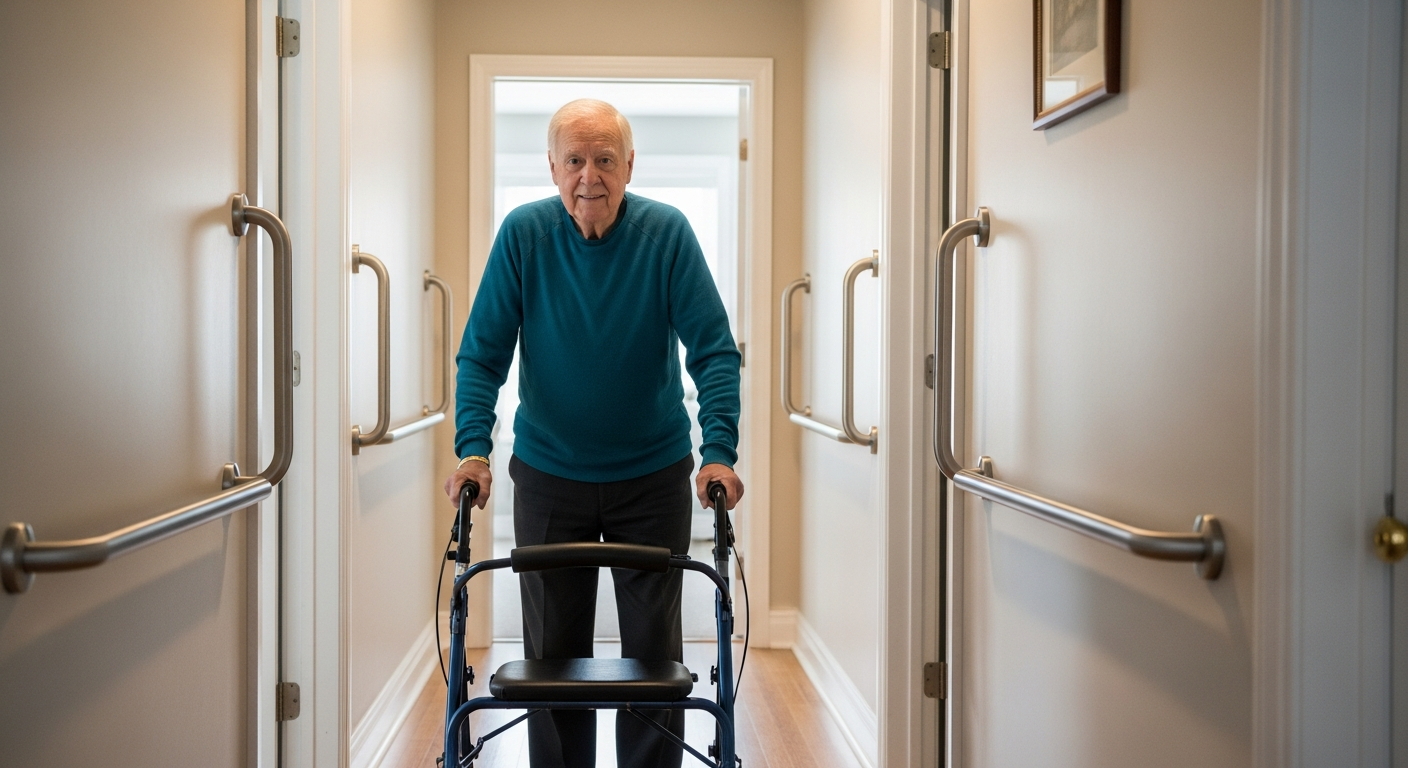
For seniors who need help at home but want to avoid or delay long-term care placement, private personal support worker (PSW) care is often the critical expense. Ontario's publicly funded home care through Ontario Health atHome provides some hours — but the waitlists are long and the hours are often insufficient.
The math for private home care adds up quickly:
| Care Level | Hours/Week | Cost/Hour | Monthly Cost | Annual Cost |
|---|---|---|---|---|
| Light assistance (housekeeping, meals) | 6 hours | $28 | $728 | $8,736 |
| Moderate care (bathing, medication reminders, mobility) | 15 hours | $30 | $1,950 | $23,400 |
| Extensive care (daily personal care, overnight) | 30 hours | $32 | $4,160 | $49,920 |
| Full-time live-in care | 40+ hours | $30–$35 | $5,600+ | $67,200+ |
A senior who needs moderate private care for three years faces a total cost of approximately $70,000. This is far beyond what CPP, OAS, and typical savings can sustain — but it is well within the equity available through a reverse mortgage on most Ontario homes.
Public vs Private Home Care: The Waiting Game
Ontario Health atHome (formerly LHIN-coordinated) provides publicly funded PSW care, but availability is constrained:
| Factor | Public Home Care | Private Home Care (Reverse Mortgage Funded) |
|---|---|---|
| Cost | Free (publicly funded) | $25–$35/hour |
| Wait time for assessment | 2–8 weeks | Immediate |
| Wait time for service start | 4–16 weeks (varies by region) | 1–2 weeks |
| Hours available | Often 3–8 hours/week | Unlimited (budget dependent) |
| Choice of provider | Assigned | You choose |
| Continuity of care | Caregivers may rotate frequently | Consistent caregiver possible |
| Weekend/evening coverage | Limited | Available |
For many Ontario seniors, the public system provides a baseline — but the private top-up funded by a reverse mortgage provides the quality and quantity of care that makes aging in place genuinely viable.
How a Reverse Mortgage Funds Healthcare: Three Models
HomeEquity Bank (CHIP), Equitable Bank, Bloom Financial, and Home Trust all offer reverse mortgages that can be structured to address healthcare costs. Rick Sekhon helps Ontario seniors choose the right structure based on their specific healthcare needs.
Model 1: Lump Sum for Major Procedures
Best for: dental implants, hearing aids, cataract surgery, accessibility renovations
Take a one-time lump sum from the reverse mortgage to cover a specific healthcare expense. Interest accrues only on the amount drawn.
Example: Sandra, 74, Kingston
- Home value: $520,000 (mortgage-free)
- Needed: dental implants ($12,000) + hearing aids ($6,500) + stair lift ($4,500) = $23,000
- Reverse mortgage at 35% LTV: $182,000 available
- Amount drawn: $23,000
- Rate: 6.54% (Equitable Bank 5-year fixed)
- Balance after 5 years: ~$31,500
- Balance after 10 years: ~$43,300
Sandra pays nothing monthly. Her dental health, hearing, and mobility in her own home are restored. The $23,000 grows to $43,300 over a decade — a cost of $20,300 in interest — but she remains in her home with dignity and independence.
Model 2: Scheduled Draws for Ongoing Care
Best for: private PSW care, monthly prescription costs, regular physiotherapy
Set up scheduled monthly or quarterly draws to cover recurring healthcare costs. This minimizes compound interest because you only draw what you need, when you need it.
Example: Harold, 79, Sudbury
- Home value: $420,000
- Needs: 12 hours/week private PSW care at $30/hour = $1,560/month
- Monthly income (CPP + OAS + small pension): $2,600
- Monthly expenses (excluding care): $2,100
- Available for care from income: $500
- Shortfall: $1,060/month
Harold arranges a reverse mortgage with monthly draws of $1,060:
| Year | Cumulative Draws | Interest Accrued | Total Balance |
|---|---|---|---|
| Year 1 | $12,720 | $430 | $13,150 |
| Year 2 | $25,440 | $1,730 | $27,170 |
| Year 3 | $38,160 | $3,960 | $42,120 |
| Year 4 | $50,880 | $7,170 | $58,050 |
| Year 5 | $63,600 | $11,420 | $75,020 |
After 5 years of in-home care, Harold's reverse mortgage balance is $75,020 against a home worth $420,000+. He has received the care he needed, stayed in his home, and avoided long-term care placement — which would have cost the public system $60,000+ annually.
Model 3: Emergency Health Reserve
Best for: seniors with good current health who want a safety net
Establish the reverse mortgage now but draw nothing immediately. The facility is in place — no interest accrues until funds are drawn. When a health emergency or unexpected cost arises, the funds are accessible within days rather than the 3–5 weeks required for a new application.
This approach appeals to seniors who recognize that healthcare costs are unpredictable and want the security of pre-arranged access to equity.
The Alternative: What Happens Without Funding
When seniors cannot fund out-of-pocket healthcare, the consequences are real and measurable:
Dental neglect leads to infection, malnutrition (inability to chew), and systemic health complications. According to the Canadian Dental Association, poor oral health in seniors is correlated with increased cardiovascular risk and cognitive decline.
Untreated hearing loss accelerates cognitive decline. A Lancet Commission report identified hearing loss as the single largest modifiable risk factor for dementia.
Skipped medications due to cost — known as cost-related non-adherence — affects an estimated 10% of Canadian seniors. The downstream cost to the healthcare system (emergency visits, hospitalizations) far exceeds the cost of the medications themselves.
Delayed mobility aids lead to falls. Falls are the leading cause of injury-related hospitalization among Canadian seniors, with an average hospital stay cost of $18,000–$25,000.
The reverse mortgage cost — interest on borrowed equity — is almost always less than the health consequences of going without necessary care.
Tax Considerations for Healthcare Spending
Reverse mortgage proceeds used for healthcare are not taxable income. However, the healthcare expenses themselves may generate valuable tax credits:
| Expense Type | Eligible for Medical Expense Tax Credit? | Credit Value (approx.) |
|---|---|---|
| Dental procedures | Yes | ~15% federal + ~5% Ontario |
| Prescription drugs (above ODB) | Yes | ~15% federal + ~5% Ontario |
| Hearing aids | Yes | ~15% federal + ~5% Ontario |
| Mobility aids (prescribed) | Yes | ~15% federal + ~5% Ontario |
| Private PSW care | Yes (if prescribed by physician) | ~15% federal + ~5% Ontario |
| Home accessibility renovations | Yes (Home Accessibility Tax Credit up to $20,000) | Up to $3,000 |
CRA allows seniors to claim the Medical Expense Tax Credit (METC) for eligible expenses exceeding approximately 3% of net income or $2,759 (2026 threshold), whichever is less. For a senior with $30,000 in net income spending $8,000 on dental work, the tax savings could be $1,000–$1,500.
Rick Sekhon recommends keeping detailed receipts for all healthcare spending funded by a reverse mortgage — the tax credits partially offset the borrowing cost.
Ontario-Specific Programs That Work Alongside a Reverse Mortgage
Several provincial programs can reduce your out-of-pocket healthcare costs, meaning the reverse mortgage funds stretch further:
- Ontario Drug Benefit (ODB): Covers most formulary prescriptions for those 65+
- Assistive Devices Program (ADP): Covers 75% of the cost of eligible mobility devices
- Ontario Seniors' Dental Care Program: Free routine dental for eligible low-income seniors
- Home and Vehicle Modification Program: Grants for accessibility modifications (income-tested)
- Veterans Affairs Canada benefits: Additional healthcare coverage for eligible veterans
FSRAO and FCAC provide consumer protection resources for seniors navigating financial decisions related to healthcare funding. Rick Sekhon ensures every client is aware of applicable provincial programs before recommending a reverse mortgage — the goal is to minimize borrowing by maximizing available subsidies first.
Long-Term Care vs Aging in Place: The Financial Comparison
One of the most powerful applications of a reverse mortgage is funding in-home care that delays or prevents long-term care admission:
| Factor | Long-Term Care (Ontario) | Aging in Place (Reverse Mortgage Funded) |
|---|---|---|
| Monthly co-pay (basic) | $1,891/month (2026) | Varies by care needs |
| Monthly co-pay (private/semi-private) | $2,280–$2,701/month | N/A |
| Wait time for placement | 3 months to 5+ years | Immediate (private care) |
| Choice of location | Limited — assigned by region | Your own home |
| Quality of life | Institutional setting | Familiar surroundings |
| Home retained? | Often sold to fund care | Yes — reverse mortgage preserves ownership |
| Spousal impact | Separation if spouse does not need LTC | Couple stays together |
For couples where one partner needs care and the other does not, the reverse mortgage approach keeps them together in their own home — an outcome that is virtually impossible under the long-term care model.
Frequently Asked Questions
Can I use a reverse mortgage specifically for medical expenses?
Yes. Reverse mortgage funds can be used for any purpose — there are no restrictions on how you spend the proceeds. Medical expenses, dental work, hearing aids, in-home care, prescription drugs, and accessibility renovations are all common uses. No documentation of spending purpose is required by the lender.
Will using a reverse mortgage for healthcare affect my Ontario Drug Benefit coverage?
No. Reverse mortgage proceeds are not income. They do not appear on your tax return and do not affect income-tested benefits like ODB, OAS, GIS, or the Ontario Trillium Benefit. This is a critical advantage over RRIF withdrawals or RRSP drawdowns, which increase taxable income and can trigger benefit clawbacks.
How quickly can I access reverse mortgage funds for a medical emergency?
The initial reverse mortgage application takes 3–5 weeks. Once established, additional draws (if you have pre-approved availability) can be accessed within a few business days. For urgent medical needs, Rick Sekhon can sometimes expedite the process. If you anticipate future healthcare needs, establishing the reverse mortgage in advance (Model 3 above) ensures funds are available immediately when needed.
Is it better to use savings, sell investments, or take a reverse mortgage for healthcare costs?
This depends on your overall financial picture. Liquidating RRSPs or RRIFs generates taxable income that can trigger OAS clawback and affect GIS eligibility. Selling non-registered investments may trigger capital gains. A reverse mortgage provides tax-free funds with no income impact. For many seniors, the reverse mortgage is the most tax-efficient source — but Rick Sekhon recommends consulting with your financial advisor to compare all options.
Can my family help pay for my healthcare instead of taking a reverse mortgage?
Family contributions are always an option — but they create dependency and potential family tension. A reverse mortgage allows you to fund your own care independently, preserving family relationships. Some families take a combined approach: the senior funds routine care through a reverse mortgage, while family members contribute to specific large expenses.
What happens if my healthcare needs exceed what the reverse mortgage can provide?
If your care needs escalate beyond what reverse mortgage funds can support — particularly full-time live-in care or complex medical needs — long-term care placement may become necessary. At that point, the home can be sold, the reverse mortgage is repaid from the proceeds, and the remaining equity funds the long-term care co-payments. OSFI regulations ensure that your reverse mortgage balance will never exceed your home's value (the no-negative-equity guarantee).
Get your free Ontario Reverse Mortgage Guide →
This content is for illustrative purposes only. Rates may vary. Call Rick Sekhon for the best rates and more information.
Ready to Learn More?
Find out exactly how much you could unlock from your home — free and no obligation.
Related Articles
Reverse Mortgage Renovation Checklist: Aging in Place in Ontario (2026)
A complete checklist of aging-in-place renovations Ontario seniors fund with a reverse mortgage — with costs, contractor guidance, and grant stacking tips.
Read →How to Supplement CPP and OAS with a Reverse Mortgage in Canada
Ontario retirees: learn how a reverse mortgage creates tax-free income to supplement CPP and OAS without triggering clawbacks or affecting GIS eligibility.
Read →Reverse Mortgage for Healthcare Costs: Aging in Place in Ontario
How Ontario seniors use a reverse mortgage to fund home care, medical equipment, prescriptions, and healthcare expenses — and stay in their home longer.
Read →