
Home Renovations for Aging in Place: Reverse Mortgage to Fund Safety
Aging in place requires accessible homes. Discover how a reverse mortgage can fund grab bars, accessible bathrooms, walkways, and modifications to stay safely in your Ontario home longer.
"My home is perfect, but I'm worried I won't be able to navigate it safely as I age. Can I afford to make it accessible without selling?" Many Ontario seniors love their homes but recognize that stairs, narrow bathrooms, and slippery entryways pose real risks as mobility changes. Retrofitting a home for aging in place typically costs $15,000–$75,000 depending on the extent of modifications. A reverse mortgage can fund these critical safety improvements, allowing you to remain in your cherished home for decades to come.
This article is for educational purposes only and does not constitute financial advice.
The Cost of Staying: Why Aging in Place Matters
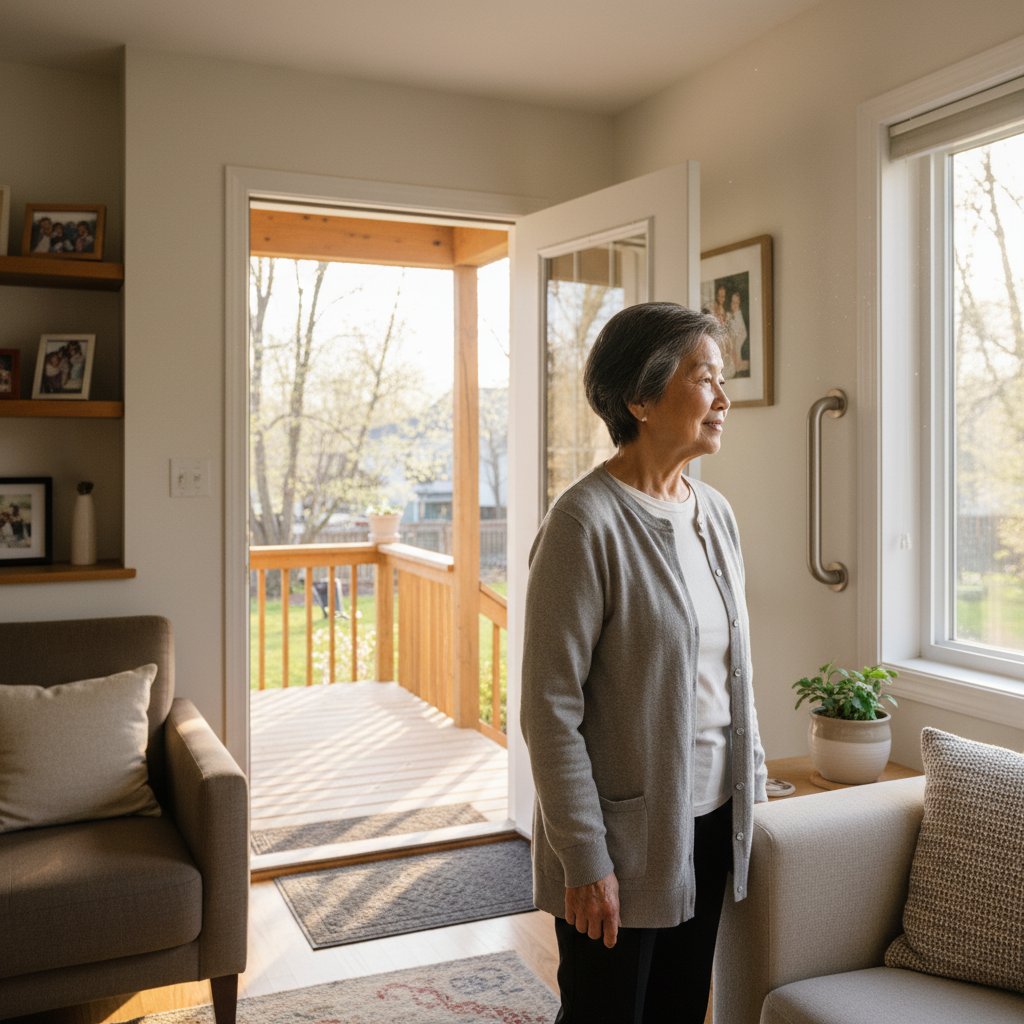
Many seniors face an implicit ultimatum: downsize now while you can manage the move, or wait until a fall or mobility crisis forces relocation under duress. Aging in place offers a third option — invest in accessibility now while you're healthy enough to enjoy the home.
The benefits of aging in place:
- Maintain independence and autonomy
- Stay in a home filled with memories and community connections
- Avoid the stress and cost of selling and relocating
- Allow family members to provide care in a familiar environment
- Preserve your sense of identity and control
The barrier: Renovation costs exceed available liquid savings for many homeowners.
A reverse mortgage unlocks home equity to pay for these modifications, turning your home asset into a vehicle for both independence and safety.
Common Accessibility Modifications and Their Costs
| Modification | Purpose | Typical Cost | Impact |
|---|---|---|---|
| Main floor bedroom setup | Avoid stairs for sleeping | $5,000–$15,000 | High — eliminates daily stair use |
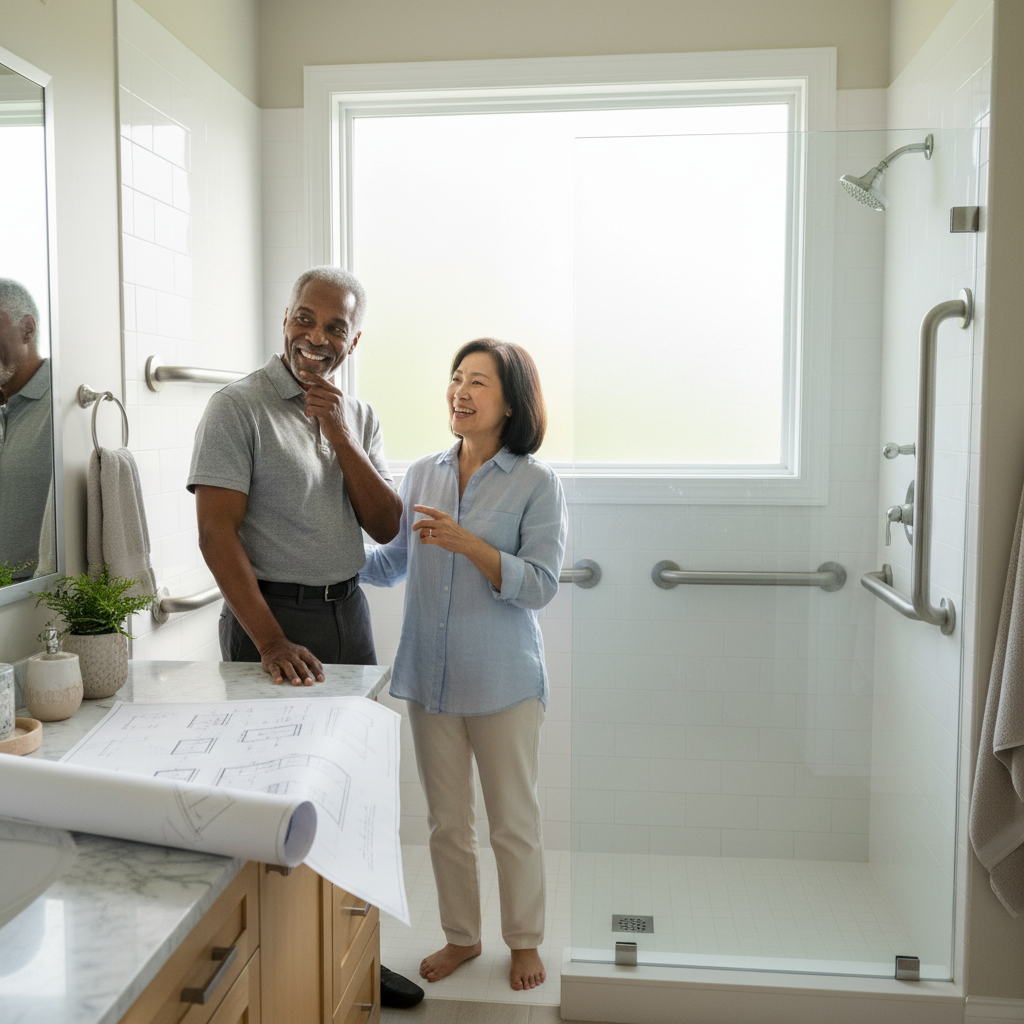
| Accessible bathroom (walk-in shower, grab bars, lower sink) | Prevent falls in high-risk area | $12,000–$35,000 | High — bathrooms are injury hotspots |
| Ramp or ramped entryway | Wheelchair/walker access to home | $3,000–$8,000 | Medium — essential if mobility changes |
| Widened doorways and hallways | Wheelchair/walker navigation | $4,000–$12,000 | Medium — enables safe movement |
| Stair lift or residential elevator | Preserve multi-level living | $4,000–$15,000 | High — maintains home independence |
| Improved lighting and contrast | Fall prevention through visibility | $2,000–$5,000 | Medium — low-cost, high-value |
| Handrails and grab bars (comprehensive) | Fall prevention throughout home | $1,500–$4,000 | High — inexpensive, critical safety |
| Accessible kitchen modifications | Safe food prep and storage | $6,000–$20,000 | Medium — quality of life improvement |
Total accessibility retrofit (comprehensive): $30,000–$75,000 for a full-service aging-in-place transformation.
Reverse Mortgage as the Accessibility Funding Solution
A reverse mortgage provides tax-free funds to pay for these modifications upfront, without requiring monthly payments. This is particularly valuable for homeowners on fixed incomes (pensions, CPP/OAS) who cannot take on additional debt servicing costs.
According to the Canada Mortgage and Housing Corporation (CMHC), aging-in-place modifications are among the most effective investments seniors can make to reduce fall risk and extend independent living — yet funding barriers prevent many from making these investments until a crisis forces the issue.
Why Reverse Mortgage Beats Other Funding Options
| Funding Source | Monthly Payment | Income Requirement | Speed | Best For |
|---|---|---|---|---|
| Reverse Mortgage | None | None — no income verification | 4–6 weeks | Fixed-income seniors with home equity |
| HELOC | Yes | Yes — employment/income needed | 2–4 weeks | Employed homeowners with flexible credit |
| Home Equity Loan | Yes | Yes — credit and income required | 3–6 weeks | Homeowners with strong credit scores |
| Downsizing | N/A | N/A | 2–4 months | Homeowners willing to relocate |
| Family loan | Depends | Personal arrangement | 1 week | Homeowners with family resources |
| Government grant | None, if qualified | Income-based eligibility | 2–8 weeks | Low-income seniors in specific provinces |
A reverse mortgage stands out because it requires no monthly payments, making it ideal for seniors on fixed incomes who cannot accommodate additional debt servicing.
Government Support and Tax Credits
Several Ontario and federal programs can supplement reverse mortgage funding for accessibility:
Ontario Programs
- Ontario Disability Support Program (ODSP): May cover some modifications for qualified applicants
- Ontario Home Repair Assistance Program (IHAP): Grants up to $17,500 for homeowners 65+ (income-tested)
- Property Tax Deferral for Seniors: Allows deferral of property taxes to help fund accessibility renovations
Federal Programs
- Canada Disability Tax Credit (DTC): Refundable tax credit if you or a family member qualifies
- Registered Disability Savings Plan (RDSP): Can be used for accessibility improvements if a beneficiary has a DTC certificate
Combining Sources
Many seniors use a layered approach: apply for government grants first, use IHAP or ODSP for portions covered, then use a reverse mortgage to cover the gap and complete the full accessibility vision.
Real-World Example: Margaret's Master Bathroom Retrofit
Margaret, 71, Ottawa:
- Home value: $550,000
- Mortgage balance: $0 (paid off)
- Mobility concern: Arthritis in knees; bathroom tub poses slip risk
- Required: New accessible bathroom + main floor bedroom modification
- Estimate: $28,000
Solution:
- Reverse mortgage advance: $30,000 (5% of home value, well below the 55% maximum)
- Funds available: Within 5 weeks
- Monthly payment obligation: $0
- Interest rate: 7.3% (fixed)
- 5-year cost of borrowing $30,000: ~$12,000
Result: Margaret renovates her bathroom to include a walk-in shower with grab bars, adjustable-height toilet seat, and non-slip flooring. She converts her den into a main-floor bedroom. She avoids the trauma of moving and maintains her independence for an estimated 10–15 additional years in her home.
According to the Canadian Association on Gerontology, seniors who successfully age in place report higher life satisfaction, lower depression rates, and better overall health outcomes compared to those who relocate to residential care facilities.
Choosing the Right Renovations: A Prioritization Framework
Not all modifications are equally valuable. Prioritize based on:
- Fall risk reduction (bathrooms, stairs, lighting) — highest priority
- Mobility preservation (ramps, grab bars, doorway widening) — high priority
- Daily living quality (kitchen accessibility, main-floor bedroom) — medium priority
- Visiting family comfort (accessible guest rooms, wider hallways) — lower priority
A reverse mortgage typically funds Tiers 1–3. Prioritizing helps maximize the impact of your borrowed funds.
Working with Contractors and Managing Renovation Risk
When using reverse mortgage funds for renovations:
- Get multiple quotes — obtain 3 estimates for major work
- Verify licensing — ensure contractors are registered with Ontario's registration bodies
- Secure fixed-price contracts — avoid open-ended cost scenarios
- Obtain permits — accessibility modifications typically require municipal permits
- Stage the work — consider phasing large projects over 6–12 months to manage contractor quality
- Withhold final payment — hold back 10% until all work meets specifications and permits are finalized
Drawback: Interest Compounds Without Monthly Payments
A $30,000 reverse mortgage at 7.3% annual interest, held for 10 years without payments, grows to approximately $61,000 in total debt. Your home equity shrinks correspondingly.
However, this reduced equity is offset by the benefit of remaining independent in your home for 10–15 additional years — an outcome that may be impossible without the renovations. The cost-benefit analysis typically favors the renovation investment.
Frequently Asked Questions
Can I use a reverse mortgage for renovations I haven't had quotes for yet?
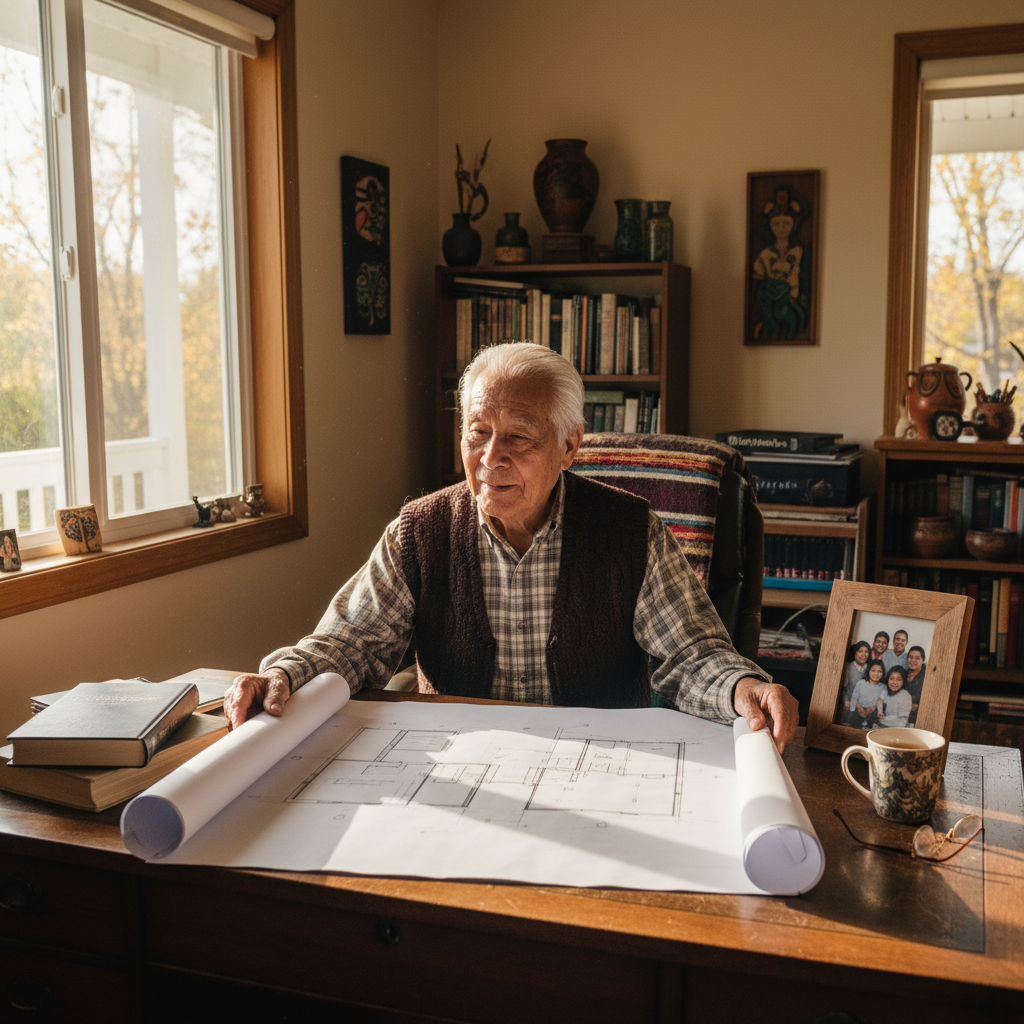
Yes, but you'll need a professional scope of work. Most reverse mortgage lenders require a contractor's estimate or architectural plan before funding. Once approved, you can draw funds as work progresses (structured drawdown) or receive a lump sum upfront.
What if the renovation costs exceed what I can borrow?
You can borrow up to 55–59% of your home value. If your home is worth $500,000, you can access up to $295,000. Most accessibility retrofits fall well within this range. If costs exceed your borrowing capacity, combine a reverse mortgage with government grants or family contributions.
Will aging-in-place renovations increase my home's resale value?
Some modifications (bathrooms, kitchens) add value. Others (grab bars, ramps) appeal only to specific buyers but don't increase overall resale value. Focus on renovations that improve your quality of life now, not potential future resale value. Your goal is to remain in the home, not to flip it.
Can I get a reverse mortgage for renovations if I still have a traditional mortgage?
Yes. The reverse mortgage will be a secondary mortgage (second position). You'll need to repay or refinance your first mortgage using reverse mortgage proceeds. Speak with Rick Sekhon, a licensed reverse mortgage specialist, to understand the mechanics and costs.
What if I move to long-term care after the renovations are complete?
The reverse mortgage becomes due when you permanently vacate the property. Your family or executor can sell the home to repay the loan. The renovations you made will not be "wasted" — they improved your quality of life while you remained in the home, which was the goal.
How do I access the reverse mortgage funds for the renovations?
Options vary by lender:
- Lump sum: All funds advance at closing (simplest)
- Scheduled draws: Funds release as contractor invoices are paid (reduces interest on unspent funds)
- Line of credit: You draw funds as needed over time (most flexible)
Ask your lender which structure minimizes interest while meeting your renovation timeline.
Making the Aging-in-Place Decision
Aging in place is not right for everyone. It works best for seniors who:
- Have significant home equity ($300,000+)
- Love their homes and communities
- Want to maintain independence as long as possible
- Can afford professional care assistance if needed
For seniors in these situations, a reverse mortgage to fund accessibility modifications is often the most effective and efficient path to a safe, independent future.
Your home has sheltered you for decades. With the right modifications and the right funding, it can continue to support your independence and quality of life for many years to come.
Speak to a licensed mortgage professional. Independent legal advice is required before closing a reverse mortgage in Ontario.
This content is for illustrative purposes only. Rates may vary. Call Rick Sekhon for the best rates and more information.
Related Reading
Ready to Learn More?
Find out exactly how much you could unlock from your home — free and no obligation.
Related Articles
Reverse Mortgage Eligibility in Ontario: Complete 2026 Guide
Everything Ontario homeowners need to know about qualifying for a reverse mortgage in 2026. Covers age requirements, home equity, property types, and the application process.
Read →Reverse Mortgage for Aging in Place With Fibromyalgia: Home Modifications for Invisible Illness
Fund home modifications for aging with fibromyalgia. Reverse mortgage enables accessible design for pain management, energy conservation, and quality of life.
Read →Reverse Mortgage for Accessible Community Kitchen: Culinary Training and Aging in Place
Convert your home kitchen into an accessible commercial culinary training space. Reverse mortgage funds renovation while creating community impact.
Read →