
Reverse Mortgage for Home-Based End-of-Life Doula Services: Building a Meaningful Retirement Business
Turn retirement expertise into end-of-life doula services. Reverse mortgage funds business setup, training, and operations launch.
You've spent 30+ years in healthcare, hospice, or elder care, and you know something is missing: families and aging individuals need compassionate, non-medical support at end of life. A doula model—trained companion support for dying people and their families—is growing in Canada, but there's no formal business structure or credentialing yet.
What if you could launch a home-based end-of-life doula practice in retirement, create meaningful work, generate income, and support your community? A reverse mortgage can fund the startup, training, and first-year operations.
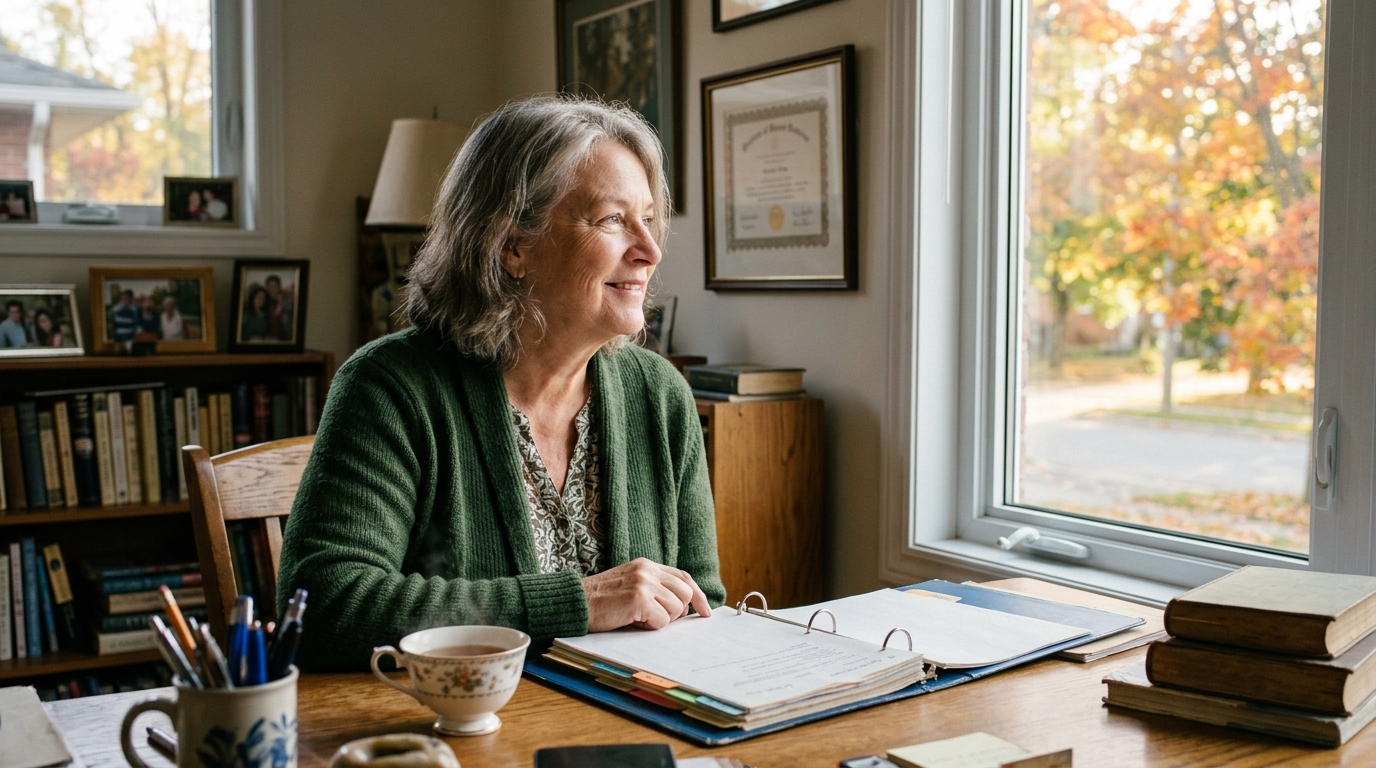
The Growing End-of-Life Doula Movement
End-of-life doula is an emerging profession: trained companions who support dying people and families with emotional, practical, and spiritual care—not medical services.
According to the Canadian Hospice Palliative Care Association, 60–70% of Canadian families want to die at home but lack practical support. This creates demand for doula services that are:
- Non-medical: No licensing required; trained companions work alongside healthcare providers
- Affordable: $25–$50/hour, compared to $75–$150/hour for private nurses
- Accessible: Weekend/evening availability; flexible scheduling
- Holistic: Addressing emotional, practical, and spiritual needs alongside medical care
The International End of Life Doula Association reports there are approximately 200–300 practicing doulas in Canada (2026), with demand far exceeding supply. Starting a home-based doula service with 2–4 clients simultaneously could generate $30,000–$60,000 annually by year two.
Business Costs: Startup and Year-One Operations
| Startup Cost | Amount | Year-One Ongoing |
|---|---|---|
| Training & Certification | $2,500–$4,000 | Continuing education: $500/year |
| Home office setup (quiet space, comfortable seating) | $2,000–$3,500 | Maintenance: $100/year |
| Insurance (general liability + disability) | $800–$1,500 | Annual renewal: $800–$1,200 |
| Marketing & website | $1,000–$2,000 | Digital presence: $200/year |
| Legal setup (business registration, LLC/sole proprietor) | $500–$800 | Accounting/tax: $500–$1,000/year |
| Initial operating supplies (comfortable bedding, support materials) | $1,000–$2,000 | Replenishment: $300/year |
| Professional development books, courses | $500–$1,000 | Ongoing: $300/year |
| TOTAL STARTUP | $8,300–$14,800 | TOTAL YEAR 1 |
Realistic timeline: Startup + first 6 months of limited clients = $12,000–$18,000 reverse mortgage access needed. After 6–12 months, client income offsets ongoing costs.

Revenue Model: Conservative Projection
| Year | Clients/Month | Hours/Week | Hourly Rate | Annual Revenue | Business Profit |
|---|---|---|---|---|---|
| Year 1 | 0.5 (part-time) | 5–10 | $30 | $2,000–$5,000 | -$7,000 to -$13,000 (offset by RM funds) |
| Year 2 | 2–3 | 20–30 | $35 | $25,000–$40,000 | $20,000–$35,000 (RM offset reduced) |
| Year 3 | 3–4 | 30–40 | $40 | $45,000–$65,000 | $40,000–$60,000 (RM offset minimal) |
| Year 4+ | 4–5 (sustainable) | 35–45 | $45 | $65,000–$90,000 | $60,000–$85,000 (fully self-sustaining) |
Key insight: You're not starting a high-growth business; you're building a sustainable practice that generates $60,000–$90,000 annually within 3–4 years—sufficient for comfortable retirement supplementation without growth pressure.
Reverse mortgage covers initial losses (Years 1–2, approximately $10,000–$18,000 total). By Year 3, business income pays its own way and your reverse mortgage balance stabilizes.
Real-World Example: From Hospice Worker to Solo Doula
Susan, 64, retired from hospital hospice work after 35 years. She wanted meaningful part-time work but wasn't interested in standard retirement consulting or part-time nursing. She decided to start a home-based end-of-life doula practice.
Susan's plan:
- Complete end-of-life doula certification ($3,500; 3-month program)
- Set up home office ($2,000; comfortable space for family consultations)
- Insurance and legal setup ($1,500)
- Marketing and website ($1,500; emphasize her 35-year hospice background)
- Operating reserve for Year 1 ($3,000)
Total: $11,500. Susan accessed a $15,000 reverse mortgage line of credit.
Year 1 results:
- Months 1–4: Built relationships with local hospices, funeral directors, family counselors; took 0 clients
- Months 5–8: First 2 clients (families needing end-of-life companion support); generated $3,000 revenue
- Months 9–12: 3 concurrent clients; generated $8,000 revenue
By end of Year 1, Susan had established herself and generated enough revenue to begin covering her modest costs. She drew approximately $5,000 from her RM line of credit to cover Year 1 losses (less than anticipated).
Year 2–3: Business grew to 3–4 concurrent clients. Susan generated $35,000–$50,000 annually, covering all business costs and generating profit for her personal use. The reverse mortgage line of credit remained (never used in Year 2+) as a safety net if a client needed extended support during a long dying process.
Outcome: Susan built a meaningful, income-generating business in retirement; created employment for herself at 64–67; and maintained flexibility to scale back as she ages.

Positioning Your Doula Practice: Marketing Angle
Your advantage: You're not a nursing student or wellness coach pivoting to doulas; you're a seasoned healthcare professional turning expertise into compassionate direct service.
Marketing message: "Experienced hospice/elder care professional offering end-of-life companionship support for individuals and families navigating final life transitions. Based in [your community]. Available 24/7 for crisis support."
Where to market:
- Local hospices and palliative care organizations: Partner with medical teams
- Funeral directors: Refer families needing pre-death and post-death support
- Elder law attorneys: Families planning end-of-life transitions
- Religious organizations: Faith communities often lack trained end-of-life support
- Geriatric care managers: Professional referral networks
- Word-of-mouth: One successful client family recommends you to others
Low-cost marketing: Website ($200–$500); business cards ($100); local directory listings (free–$50). Most clients will come from referrals, not advertising.
Regulatory and Professional Considerations
Important: End-of-life doula is NOT a licensed profession in Canada (yet). You do NOT need formal credentials to call yourself a doula. However, professionalism requires:
- Completion of doula training program ($2,500–$4,000)
- General liability insurance ($800–$1,200/year)
- Clear scope of practice: You support emotionally and practically; you do NOT provide medical care, medication administration, or clinical assessment
- Collaboration with healthcare providers: Always communicate with doctors, nurses, social workers involved in the client's care
According to the Canadian Hospice Palliative Care Association, families and healthcare teams actually prefer trained doulas to untrained volunteers because formal training ensures professional boundaries and appropriate support.
Tax and Business Structure Implications
Consult an accountant, but generally:
- Business income is taxable: Doula fees are self-employment income; you'll file income tax annually
- Business expenses are deductible: Training, insurance, home office, supplies reduce taxable income
- CPP contributions: Self-employed income requires CPP contributions; however, if you're already receiving CPP at 62, contributions may be limited
- Reverse mortgage interest is NOT deductible: Interest on reverse mortgage borrowed for business isn't tax-deductible (unlike traditional mortgage interest for income-producing property)
Bottom line: Business income of $40,000–$60,000 annually is subject to tax and CPP contributions. However, you'll likely owe less tax than someone earning equivalent W-2 wages because business expenses (training, insurance, supplies) offset income.
Key Takeaways
- End-of-life doula is an emerging, in-demand profession with 200–300 practitioners in Canada serving 1,000s of families annually
- Startup costs are modest: $8,000–$15,000 covers training, insurance, and home office setup
- Revenue model is sustainable: $30,000–$60,000 annually by Year 2–3 without growth pressure or scaling complications
- Reverse mortgage funds initial losses in Years 1–2; business becomes self-sustaining by Year 3
- Your background (healthcare, hospice, elder care) is your competitive advantage and primary marketing tool
- No licensing required, but professional training, insurance, and clear scope of practice are essential
- Work-life balance: Doula work is meaningful but emotionally demanding; most practitioners limit to 3–4 concurrent clients, keeping it manageable
Frequently Asked Questions
Isn't this work emotionally exhausting? How do you maintain boundaries?
Yes, it's emotionally demanding. That's why training includes self-care, boundary-setting, and grief support for the doula. Most practitioners limit to 3–4 concurrent clients, work 30–40 hours/week, and take breaks between clients. It's sustainable part-time work, not full-time burnout.
Do I need a clinical license or nursing credential to be an end-of-life doula?
No. Doulas are lay companions; no clinical license is required. However, you cannot administer medication, assess medical status, or provide clinical judgment. You work alongside healthcare providers, not as a replacement for them.
Can I do this work from home, or do I need an office?
Home-based works fine. Your home office is where you meet with families for consultations and planning. When supporting a dying person, you'll typically be in their home or hospital room, not your office. Home-based keeps overhead low and allows flexibility.
How do I find clients if I'm just starting?
Most early clients come through referrals from hospices, funeral directors, and word-of-mouth. You'll want professional liability insurance before accepting clients. Most practitioners start with 1–2 referral sources (e.g., local hospice), build reputation, then expand.
If the business doesn't succeed, what happens to the reverse mortgage?
You still owe it. Reverse mortgage is secured against your home regardless of business success. However, the $15,000 is modest; if the business underperforms, you can simply stop drawing and the balance stabilizes. Alternatively, the business becomes a side practice generating $10,000–$15,000 annually, still helpful supplementation.
Can I partner with another doula to share clients and reduce stress?
Absolutely. Some practitioners work as pairs or networks, referring clients between each other based on availability and compatibility. This reduces individual workload and creates peer support.
End-of-life doula is not a business for profit-maximization; it's a practice for purpose. A reverse mortgage enables you to turn retirement expertise into meaningful work that supports families through life's final transitions—while generating income to sustain your own retirement.
Ready to explore end-of-life doula as a retirement business? Contact Rick Sekhon Reverse Mortgages to discuss funding your practice launch.
Ready to Learn More?
Find out exactly how much you could unlock from your home — free and no obligation.
Related Articles
Reverse Mortgage for DEI Consulting Practice: Launching Diversity, Equity, and Inclusion Consulting in Retirement
Start a diversity and inclusion consulting practice. Help corporations and nonprofits build equitable cultures; reverse mortgage funds training, business setup, and market entry.
Read →Reverse Mortgage for Residential Sustainability Auditing Practice: Certifying Aging in Place
Launch a professional home energy and sustainability auditing business. Help Ontario homeowners certify efficiency; reverse mortgage funds training, tools, and market entry.
Read →Reverse Mortgage for Archival and Digital Preservation Consulting: Preserving Institutional History and Heritage
Launch archival consulting practice preserving records for institutions. Help libraries, archives, nonprofits; reverse mortgage funds training, tools, and market entry.
Read →