
Reverse Mortgage for Charitable Giving and Donations in Canada
Use a reverse mortgage for charitable giving and donations in Canada. Tax credits, strategies, and how to maximize your philanthropic impact with home equity.
"I've always wanted to give more to the causes I believe in, but my pension barely covers my own expenses — can my home equity fund my charitable goals?" For Canadian homeowners aged 55 and older, a reverse mortgage offers a powerful and tax-efficient path to meaningful philanthropy. You can donate generously, receive substantial tax credits, and continue living in your home with no monthly mortgage payments.
This article is for educational purposes only and does not constitute financial advice.

Why Home Equity Is the Untapped Philanthropic Resource
Most Canadian retirees have the majority of their wealth locked in their principal residence. According to Statistics Canada, the median net worth of Canadian families headed by someone aged 65 or older is approximately $543,000 — and the primary residence accounts for the single largest share of that figure. Yet very few retirees consider their home equity as a philanthropic resource.
The reason is simple: until recently, accessing home equity meant either selling the home or taking on a traditional mortgage with monthly payments. Neither option appeals to retirees who want to stay in their home and maintain financial stability.
A reverse mortgage changes the equation entirely. By borrowing against home equity with no monthly payment obligation, Canadian seniors can make charitable donations they otherwise could not afford — and receive meaningful tax benefits in return.
How the Reverse Mortgage Charitable Giving Strategy Works
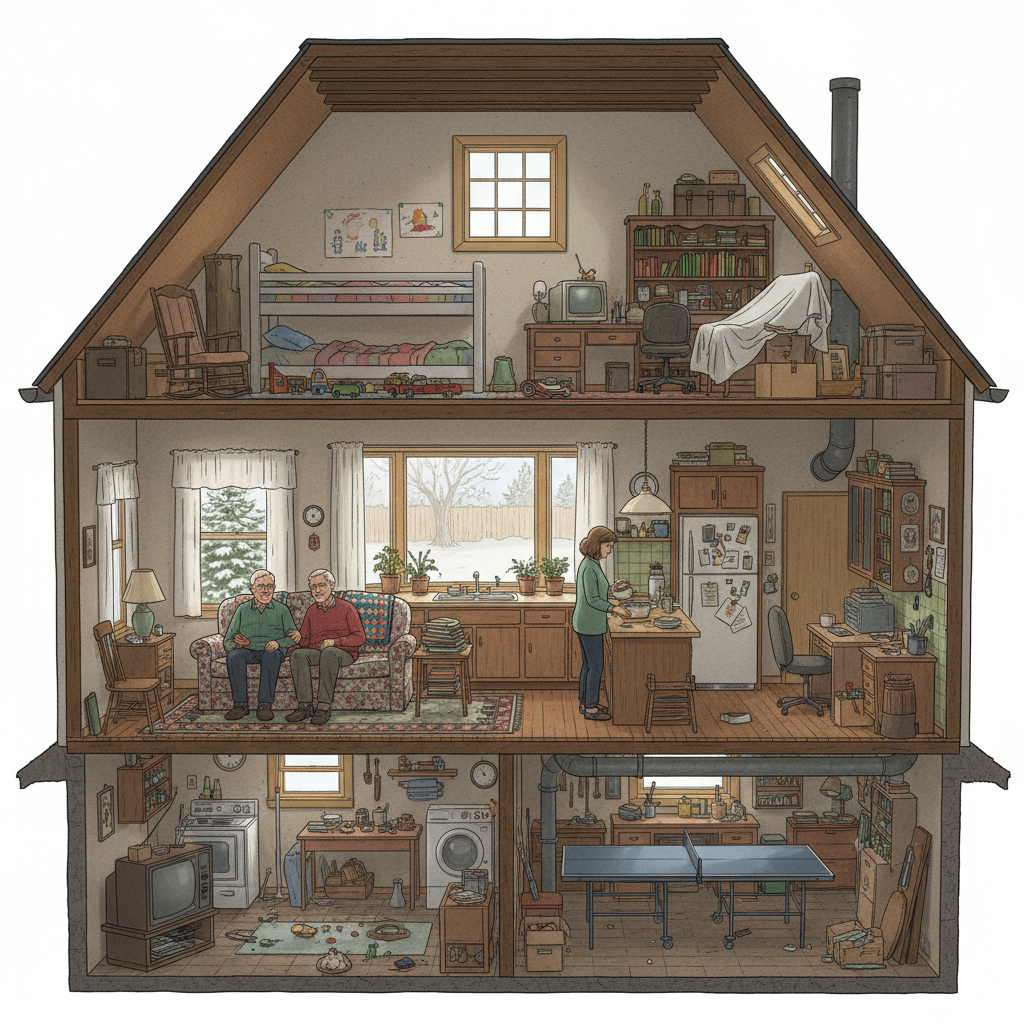
The strategy is straightforward:
- Access home equity through a reverse mortgage. Available through HomeEquity Bank (CHIP Reverse Mortgage), Equitable Bank, or Bloom Financial, a reverse mortgage lets you borrow up to 55% of your home's appraised value.
- Donate a portion (or all) of the proceeds to a registered Canadian charity. The charity issues an official donation receipt.
- Claim the donation tax credit on your income tax return. The federal charitable donation tax credit is 15% on the first $200 and 29% on amounts over $200 (33% if you have income in the top bracket). Ontario's provincial credit adds approximately 11.16% on amounts over $200.
- The net cost of your donation is significantly reduced. Depending on your tax bracket, you recover 40–50% of the donation through tax credits.
The reverse mortgage proceeds themselves are not taxable income — they are a loan. For a full explanation of the tax treatment, see our reverse mortgage tax implications guide →.
The Tax Credit Math
| Donation Amount | Federal Credit | Ontario Provincial Credit | Total Tax Credit | Net Cost of Donation |
|---|---|---|---|---|
| $5,000 | $1,422 | $535 | $1,957 | $3,043 |
| $10,000 | $2,872 | $1,092 | $3,964 | $6,036 |
| $25,000 | $7,222 | $2,764 | $9,986 | $15,014 |
| $50,000 | $14,472 | $5,548 | $20,020 | $29,980 |
| $100,000 | $28,972 | $11,116 | $40,088 | $59,912 |
Credits calculated at the combined federal (29%) and Ontario (11.16%) rates for amounts over $200. Actual credits depend on your taxable income and may be higher if you are in the top federal bracket (33%).
According to the CRA (Canada Revenue Agency), charitable donations can be claimed up to 75% of your net income in a given year, with a five-year carry-forward for unused credits. This means a large donation in one year can generate tax savings over multiple years.
Structuring Your Charitable Reverse Mortgage
There are several ways to structure reverse mortgage proceeds for charitable giving:
Option 1: One-Time Lump Sum Donation
Take a single lump sum from the reverse mortgage and donate it immediately. This works well for:
- Capital campaigns (new hospital wing, community centre, church building fund)
- Endowment contributions
- One-time emergency relief donations
- Named scholarships or bursaries
Option 2: Scheduled Annual Donations
Set up the reverse mortgage as a series of scheduled advances — for example, $5,000 per year — directed to your chosen charities. This approach:
- Spreads the donation tax credit across multiple tax years
- Minimizes the reverse mortgage balance (and interest accrual) at any given time
- Allows you to support multiple organizations over time
- Creates a predictable giving pattern that charities can rely on
Option 3: Donor-Advised Fund Contribution
Contribute a lump sum from the reverse mortgage to a donor-advised fund (offered by organizations like Community Foundations of Canada). You receive the tax credit immediately, but can direct the grants to specific charities over time.
| Strategy | Best For | Tax Credit Timing | Interest Cost |
|---|---|---|---|
| Lump sum donation | Capital campaigns, endowments | Immediate (with 5-year carry-forward) | Higher — full balance accrues from day one |
| Scheduled annual donations | Ongoing annual giving | Spread across years | Lower — smaller balances at any time |
| Donor-advised fund | Flexible multi-charity giving | Immediate | Moderate — one-time advance |
Rick Sekhon, a licensed Ontario mortgage broker specialising in reverse mortgages, recommends working with both a mortgage broker and a tax accountant when planning charitable giving with home equity: "The mortgage side is straightforward — the real value comes from structuring the donations to maximize your tax credits. A good accountant can save you thousands."
Real Ontario Example: The Philanthropic Retiree

Consider David and Helen, both 74, living in their $720,000 home in Kingston, Ontario. They have a combined retirement income of $52,000 per year (CPP, OAS, and a small pension). They want to support their local hospital's cancer care expansion with a $30,000 donation.
Without a reverse mortgage: They would need to save approximately $2,500/month for a year from their $4,333 monthly income — clearly impossible after living expenses.
With a reverse mortgage:
| Item | Amount |
|---|---|
| Home value | $720,000 |
| Reverse mortgage available (age 74, ~47% LTV) | ~$338,000 |
| Amount borrowed for donation | $30,000 |
| Charitable tax credit (combined federal + Ontario) | ~$11,795 |
| Net cost of $30,000 donation | ~$18,205 |
| Annual interest on $30,000 at 6.5% | ~$1,950 |
| Impact on OAS/GIS | None |
| Monthly payment required | $0 |
David and Helen make a $30,000 donation that effectively costs them $18,205 after tax credits — and the interest cost is approximately $1,950 per year, accruing on the reverse mortgage balance. Their home continues to appreciate, their government benefits are unaffected, and they receive a named recognition plaque in the hospital's new wing.
This is the living legacy philosophy in action — using home equity to create meaningful impact during your lifetime.
Combining Charitable Giving With Estate Planning
For seniors who are also thinking about their estate, charitable giving through a reverse mortgage can complement an estate plan in powerful ways:
- Reduce estate value strategically. In Ontario, probate fees (Estate Administration Tax) are 1.5% of estate value above $50,000. A $30,000 donation reduces probate-eligible assets by $30,000 — saving $450 in probate fees, on top of the donation tax credit.
- Create a charitable remainder trust. Work with an estate lawyer to structure a charitable remainder trust funded in part by reverse mortgage proceeds. You receive income during your lifetime, and the charity receives the remainder.
- Name the charity as a beneficiary. While this does not involve a reverse mortgage directly, some retirees use a reverse mortgage to fund current living expenses and redirect other assets to charitable bequests.
For a comprehensive approach, see our estate planning checklist →.
According to FCAC (Financial Consumer Agency of Canada), seniors should always seek independent financial and legal advice before making significant financial decisions involving home equity, including those related to charitable giving.
Which Charities Qualify for Tax Credits?
Only donations to registered Canadian charities and certain other qualified donees generate official donation receipts eligible for tax credits. Qualified donees include:
- Registered Canadian charities (hospitals, universities, religious organizations, community foundations)
- Registered Canadian amateur athletic associations
- Canadian municipalities
- The United Nations and its agencies
- Prescribed foreign universities
- The Government of Canada, provincial governments
The CRA maintains a searchable database of registered charities at canada.ca. Always verify the charity's registration before donating.
The Interest Cost of Charitable Giving via Reverse Mortgage
One valid concern is the interest cost. Here is how it breaks down over time:
| Donation | Interest Rate | Balance After 5 Years | Balance After 10 Years | Balance After 15 Years |
|---|---|---|---|---|
| $10,000 | 6.50% | $13,700 | $18,770 | $25,720 |
| $25,000 | 6.50% | $34,250 | $46,930 | $64,290 |
| $50,000 | 6.50% | $68,500 | $93,850 | $128,580 |
However, these figures should be weighed against:
- The tax credit received (40–50% of the donation amount, received immediately or over a few years)
- Home appreciation (even 2% annual growth on a $700,000 home adds $14,000/year to equity)
- The no-negative-equity guarantee — you can never owe more than your home is worth. See our inheritance guide → for details.
For current rates from all Canadian reverse mortgage lenders, see our interest rates guide →.
Eligibility and Getting Started
To use a reverse mortgage for charitable giving, you must meet the standard eligibility requirements. You must be at least 55 years old, own a home in Canada, and have sufficient equity. For the complete eligibility breakdown, see our eligibility guide →.
Rick Sekhon works with Ontario homeowners to structure reverse mortgages for a wide range of purposes, including charitable giving. His process includes:
- A free consultation to review your home value, age, and philanthropic goals
- A comparison of rates and terms from HomeEquity Bank, Equitable Bank, and Bloom Financial
- Coordination with your tax accountant to optimize the donation tax credit
- Guidance through the independent legal advice requirement mandated by FSRAO
The application process typically takes 3–5 weeks. There is no cost for the initial consultation.
Giving Back While Living Well
The reverse mortgage charitable giving strategy is not about sacrifice. It is about unlocking a resource — your home equity — that would otherwise remain dormant until your estate is settled. By giving during your lifetime, you:
- See the impact of your generosity
- Receive meaningful tax credits that offset the cost
- Maintain your independence and home
- Create a legacy that is both financial and personal
For broader retirement planning that incorporates charitable goals, visit our retirement cash flow page →.
FAQ
Can I donate reverse mortgage proceeds to a charity outside Canada? Only donations to registered Canadian charities and certain other qualified donees generate tax-creditable donation receipts. However, many Canadian charities operate internationally (e.g., Canadian Red Cross, Doctors Without Borders Canada), so you can support global causes through Canadian-registered organizations.
Will a large donation trigger a CRA audit? Large donations attract CRA scrutiny, particularly if they seem disproportionate to your reported income. However, a legitimate donation to a registered charity with a proper receipt is fully defensible. Keep your reverse mortgage documentation and donation receipts organized.
Can I split the donation between my spouse and me for tax purposes? Yes. Under Canadian tax law, either spouse can claim all or a portion of the combined charitable donations. This is particularly useful if one spouse has a higher income and would benefit more from the credit.
Does using a reverse mortgage for charity affect my OAS or GIS? No. Reverse mortgage proceeds are a loan, not income. They do not affect any income-tested government benefits, including OAS, GIS, and the Ontario Guaranteed Annual Income System (GAINS).
What if the charity I donate to loses its registered status? This does not retroactively affect donation receipts you have already claimed. However, you should verify the charity's status at the time of donation. The CRA's charities database is the authoritative source.
Can I set up a recurring donation from a reverse mortgage line of credit? Yes. If your reverse mortgage includes a line of credit component (available through CHIP and Equitable Bank), you can draw from it annually and donate each year. This spreads both the borrowing and the tax credits over time.
Speak to a licensed mortgage professional. Independent legal advice is required before closing a reverse mortgage in Ontario.
Get your free Ontario Reverse Mortgage Guide →
This content is for illustrative purposes only. Rates may vary. Call Rick Sekhon for the best rates and more information.
Ready to Learn More?
Find out exactly how much you could unlock from your home — free and no obligation.
Related Articles
Reverse Mortgage Estate Planning Checklist for Ontario Homeowners
A 10-item estate planning checklist for Ontario homeowners with a reverse mortgage — covers wills, executors, projected balances, and annual reviews.
Read →Gift Home Equity to Family with a Reverse Mortgage in Canada
How Canadian seniors use a reverse mortgage to gift home equity to children and grandchildren as a living legacy — the financial, tax, and family planning details.
Read →Reverse Mortgage Tax Implications in Canada: What Ontario Homeowners Need to Know
Are reverse mortgage proceeds taxable in Canada? How do they affect OAS, GIS, and CPP? A complete guide to the tax implications of reverse mortgages for Ontario seniors.
Read →