
Reverse Mortgage for Aging Landlords: Managing Rental Property Maintenance and Operations in Retirement
Strategic guide for Ontario retirees who own rental properties. Use reverse mortgages to fund maintenance, manage vacancies, and optimize real estate operations in retirement.
The Landlord's Dilemma: Income and Complexity in Retirement
You've spent decades building a rental property portfolio. The income is steady, the assets appreciate, and you're proud of your real estate investments. But now, in retirement, you're realizing that landlording is becoming complicated: repairs are expensive, tenants need attention, and property management requires energy you're not sure you still have.
Aging landlords face a unique challenge: rental income is attractive for retirement, but the operational demands—emergency repairs, management, compliance, tenant issues—become burdensome. A reverse mortgage on your primary residence can provide the capital flexibility to optimize your rental operations while maintaining retirement income.
The Aging Landlord Challenge: A Specific Profile
Most aging Ontario landlords share similar characteristics:
Asset-Rich, Cash-Flow-Challenged
- Primary residence: $400,000-$600,000+ in equity
- One or more rental properties: $250,000-$400,000+ in value each
- Total real estate equity: $700,000-$1,000,000+
- Monthly retirement cash flow from rentals: $800-$2,500 (after mortgage payments, taxes, insurance, maintenance)
| Repair/Replacement | Estimated Cost |
|---|---|
| Furnace | $5,000-$8,000 |
| Roof | $15,000-$30,000 |
| Foundation | $20,000-$50,000 |
| Vacancy period | 4-8 weeks/year |
Operational Stress
- Unexpected major repairs: furnace ($5,000-8,000), roof ($15,000-30,000), foundation ($20,000-50,000)
- Tenant vacancy: 4-8 weeks per year with zero rental income
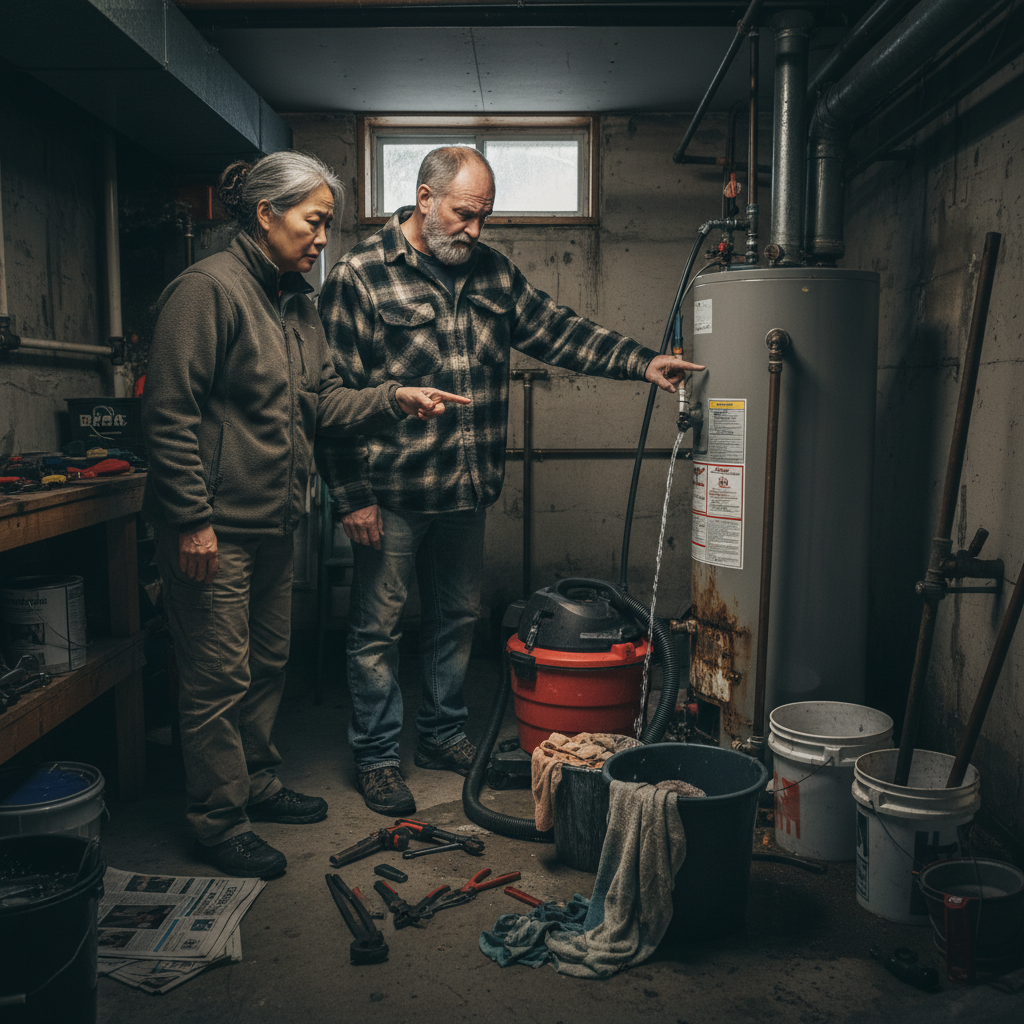
- Emergency maintenance: burst pipes, electrical issues, plumbing, weatherproofing
- Regulatory compliance: Property standards inspections, upgrades to meet code
Succession Uncertainty
- Adult children may not want to inherit landlording responsibilities
- Considering whether to sell properties and simplify
- Want to retire from active management while retaining income
Energy and Capability Decline
- Managing properties takes time, energy, and stress
- Medical issues may limit ability to respond to emergencies
- Wear and tear of rental management years becomes apparent
How a Reverse Mortgage Optimizes Rental Operations
A reverse mortgage on your primary residence provides capital flexibility for rental operations:
1. Emergency Repair Capital
- Rental property has major repair: roof, HVAC, electrical, foundation
- You need $15,000-$30,000 immediately; can't wait for savings accumulation
- Reverse mortgage line of credit provides instant access without disrupting retirement income
- You remain landlord; property is maintained and continues generating income
2. Vacancy Management
- Tenant moves out; property requires 3-4 months to re-rent
- Lost rental income: $3,000-$5,000+
- Reverse mortgage covers property tax, insurance, utilities during vacancy
- You avoid forced rent reductions to fill unit quickly
3. Capital Replacement Reserves
- Rental properties require periodic replacement: roof (20-25 years), furnace (15-20 years), water heater (10-15 years)
- Should budget $200-400/month as reserve, but many landlords don't
- Reverse mortgage line of credit creates de facto replacement reserve
- When replacement is due, you have access to capital
4. Property Improvements for Tenant Retention
- Market rents increase when properties are well-maintained
- Modern kitchens, updated bathrooms, fresh paint, flooring attract better tenants
- Improvement cost: $8,000-$20,000; generates $50-100/month higher rent
- Reverse mortgage funds improvement; higher rent repays it over time
5. Transition Capital
- You decide to sell one property and consolidate to one rental
- Timing issues: buyer wants quick close; you need time to find replacement
- Reverse mortgage provides bridge capital to manage transition
- Avoids forced selling at bad timing or price
Real Scenario: The Landlord's Emergency Fund
George, age 72, owns two rental properties in Ontario:
Property 1 (Triplex in Hamilton):
- Value: $420,000; mortgage: $180,000; equity: $240,000
- Rental income: $1,600/month (tenant-occupied)
- Annual expenses: $4,800 (property tax) + $1,800 (insurance) + $2,400 (maintenance budget) = $9,000
- Net income: $1,600 × 12 - $9,000 = $10,200/year
Property 2 (Duplex in Kitchener):
- Value: $340,000; mortgage: $140,000; equity: $200,000
- Rental income: $1,400/month (tenant-occupied)
- Annual expenses: $4,200 (property tax) + $1,600 (insurance) + $1,600 (maintenance budget) = $7,400
- Net income: $1,400 × 12 - $7,400 = $9,400/year
- Total rental income: $2,000/month net; $19,600/year
His Primary Residence:
- Value: $480,000; fully paid off; no mortgage
- Available reverse mortgage equity: ~$250,000 (52% LTV)
The Emergency: In spring 2026, George gets a call: the roof of Property 1 (triplex) is leaking. Inspector estimates $22,000 to replace. George's "maintenance budget" assumes $2,400/year ($200/month), which is wholly inadequate for a major replacement.
George's Options:
Option A: Delay Repairs
- Landlord doesn't want to spend $22,000 immediately
- Delays roof replacement 2-3 years until he accumulates funds
- Water damage worsens; mold grows; tenant complains
- Eventually forced to do emergency $28,000 repair
- Tenant moves out due to poor conditions; 6-week vacancy; lost rent $3,200
Option B: Liquidate RRIF/Savings
- Withdraws $22,000 from retirement savings
- Triggers $22,000 taxable income (possibly $5,500-7,000 in taxes)
- Retirement savings permanently reduced
- Net cost: ~$27,000 ($22,000 + taxes)
Option C: Reverse Mortgage
- George accesses $22,000 via reverse mortgage on primary residence ($480,000 value)
- Completes roof replacement immediately
- No monthly payments; no income qualification; no disruption to retirement income
- Reverse mortgage grows ~$900/year at typical rates
- Property is preserved; tenants remain; income continues
Cost-Benefit Analysis:
- Reverse mortgage cost: $22,000 grows to ~$34,000 over 15 years (5% growth rate)
- Property value appreciation: $420,000 grows to $550,000+ over 15 years (3% annual)
- George's net equity benefit: property appreciated $130,000 while reverse mortgage grew $12,000 (net: $118,000 benefit)
- He maintained property, retained tenants, and preserved retirement income
Comparison to Home Sale:
- If George sold Property 1 to avoid roof repair, he'd lose future appreciation, income, and asset diversity
- By using reverse mortgage, he maintains full rental portfolio
| Option | Immediate Cost | Long-Term Outcome |
|---|---|---|
| Delay repairs | $0 upfront | Water damage, mold, eventual $28,000 emergency repair, lost rent $3,200 |
| Liquidate RRIF/savings | ~$27,000 (incl. taxes) | Retirement savings permanently reduced |
| Reverse mortgage | $22,000 (grows to ~$34,000 over 15 years) | Property maintained, tenants retained, income continues |
Scenario: Property Improvement for Tenant Retention
Patricia, age 68, owns a single-family rental in London, Ontario.
- Property value: $380,000; mortgage: $100,000; equity: $280,000
- Rental income: $1,200/month
- Market rent: Properties in good condition: $1,400-1,500/month
- Current property condition: Kitchen and bathrooms are dated (15+ years old)
Patricia wants to upgrade the kitchen and both bathrooms to capture higher market rent, but the $18,000 cost seems prohibitive when her rental income is only $14,400/year gross.
Using a Reverse Mortgage:
- Patricia accesses $18,000 from her primary residence reverse mortgage
- Upgrades kitchen and bathrooms (modern cabinets, granite counters, new fixtures)
- Tenant moves out at lease end; property is immediately re-rented at $1,400/month (vs. $1,200)
- Increased rent: $200/month = $2,400/year
- Payback timeline: $18,000 ÷ $2,400 = 7.5 years
- After payback, she has additional income of $2,400/year indefinitely
Net Benefit:
- $18,000 reverse mortgage investment generates $2,400/year additional income
- Over 15 years: $36,000 additional income
- Reverse mortgage balance: $28,000 (at 5% growth)
- Net financial benefit: $8,000+ (not counting property appreciation or tenant satisfaction)

Property Maintenance Planning for Aging Landlords
As a landlord ages, proactive maintenance becomes increasingly important:
Major System Replacement Timeline:
- Roof: 20-25 years (plan $15,000-$30,000)
- Furnace/HVAC: 15-20 years (plan $5,000-$8,000)
- Water heater: 10-15 years (plan $1,500-$2,500)
- Plumbing: 50+ years but repairs common (plan $100-300/month)
- Windows: 25-30 years (plan $8,000-$15,000 for full replacement)
- Electrical: 40-60 years but upgrades common (plan $3,000-$8,000)
Create a Reserve Strategy:
- Identify which systems are approaching end-of-life
- Estimate replacement costs
- Monthly reserve needed: Total cost ÷ Years remaining
- Example: Roof needs replacement in 8 years at $20,000; monthly reserve = $20,000 ÷ (8 × 12) = $208/month
| System | Lifespan | Planned Cost |
|---|---|---|
| Roof | 20-25 years | $15,000-$30,000 |
| Furnace/HVAC | 15-20 years | $5,000-$8,000 |
| Water heater | 10-15 years | $1,500-$2,500 |
| Windows | 25-30 years | $8,000-$15,000 |
| Electrical | 40-60 years | $3,000-$8,000 |
Reverse Mortgage as Reserve:
- If rental income doesn't support monthly reserves, reverse mortgage line of credit becomes your reserve
- Pre-approved capital awaits when major replacement occurs
- Peace of mind knowing capital is available
Tenant Management and Aging Landlords
Tenant Communication
- Clear, documented communication with tenants about repairs and maintenance
- Responsive approach to maintenance requests (fixes small issues before they become big ones)
- Professional management relationships (minimize conflict and eviction risk)
Management Delegation
- As you age, consider hiring professional property manager
- Cost: 8-12% of rental income
- Benefit: You're hands-off; professional handles tenant, repairs, compliance
- Reverse mortgage can fund initial property manager fees
Compliance and Standards
- Ontario has property standards; aging rental properties need updates
- Deferred maintenance can result in compliance violations and rent reductions
- Reverse mortgage provides capital to address code issues before they're forced
Tax Implications of Rental Property Operations
Deductible Rental Expenses:
- Mortgage interest (but not principal)
- Property tax
- Insurance
- Utilities
- Repairs and maintenance
- Property management fees
- Advertising for tenants
- Legal and accounting fees
Not Deductible:
- Capital improvements (depreciated over time, not immediately deducted)
- Mortgage principal
- Reverse mortgage interest (since it's on primary residence, not rental property)
Strategy for Aging Landlords:
- Work with accountant to properly allocate expenses
- Capitalize major repairs/improvements (depreciate over time)
- Deduct ongoing maintenance and repairs
- If you're thinking of selling rental property, plan capital gains tax ($25,000 gain = $6,250 tax at 50% inclusion rate)
Should You Sell, Hold, or Consolidate Your Rentals?
A reverse mortgage provides capital flexibility to manage this transition:
Hold if:
- Rental income is meaningful part of retirement (> 20% of income)
- Properties are well-maintained and generating steady income
- You enjoy landlording or have hired manager
- You want to pass properties to heirs
Sell If:
- Properties are aging; major replacement costs loom
- You don't want landlording stress in later retirement
- You'd prefer to simplify and consolidate wealth
- Reverse mortgage could bridge transition period while you sell
Consolidate If:
- You own 3+ properties; consider selling 1-2 and focusing on best performers
- Reduces management complexity while maintaining rental income
- Frees capital from slower-performing properties
Case Study: The Aging Portfolio Transition
Robert and Susan, ages 74 and 72, own three rental properties:
- Primary residence: $520,000
- Rental Property 1 (Triplex): $420,000; mortgage: $150,000; equity: $270,000
- Rental Property 2 (Duplex): $380,000; mortgage: $100,000; equity: $280,000
- Rental Property 3 (Single-family): $300,000; mortgage: $50,000; equity: $250,000
- Total equity: $1,320,000 (very asset-rich)
Combined rental income: $3,200/month; combined expenses: $15,000/year; net income: $23,400/year
Their Challenge:
- Robert's health is declining; managing three properties is burdensome
- Major repairs looming on Property 1 ($18,000 roof replacement due soon)
- Considering selling one property to simplify, but unsure of timing
Their Reverse Mortgage Strategy:
- Access $50,000 on primary residence via reverse mortgage
- Use for Property 1 roof replacement ($18,000)
- Use remaining $32,000 as capital reserve for other maintenance
- This buys time (3-5 years) to decide which property to sell
- If they decide to sell Property 3, reverse mortgage is paid off from sale proceeds
- If they keep all three, the line of credit remains as ongoing capital reserve
Benefit:
- No pressure to sell property at bad timing due to unexpected major repairs
- Clear financial runway to make thoughtful decisions about portfolio
- Continued rental income supports their retirement
- Flexibility to transition gradually rather than make rushed changes
Managing Succession: What Happens to Rental Properties?
Will Your Heirs Want Them?
- Adult children may not want to inherit landlording responsibility
- Consider whether heirs have interest, capability, and desire to manage properties
- If not, better to sell during your lifetime and leave heirs cash/investments
Transition Planning:
- Consider selling properties gradually during retirement
- Use proceeds for TFSA, investment portfolio, or other retirement needs
- This relieves burden while you're alive; heirs inherit cleaner estates
- Reverse mortgage can provide bridge capital during transition
Trust Structures:
- Some landlords use trusts to hold properties
- Trusts can manage succession, tax planning, and liability protection
- Consult estate lawyer on optimal structure for your situation
Professional Management for Heirs:
- If heirs inherit rental properties, ensure professional property management is in place
- They inherit income stream, not operational burden
- Clear documentation of systems, contacts, and procedures

Key Takeaways
- Aging Ontario landlords often hold $700,000-$1,000,000+ in combined equity across their primary residence and rental properties, but only $800-$2,500/month in usable net rental cash flow.
- Major rental repairs are expensive and unpredictable: furnace replacement runs $5,000-$8,000, a roof $15,000-$30,000, and foundation work $20,000-$50,000.
- A reverse mortgage on your primary residence is available at age 55+ and typically provides access to 15-59% of appraised home value with no monthly payments required.
- In the George case study, a $22,000 reverse mortgage draw for an emergency roof repair grew to about $34,000 over 15 years, while the property itself appreciated over $130,000 in the same period.
- Reverse mortgage proceeds are not taxable income and do not affect OAS or GIS calculations, unlike an RRIF withdrawal, which can trigger significant tax.
- Using a reverse mortgage line of credit as a de facto repair reserve avoids forced property sales at bad timing when major repairs arise unexpectedly.
Frequently Asked Questions
Can I use a reverse mortgage on my primary residence to fund repairs on a rental property?
Yes. A reverse mortgage is registered against your primary residence, but the funds can be used for any purpose, including emergency repairs, renovations, or reserve funding for a separate rental property you own.
How does a reverse mortgage compare to withdrawing from my RRIF to cover a rental repair?
An RRIF withdrawal is fully taxable as income in the year you take it, which can push you into a higher tax bracket and permanently reduce your retirement savings. A reverse mortgage draw is a tax-free loan advance, so a $22,000 repair might effectively cost $27,000 through an RRIF withdrawal versus no immediate tax cost through a reverse mortgage.
Will a reverse mortgage affect my ability to keep managing my rental properties?
No. A reverse mortgage does not require you to sell or transfer your rental properties. It simply provides access to capital from your primary residence, which you can then use to maintain, improve, or manage your rental portfolio as you choose.
What happens to my rental properties when I die if I have a reverse mortgage on my primary residence?
Your rental properties are separate from the reverse mortgage, which is secured only against your primary residence. When you pass away, your estate repays the reverse mortgage balance (typically from the sale of the primary residence), while your rental properties pass to your heirs according to your will.
Is it better to sell a rental property or use a reverse mortgage to fund its repairs?
It depends on your goals. If the property still generates meaningful income and you want to keep it in the family, a reverse mortgage can fund repairs without forcing a sale at an inconvenient time. If you're ready to simplify your portfolio, selling may make more sense, and a reverse mortgage can still serve as bridge capital during that transition.
How much can an aging landlord typically borrow through a reverse mortgage?
Homeowners aged 55 and older can generally access 15% to 59% of their primary residence's appraised value, with the exact percentage depending on age, property type, and lender terms.
Moving Forward: Sustainable Landlording in Retirement
You've built valuable real estate assets. A reverse mortgage helps you sustain and optimize those assets during retirement without the constant stress of emergency capital needs.
Whether you're maintaining rental properties long-term, planning to sell and consolidate, or transitioning management to heirs, a reverse mortgage provides financial flexibility to manage your real estate portfolio strategically.
You don't have to choose between retirement comfort and rental property success. With a reverse mortgage line of credit, you can have both.
Ready to Learn More?
Find out exactly how much you could unlock from your home — free and no obligation.