
Reverse Mortgage When Adult Child Returns Home After Marital Breakdown
Your adult child's marriage ended. They're moving home with kids, needing support. Use a reverse mortgage to fund housing modifications and living expenses without strain.
Your adult child's marriage just ended. They're moving back in with the kids—temporarily, they hope, but the reality is they need shelter, stability, and financial breathing room. This scenario unfolds in thousands of Ontario homes every year. Your 35- or 40-year-old child, who you expected to be independent, suddenly needs a bedroom, a safe space for their kids, and your emotional and financial support. A reverse mortgage can fund the necessary home modifications—an extra bedroom, updated kitchen, fresh utilities—without forcing you to deplete savings or create family financial entanglement.
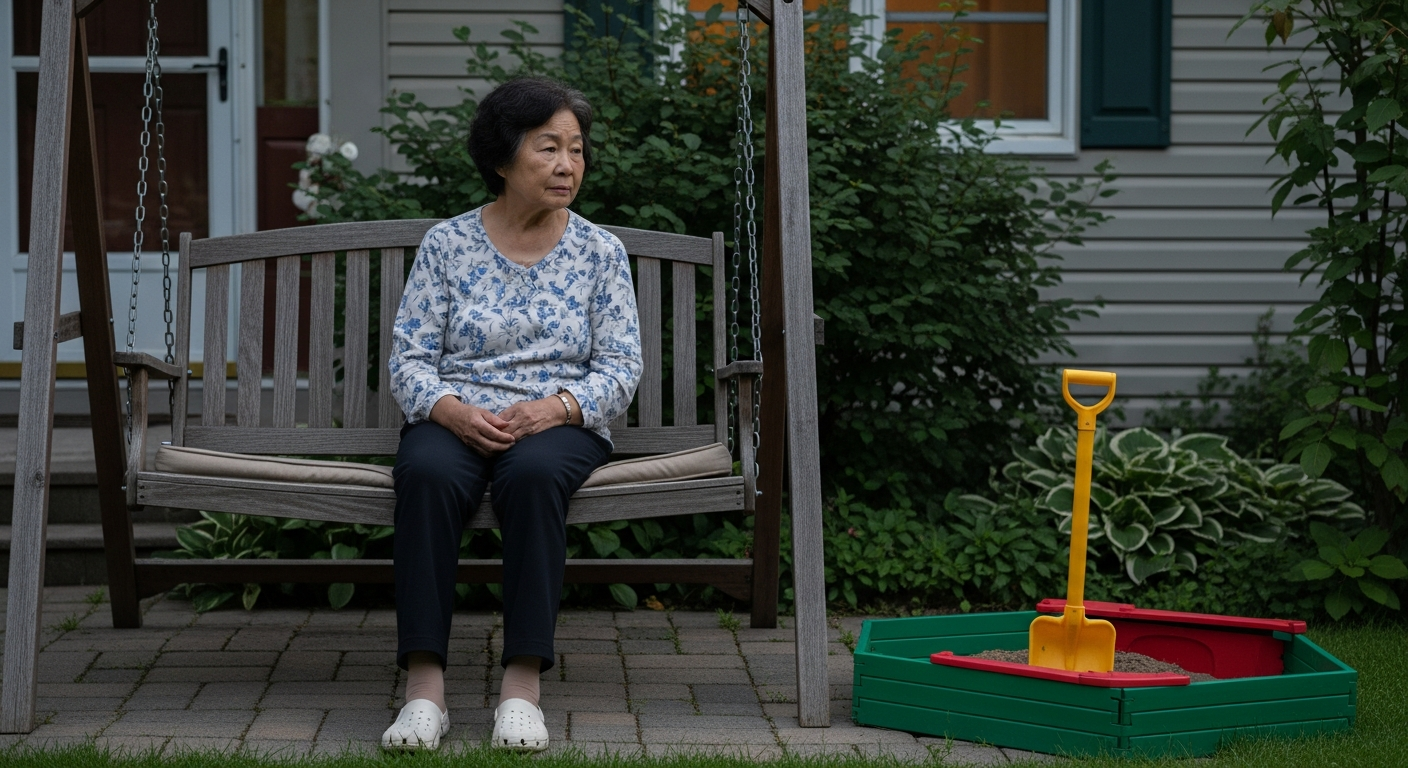
The Reality: Marital Breakdown and Boomerang Adult Children
Canadian divorce rates for first marriages hover around 40%, but for remarriages, the number climbs to nearly 50%. Many of these divorces involve adult children (age 25+) with their own children.
When a marriage ends:
- Your adult child loses housing stability (often, one spouse keeps the home; the other must find new housing)
- Family income drops dramatically (legal fees, two households, reduced combined income)
- Custody arrangements require flexibility (shared parenting often means a child-friendly home base for your adult child)
- Your adult child feels shame about "failing" and may be reluctant to ask for help
The result: Many Ontario parents find their adult children and grandchildren moving back in during the 6–24 month recovery period after divorce. This is now such a common demographic pattern that it has a name: the "Boomerang Generation" or "Failure to Launch" cohort.
According to Statistics Canada, approximately 30% of Canadian adults aged 25–34 live with parents, often due to relationship breakdowns, job loss, or financial setbacks. In Ontario, this number is even higher in urban centers like Toronto and Ottawa.
The Housing Situation: What Your Home Needs (And Costs)
When an adult child and 1–2 grandchildren move in, your home often requires modifications:
| Modification | Cost | Why It's Needed |
|---|---|---|
| Additional bedroom (existing space converted) | $3,000–$8,000 | Your child + 1–2 kids need separate sleeping areas |
| Extra bathroom (existing space renovated) | $8,000–$15,000 | Multiple people, privacy, reduced conflict |
| Kitchen upgrade (larger fridge, prep space) | $5,000–$12,000 | Feeding 3–5 people instead of 2 |
| Laundry facilities (washer/dryer hookup) | $2,000–$4,000 | Handling more laundry with separate family |
| Child safety updates (gates, window guards, outlet covers) | $1,500–$3,000 | Grandkids' safety as a priority |
| Flooring, paint, cosmetic updates | $4,000–$10,000 | Refreshing worn-out spaces for new residents |
| Utility capacity (upgraded electrical, water heater) | $3,000–$8,000 | Increased demand on systems |
| Total Realistic Cost | $26,500–$60,000 | Multi-generational household infrastructure |
Many parents try to absorb these costs from savings—but $40,000–$60,000 is a significant hit to retirement accounts, especially for those on fixed incomes.
A reverse mortgage funds these modifications without liquidating investments.

Why Adult Children Move Home After Divorce (And How Long They Stay)
Research shows adult children typically remain in a parent's home for 6–24 months post-divorce:
| Timeline | What's Happening | Financial Needs |
|---|---|---|
| Months 1–3 (Crisis phase) | Separation legal process, finding separation agreement, immediate housing need | Emergency support, temporary housing, legal costs |
| Months 4–12 (Stabilization) | Divorce finalized, custody/access determined, job stability reassessed | Ongoing housing, childcare support, modest savings building |
| Months 13–24 (Recovery) | New routine established, income recovered, savings accumulated for independence | Gradual transition to own housing, some parental support continues |
| Month 24+ (Transition or Permanent) | Some children move to independent housing; others remain longer-term or help parent age in place | Ongoing or evolved living arrangement |
The living arrangement often becomes semi-permanent. What started as a "6-month recovery" becomes 2–3 years or longer. This isn't failure—it's pragmatism. Your adult child rebuilds finances, establishes stability, builds savings, and then (in many cases) eventually moves to their own place. But the timeline is uncertain.
Your reverse mortgage funds modifications without assuming a particular outcome. If they move out in 8 months, you have a beautifully renovated home. If they stay 3 years, the modifications support everyone's wellbeing.
Financial Impact on Your Retirement: How RMs Help
Scenario: Carol and Her Daughter's Return Home
Carol, 72, lives in Oakville in a 3-bedroom home worth $680,000 (paid off). Her CPP: $28,000/year. Pension: $15,000/year. Total: $43,000/year.
Her daughter Sarah, 38, just finalized her divorce. She has two kids (ages 7 and 10) and receives $800/month child support. Sarah's job pays $48,000/year. She needs temporary housing.
Carol invites Sarah and the kids to move in. They'll stay while Sarah rebuilds savings and finds stable housing. Timeline: 18–24 months.
Needed home modifications:
- Convert the third bedroom to a second kid's bedroom: $5,000
- Upgrade kitchen (larger capacity): $8,000
- Install additional bathroom: $12,000
- New flooring (higher traffic, durability): $6,000
- Utility upgrades (water heater, electrical): $5,000
- Total: $36,000
Option A: Liquidate Investments Carol has $180,000 in a TFSA (tax-free growth). She withdraws $36,000 for renovations. The $36,000 is now tax-free (TFSA), but it's gone—no longer compounding. Over the next 15 years (until Carol's late 80s), that $36,000 would have grown to ~$72,000 at 4% annual return. Lost opportunity: $36,000.
Option B: Reverse Mortgage Carol accesses a $40,000 reverse mortgage line of credit on her $680,000 home. Interest rate: 5.5%.
- Year 1 RM balance: $40,000 + accrued interest = $42,000
- Year 2: $42,000 + interest = $44,100
- Year 3: $44,100 + interest = $46,500
But her home appreciates at ~3% annually:
- Year 1: Home worth $700,400
- Year 2: Home worth $721,400
- Year 3: Home worth $742,840
Net equity after 3 years: $742,840 - $46,500 = $696,340 (vs. $680,000 now, minus the $36,000 she'd have spent anyway). Her investments stay intact and growing.
When Sarah eventually moves out (or Carol passes away), the $46,500 RM balance is repaid from home sale proceeds or estate assets. Carol's retirement accounts were never touched.
According to Equitable Bank, reverse mortgages allow retirees to fund major home expenses without forced investment liquidation. This is especially valuable for families managing multi-generational living arrangements.
Family Dynamics: Setting Expectations
Living together again as adults is emotionally complex. Establishing clear expectations helps:
Financial Transparency
- Be explicit: "I'm using a reverse mortgage to renovate the home. This is my decision, not your debt."
- Discuss timelines: "I expect you'll be independent within 2 years, but if you need 3, we can manage that."
- Clarify support level: "I can cover housing and utilities, but you'll need to fund kids' activities, clothes, school fees."
Emotional Boundaries
- Avoid blame or shame: Your child is already vulnerable; avoid judgment about the marriage.
- Respect independence: They're an adult, not a dependent. Even living in your home, they have autonomy.
- Plan the exit: Regularly discuss the plan for independence—it prevents resentment and keeps motivation alive.
Grandkids' Needs
- School continuity: Keep children in their current school if possible (reduces trauma from divorce).
- Routine and stability: A consistent home base (your home) is healing.
- Relationship maintenance: Ensure kids see their other parent (your ex-in-law). Co-parenting logistics are real.
Many family counselors recommend a written cohabitation agreement even between parents and adult children—it clarifies finances, household responsibilities, and timelines, reducing conflict.
Reverse Mortgage Specifics: Accessing Funds for Home Modifications
When using a reverse mortgage specifically for home renovations to accommodate adult children:
✓ Structure as a line of credit (not a lump sum)—you draw funds as renovations progress ✓ Get detailed contractor quotes before applying—the lender wants to see specific uses ✓ Hire licensed contractors with warranties—home modifications are assets; you want quality ✓ Obtain building permits for major work—ensures code compliance and protects future resale ✓ Budget conservatively—most renovations run 10–20% over initial estimates
According to FSRAO, reverse mortgage lenders require documentation of how funds will be used. Legitimate uses include home repairs and renovations. A contractor quote is standard documentation.
Estate Planning Considerations
When adult children live in your home and you've taken a reverse mortgage:
Clarify in your will:
- Whether the RM balance is charged against that child's inheritance
- Whether living arrangements should continue after your death (e.g., child remains in home, funds estate repayment)
- Who manages estate finances if your child has limited resources
- Whether your will specifies that the home be sold or refinanced to repay the RM
Many families structure this as: Child remains in home after parent's death; home is sold when child is independent or after a specified period; sale proceeds repay the RM and distribute remaining assets per the will.
Consult an estate lawyer to formalize this arrangement. Clarity prevents conflict and reduces family stress during an already difficult period.
Frequently Asked Questions
How long can my adult child legally stay in my home?
Indefinitely, as long as you both agree. Ontario law doesn't require you to evict family. However, if you ever tried to evict, they might be considered a "tenant" with tenancy protections—consult a lawyer if relationship deteriorates and you need to end the arrangement.
Does my adult child's presence affect my reverse mortgage eligibility?
No. The reverse mortgage is secured against your home and based on your age, home value, and ownership. Your adult child's income or credit doesn't affect your application.
What if my adult child eventually pays me rent?
You can charge rent if you want (no legal requirement to do so). If you charge market rent ($1,000–$1,500/month in most Ontario regions), report it as rental income on your taxes. If you don't charge rent or charge below-market rent, there's no tax consequence—it's simply a family arrangement.
Can my adult child take over the reverse mortgage when I pass away?
No. The reverse mortgage must be repaid when you pass away or sell the home. Your adult child cannot assume it. However, the estate can refinance the home (if child is young enough and home has sufficient equity) or sell the home to repay the RM. Consult a lawyer about the mechanics.
What if my adult child never becomes independent?
Some adult children remain in the parental home long-term—by choice or circumstance. This is fine. The reverse mortgage simply becomes a permanent part of your estate structure. When you pass, the home is sold (or inherited by the adult child, who refinances to repay the RM from equity).
The Bottom Line
Marital breakdown is one of the most common triggers for adult children returning home. It's not a failure of independence—it's a practical, loving response to temporary crisis. Your home becomes a sanctuary while they rebuild.
A reverse mortgage makes this generosity sustainable. You fund necessary renovations—extra bedrooms, bathrooms, kitchen capacity—without raiding retirement savings or creating family financial entanglement. Your adult child gets stability without debt. Your home adapts to the new reality. And when they're ready to move on, everyone has breathed easier and rebuilt.
Ready to Learn More?
Find out exactly how much you could unlock from your home — free and no obligation.
Related Articles
Reverse Mortgage for Adult Child's Housing Crisis: Supporting Your Separated Child and Grandchildren
Learn how to use a reverse mortgage to help your adult child through a housing crisis from separation, divorce, or family breakdown while protecting your retirement.
Read →Reverse Mortgage for Funding Multiple Grandchildren's RESP Gaps
When RESP grants max out but multiple grandchildren still need post-secondary funding, a reverse mortgage bridges the education gap for your whole legacy.
Read →Reverse Mortgage to Fund Your Grandchild's Wedding Celebration
When your grandchild's wedding planning begins but the couple lacks savings, a reverse mortgage helps you gift a meaningful celebration without burdening them with debt.
Read →