
Reverse Mortgage for Aging Academic's Emeritus Transition and Legacy Professorship
Fund your academic emeritus transition. Reverse mortgage covers research continuation, publication, mentorship funding, and scholarly legacy documentation.
You've spent 30+ years building an academic career, and retirement means stepping away from grant funding, research teams, and institutional support. For many academics transitioning to emeritus status, the period from active faculty to full retirement is uncertain. Emeritus professors often want to complete research projects, mentor the next generation, publish final works, and document their scholarly legacy — but without active employment income or grant funding, these projects require personal investment. A reverse mortgage lets you fund your academic transition years, allowing you to complete your scholarly work and leave a lasting intellectual legacy without compromising retirement security.
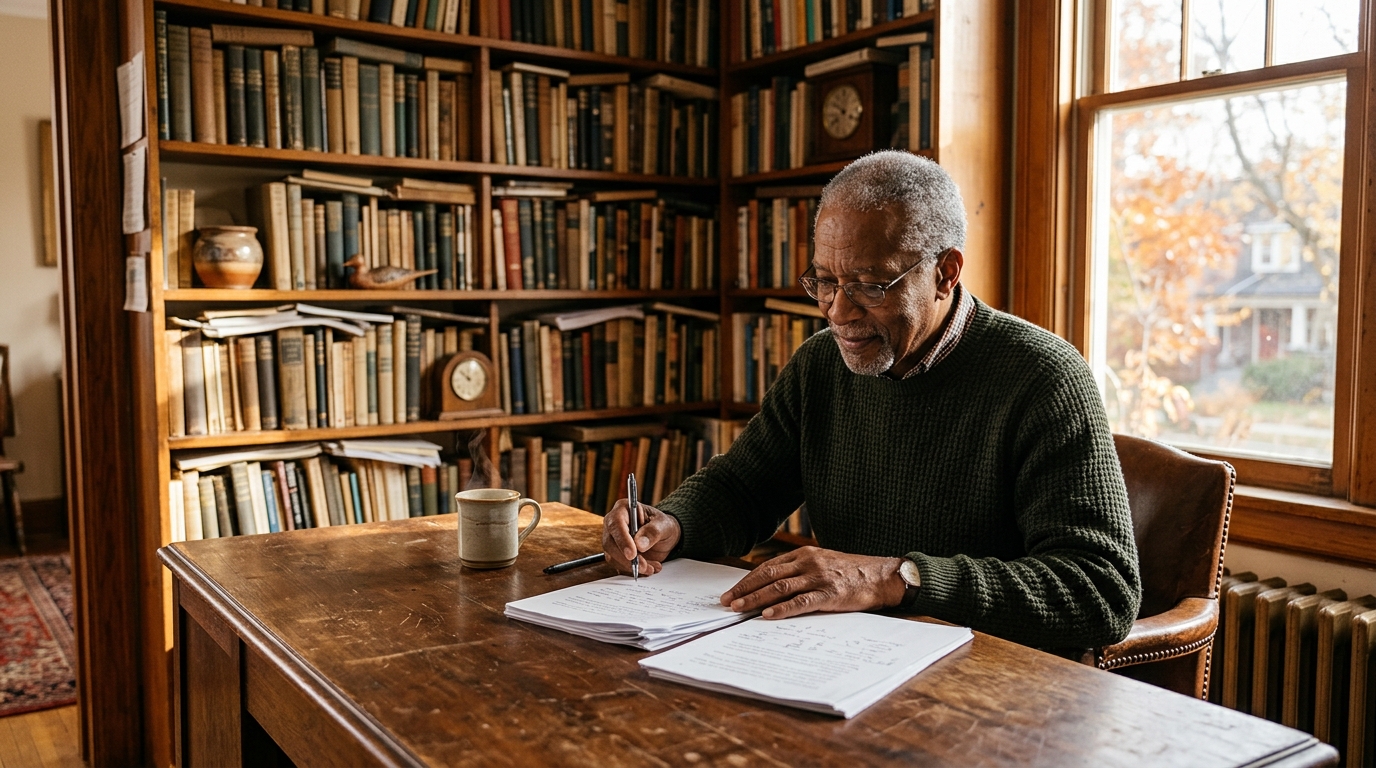
What Academic Emeritus Transition Involves
Emeritus status is an academic distinction granted to retired faculty of distinction, often carrying the right to continue conducting research, publishing, and mentoring without salary. For academics transitioning from active faculty to emeritus, the shift involves:
- Loss of institutional funding — Grant budgets, research assistants, and laboratory support end
- Loss of teaching income — Base salary ends; some emeriti earn modest honorariums for occasional seminars
- Shift to self-funded scholarship — Emeritus research requires personal funding or limited grant access
- Mentorship continuation — Many emeriti maintain informal doctoral and postdoctoral mentorship
- Publication completion — Final papers, books, and scholarly documentation are often completed during emeritus years
- Legacy documentation — Recording research methodology, creating archives, mentoring next-generation scholars
Emeritus transitions typically span 5–10 years after initial retirement, requiring sustained financial investment in research continuation and scholarly legacy building.
Costs of Academic Emeritus Research and Legacy Work
| Emeritus Activity | Typical Cost |
|---|---|
| Self-funded research supplies and materials | $5,000–$15,000/year |
| Postdoctoral mentee stipend or support | $15,000–$35,000/year |
| Travel for research collaboration and conferences | $3,000–$8,000/year |
| Publishing costs (open-access fees, indexing, distribution) | $2,000–$6,000/year |
| Data archive creation and long-term storage | $3,000–$10,000 (one-time) |
| Oral history recording and transcription (legacy documentation) | $3,000–$8,000 (one-time) |
| Research methodology documentation and handbook creation | $2,000–$5,000 (one-time) |
| Visiting scholar/emeritus office space and technology | $1,000–$3,000/year |
| Total 5-year emeritus research and legacy investment | $50,000–$150,000+ |
Without personal funding, many academics' final scholarly work remains incomplete, and institutional knowledge is lost.

Why Reverse Mortgages Serve Academic Emeritus Scholars
Traditional retirement funding rarely accounts for continued scholarly investment. A reverse mortgage addresses this gap:
- Recognizes scholarly identity — Your home equity can fund research that feels essential to your professional identity
- Flexible funding over emeritus years — Borrow as needed for projects over 5–10 years, not all at once
- No monthly payment burden — Unlike a loan, no payment obligations during your lifetime
- Preserves investment portfolios — Research funding comes from home equity, not stocks/bonds
- Supports generational knowledge transfer — Mentoring next-generation scholars is funded sustainably
According to OSFI, reverse mortgages can fund activities that extend productive, meaningful engagement in later life. Continued scholarly work and mentorship are recognized as valuable activities worth supporting through creative financing.

Real-World Scenario: Dr. Patricia's Emeritus Research Legacy
Situation: Dr. Patricia, 68, is transitioning to emeritus status after 35 years as a professor of developmental psychology. During her active career, she conducted federally-funded research on childhood learning and development. As emeritus, she wants to:
- Complete a capstone research project (2-year study) on multigenerational learning patterns ($30,000)
- Mentor two postdoctoral researchers continuing her work ($20,000/year for 3 years = $60,000)
- Document her research methodology and create an archive for future scholars ($12,000)
- Publish a final handbook synthesizing 30 years of research ($8,000)
- Record oral history interviews capturing her scholarly journey ($6,000)
Challenge: Patricia's retirement income (CPP/OAS + modest pension) is $45,000/year. Her total emeritus research and legacy goals total approximately $116,000 over 5 years (~$23,000/year). Dedicating retirement income to research would severely limit her living expenses. Her investment portfolio ($280,000) is earmarked for healthcare and long-term care; she doesn't want to liquidate it for research funding.
Solution: Patricia applies for a reverse mortgage. At age 68, she qualifies for approximately $140,000–$180,000 in borrowing capacity based on her home value ($520,000). She borrows $120,000 as a flexible line of credit and allocates:
- Year 1: $22,000 (research project launch + initial postdoc support)
- Year 2: $24,000 (continued research + postdoc salaries + methodology documentation)
- Year 3: $25,000 (research completion + final publications)
- Year 4: $25,000 (archive creation, oral history, handbook)
- Year 5: $24,000 (legacy documentation completion + final publications)
Outcome: Patricia's emeritus scholarship is fully funded. She completes her capstone research, mentors two early-career scholars who advance into independent faculty positions, documents her methodology for future researchers, and leaves a substantial intellectual legacy. Her reverse mortgage costs her approximately $7,800/year in accruing interest (on the $120,000 borrowed at 6.5%). Her retirement lifestyle remains secure; her scholarly work is complete; her legacy is preserved.
Key Takeaways
- ✓ Academic emeritus transitions typically involve 5–10 years of continued scholarly work requiring $50,000–$150,000+ investment
- ✓ Reverse mortgages fund emeritus research without depleting retirement income or investment portfolios
- ✓ Mentoring next-generation scholars and documenting legacy creates lasting intellectual impact
- ✓ Self-funded emeritus research allows completion of capstone projects and knowledge transfer
- ✓ Scholarly legacy documentation preserves decades of research and methodology for future scholars
Frequently Asked Questions
Will my university consider my emeritus research self-published if it's funded by reverse mortgage proceeds?
Your funding source (reverse mortgage vs. grant) doesn't affect publication validity. Peer-reviewed publications, regardless of funding source, maintain equal scholarly standing. Disclose funding sources transparently in publication acknowledgments (standard academic practice), but self-funding research is entirely legitimate.
Can I use a reverse mortgage line of credit to fund emeritus research gradually over years?
Yes. Many reverse mortgages offer flexible lines of credit, allowing you to draw funds annually as research needs emerge. This avoids paying interest on money you haven't yet spent. Discuss line-of-credit options with Rick Sekhon Reverse Mortgages or CHIP.
If I'm funding postdoctoral researchers through my reverse mortgage, what are the tax implications?
Stipends and salaries you provide to researchers are generally deductible as research expenses if the work is formally documented. Consult with an accountant about research expense deductions. However, your reverse mortgage proceeds themselves are not taxable — they're loan advances, not income.
What if my emeritus research takes longer than anticipated — will my reverse mortgage accommodate extended timelines?
Your reverse mortgage has no time limit on borrowing (as long as you remain in the home). If your research extends beyond initial projections, you can continue drawing on your line of credit. Interest accrues on drawn amounts, but there's no time pressure to repay until you move or pass away.
How do I formalize my emeritus research plan so my university understands my intentions and supports my continued affiliation?
Most universities have emeritus office processes. Meet with your department chair or emeritus affairs office to formalize emeritus status, secure office space, and document your research continuance plans. University support (office access, library privileges, mentoring recognition) often follows formal emeritus status.
Get Your Free Ontario Reverse Mortgage Guide
Your scholarly legacy doesn't end with retirement. A reverse mortgage can fund your emeritus transition, allowing you to complete research, mentor the next generation, and leave a lasting intellectual impact.
Ready to Learn More?
Find out exactly how much you could unlock from your home — free and no obligation.
Related Articles
Reverse Mortgage for DEI Consulting Practice: Launching Diversity, Equity, and Inclusion Consulting in Retirement
Start a diversity and inclusion consulting practice. Help corporations and nonprofits build equitable cultures; reverse mortgage funds training, business setup, and market entry.
Read →Reverse Mortgage for Residential Sustainability Auditing Practice: Certifying Aging in Place
Launch a professional home energy and sustainability auditing business. Help Ontario homeowners certify efficiency; reverse mortgage funds training, tools, and market entry.
Read →Reverse Mortgage for Archival and Digital Preservation Consulting: Preserving Institutional History and Heritage
Launch archival consulting practice preserving records for institutions. Help libraries, archives, nonprofits; reverse mortgage funds training, tools, and market entry.
Read →